Winterizing a balcony is mostly a matter of reducing exposure before the first serious frost: remove what can be damaged, protect what must stay outside, and keep water moving away from the surface. You do not need to turn an open balcony into an enclosed room to make it safer and easier to maintain.
The right routine depends on your climate, the building, and what you keep outside. A sheltered balcony in a mild city needs less protection than a windy upper-floor balcony in a place with repeated freezes. Use this checklist as a starting point, then follow plant labels, appliance instructions, and your lease or building rules.
The short version
- Check your lease, balcony rules, drainage and railings.
- Clear leaves, soil and standing water.
- Move cushions, textiles and fragile items indoors.
- Inspect furniture, planters and anything that could blow away.
- Group and protect containers, paying special attention to roots.
- Prepare for frost, wind and snow without blocking exits or drains.
- Recheck the balcony after storms and during thaw cycles.
1. Check the balcony before you add protection
Start with the building rather than the shopping list. Many apartments restrict drilling, attaching screens to railings, hanging tarps, storing bulky items, or using heaters and open flames. Ask the landlord, housing association or property manager before installing anything fixed. A permission check is especially important for a clear enclosure: it can change wind loads, appearance, drainage, and emergency access.
Walk the space and look for loose railing fittings, cracked surfaces, damaged planters, blocked drains and objects that could fall or blow into a shared area. Do not treat a balcony as a place to store heavy piles of soil, snow or water. If you see structural damage or a persistent leak, report it instead of trying to seal or reinforce it yourself.
2. Clear debris and protect drainage
Sweep away leaves, dead foliage and loose potting mix. Organic debris holds moisture against surfaces and can block a drain just when rain or melting snow needs somewhere to go. Empty saucers that stay full after watering, but keep pots raised slightly if doing so improves airflow and prevents them sitting in water.
Never cover a drain with a mat, storage box or tarp. A balcony cover that funnels water toward a wall or neighbor’s balcony can create a new problem. After the first heavy rain, check that water is leaving the balcony instead of pooling around furniture legs or containers.
3. Move soft and fragile items indoors
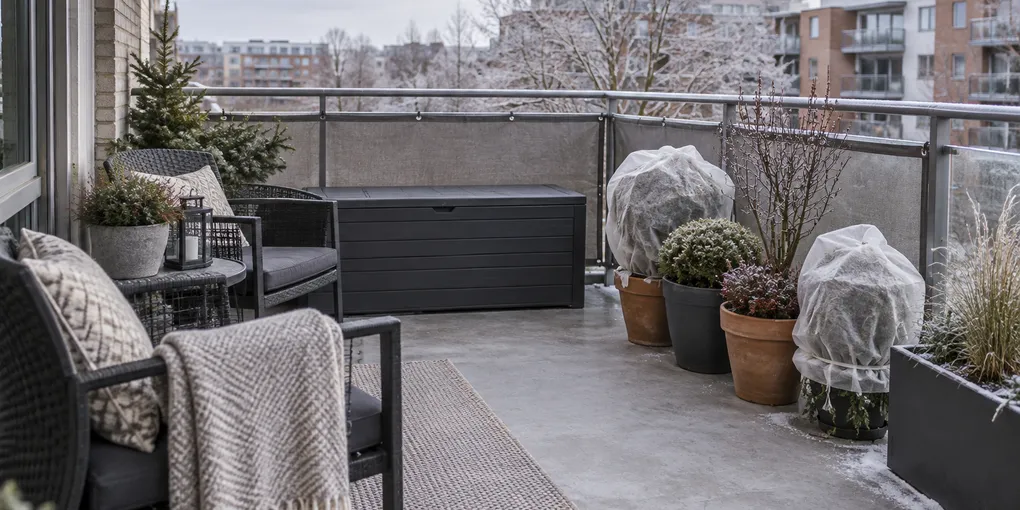
Bring in cushions, blankets, paper lanterns, untreated wood accessories and anything that absorbs water. If you have no indoor storage, use a dry, ventilated deck box only if your building permits it and the box does not obstruct the door, drain or walkway. Do not pack damp textiles into an airtight container; let them dry first.
Clean and dry small tools before storing them. Fold umbrellas and sun shades only when completely dry, and keep them away from wind. The easiest balcony to maintain in winter is one with fewer loose objects, not one covered in more protective fabric.
4. Make furniture boring and stable
Follow the manufacturer’s care instructions. Some outdoor furniture can remain outside, while cushions, painted finishes and lightweight plastics may need shelter. Tighten loose fasteners, remove standing water, and place lightweight pieces where they cannot slide into a railing.
Avoid tying furniture to railings or hanging heavy items from them unless the building explicitly allows it. Do not use a sealed cover that traps condensation against wet furniture. If you cover a piece, choose a properly sized outdoor cover, allow ventilation, and check it after windy weather.
5. Triage your plants by risk
Separate plants that can tolerate your local winter from tender plants that need a brighter indoor spot or another protected location. A label, local nursery, university extension service or horticultural society is more useful than a universal temperature promise. A plant that survives in the ground may be more vulnerable in a pot because its roots are surrounded by cold air.
For plants staying outside, group containers in the most sheltered part of the balcony, often near a building wall. Keep them stable and leave room for airflow. Wrap the outside of vulnerable pots with breathable insulation such as horticultural fleece, straw or another material recommended for the plant and container. Protect the pot and roots without sealing wet foliage in plastic.
The Royal Horticultural Society recommends preparing before winter, protecting at the first sign of frost, grouping containers, and using shelter and pot wrapping to reduce winter damage. It also notes that cold and exposed sites may require protection even for hardier plants. Read its winter-damage guidance for the principles, then adapt them to your species and local conditions.
6. Manage wind, frost and snow safely
Use reversible, breathable protection that cannot become a sail. A loose sheet or improvised plastic wall can catch wind, scrape a railing, or direct water where it should not go. If a wind screen or enclosure is permitted, use the approved attachment method and remove it when conditions exceed its rating.
Do not add a space heater, fire pit, candle or fuel-burning appliance to an enclosed balcony unless your building rules, local regulations and the manufacturer explicitly permit that exact use. An enclosed balcony is not automatically ventilated or fire-safe.
After snowfall, clear only with a method that will not damage the surface or endanger people below. Never push snow over a railing without knowing where it will land and whether the building permits it. During a thaw, check drains, pooled water and covers again.
7. Keep a small winter routine
Once a month—and after major storms—check five things: drainage, loose objects, plant moisture, cover condition and access to the door. Plants protected from rain can dry out even in cold weather, but overwatering cold containers can be just as harmful. Check the soil and the plant’s care instructions rather than watering on autopilot.
If you bring plants indoors, inspect them for pests first and reintroduce them gradually in spring. When winter ends, remove wraps in stages as conditions stabilize, wash and dry storage covers, and record what worked. That note will make next autumn faster.
A low-storage plan
If you have almost no storage, prioritize in this order: cushions and textiles, fragile containers, tender plants, loose decorations, and lightweight furniture. Keep one labeled tote indoors for small covers and tools. Group the remaining containers near the sheltered wall, protect their roots, and leave the drain and exit clear. You can make a meaningful improvement with fewer objects and better placement; you do not need a permanent enclosure.