Quick answer
Read the care label, vacuum loose hair, separate the cover and insert, pretreat stains, then machine-wash or hand-wash with mild pet-safe detergent at the approved temperature. Rinse thoroughly and dry every layer completely before your dog uses the bed again.
The simplest way to clean a dog bed is to treat it like a small laundry project: check the label, remove loose hair before it meets water, wash the pieces according to their care instructions and dry the filling all the way through. The cover may be washable while the insert is not, so the label—not the bed’s appearance—decides the method.
The CDC recommends cleaning pet beds and blankets weekly. Clean more often after an accident, illness, muddy outing or any smell that returns quickly. Cleaning removes dirt and germs with soap or detergent; disinfecting is a separate step for situations such as illness or contact with urine or feces. Follow the product label before using any disinfectant.
Before you wash: make the care-label decision
- Read the tag. Look for washing temperature, cycle, bleach, dryer and air-drying instructions.
- Separate the parts. Remove the cover, bolster inserts, foam and blankets where the design allows it. Do not force a zipper or cut a stitched seam to remove filling.
- Check the size. A bed that crowds the drum will not rinse well and can strain the washer. Use a laundromat or hand-wash a bulky bed if necessary.
- Inspect the material. Memory foam, waterproof liners, leather-like fabric and glued seams can need special care.
If the label is missing, choose the gentlest reasonable method: vacuum, spot-treat, hand-wash with mild detergent and air-dry. Search for the manufacturer’s model-specific instructions before using heat or chemicals.
Remove hair and dry dirt first
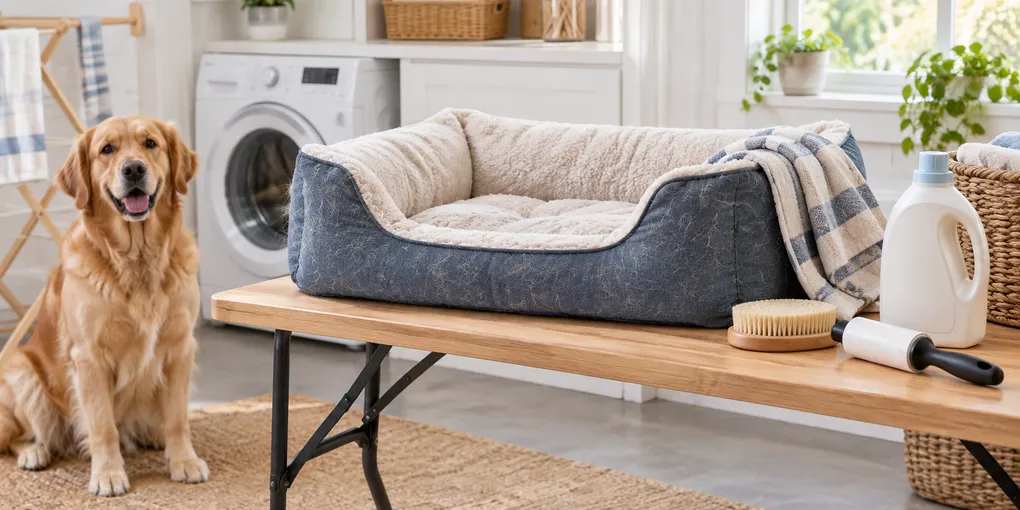
Do not put a fur-covered bed straight into the washer. Water mats hair and can move it into the pump, filter or rubber seal. Shake the bed outdoors if practical, then vacuum the surface, seams, underside and crevices. A lint roller, rubber glove or soft upholstery brush can lift the remaining coat.
If the bed has dried mud, let it dry fully and brush or vacuum it away. For wet messes, use paper towels to lift the liquid without rubbing it deeper into the fabric. Keep the dirty bed away from clean laundry until the pre-cleaning step is complete.
How to wash a removable cover
1. Pretreat stains
Blot accidents instead of scrubbing them outward. Apply a pet-safe stain treatment only if the care label permits it, and test an inconspicuous area first. Never combine bleach, ammonia, vinegar or other cleaners. A stronger mixture can damage fabric and create dangerous fumes.
2. Use a mild detergent and approved cycle
Turn the cover inside out if the label allows it, close zippers and wash it at the warmest permitted temperature. Use a modest amount of mild, fragrance-free or dye-free detergent. An extra rinse is useful when the fabric can hold soap or your dog has sensitive skin.
Wash the cover alone or with similar washable pet bedding when the load remains loose enough to move. If the cover is too large for your machine, use a larger washer rather than compressing it into a small drum.
3. Dry according to the label
Air-dry when heat could shrink the fabric or weaken its shape. If a dryer is allowed, choose the stated setting and pause to check that the seams and corners are not overheating. Do not put a damp cover back over the insert: trapped moisture is an invitation to stale odor and mildew.
How to wash the insert or entire bed
If the label says the insert is machine-washable and it fits comfortably, use the same gentle detergent and approved temperature. Balance the load and run an extra rinse if needed. Check the washer drum, filter and rubber seal afterward for trapped hair or bits of stuffing.
For a bed that cannot go in the washer, use a clean bathtub or basin. Vacuum first, pretreat spots, then fill the tub with water at the label-approved temperature and a small amount of mild detergent. Press the bed under the water and work through the fabric gently for 10–15 minutes. Drain, refill with clean water and rinse until no slippery residue remains.
Do not twist foam or a thick cushion aggressively. Press water out with your hands, then roll the bed in clean towels and press again. Place it where air can circulate around every side. Turn it periodically and wait until the center is completely dry before reassembling it.
Cleaning between full washes
Vacuum the bed weekly, or more often for a heavy shedder. Spot-clean fresh marks promptly with a label-approved pet-safe product, then blot and air-dry. Wash blankets and removable liners on their own schedule. Keep food, wet toys and muddy collars off the sleeping surface when possible.
The CDC’s baseline for soft pet items is soap or detergent, warm water, scrubbing, rinsing and air-drying or a clean towel. You usually do not need a disinfectant for ordinary dirt. Consider the extra step only when the product instructions permit it and there is a clear reason, such as illness or fecal contamination.
When the bed should be replaced
Cleaning cannot fix every problem. Replace a bed or part when foam is crumbling, seams are open, the waterproof lining is peeling, the fabric stays damp in the middle or a foul odor returns after a complete wash and dry. Look for a replacement cover or insert first if the manufacturer sells one.
Use this quick schedule:
| Timing | Task |
|---|---|
| Every few days | Shake out or vacuum hair and dry debris. |
| Weekly | Wash the cover, blanket or bed as the care label allows. |
| After accidents or illness | Remove the item, clean promptly and follow any disinfection directions. |
| After washing | Inspect the washer seal and dry every layer completely. |
| When damage or odor persists | Replace the affected part or the whole bed. |
For related home routines, see our guides to cleaning a sofa, cleaning a rug, cleaning a mattress, washing clothes and keeping a home maintenance log.
Frequently Asked Questions
How often should you wash a dog bed?
Clean dog bedding about once a week, and more often after accidents, illness, heavy outdoor dirt or a strong odor. Vacuuming between washes helps, but it does not replace laundering when the bed is visibly soiled.
Can you put a dog bed in the washing machine?
Only when the care label allows it and the bed fits without overcrowding. Removable covers are often washable even when the insert is not. If the label is missing or unclear, hand-wash the item gently or ask the manufacturer.
What detergent is safe for washing a dog bed?
Use a mild detergent marked pet-safe, fragrance-free or free from dyes, and follow the care label. An extra rinse can help remove residue, especially for dogs with sensitive skin. Avoid mixing cleaners or adding unapproved disinfectants.
How do you clean a dog bed that does not have a removable cover?
Vacuum it, pretreat spots, then hand-wash it in a clean tub with warm water and mild detergent if the material allows. Rinse until the water runs clear, press out moisture without twisting the filling and air-dry completely.