Quick answer
Empty the backpack, check its care label, and spot clean it first with lukewarm water and a small amount of mild soap. Hand wash only when the materials allow submersion; machine wash only when the label permits it. Rinse thoroughly, open every compartment, and air dry upside down in a shaded, ventilated place. Never put a coated, framed, leather, or label-restricted pack in a washer or dryer.
A backpack is easy to clean badly. A hot wash can damage a coating, a careless soak can leave foam damp for days, and a closed pocket can turn a simple rinse into mildew. The safest routine is therefore not “throw it in the machine.” It is a short decision process based on the bag’s care label, materials, and the kind of dirt you need to remove.
This guide works for school bags, daypacks, travel backpacks, and many hiking packs. If the maker gives different instructions, follow those instructions first.
Start with the care label
Find the label inside the main compartment or check the manufacturer’s care page. Look for three decisions:
- Spot clean only: Keep the pack out of a tub and washer. Use a damp cloth or soft brush.
- Hand washable: You may be able to submerge the fabric, but remove frames and open every compartment before you do.
- Machine washable: Use the gentlest permitted program, cold water, and a protective laundry bag.
When there is no label, choose the least aggressive option: spot clean first and test an inconspicuous area. Be especially cautious with leather, glued details, rigid frames, waterproof coatings, laminated fabrics, foam-heavy harnesses, and bags with electronics. “Water-resistant” does not mean “safe to soak.”
Gather a small cleaning kit
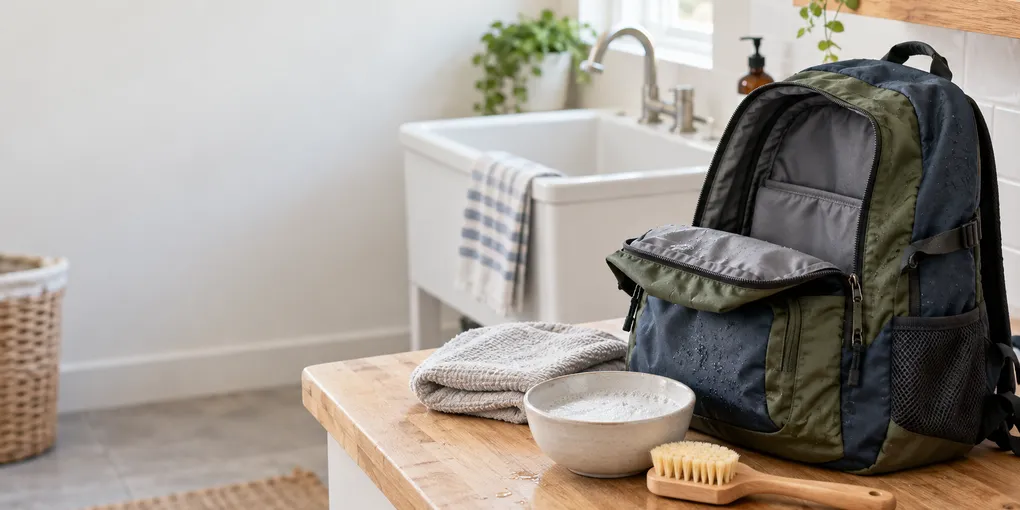
You need a vacuum with a soft attachment or a soft brush, two clean cloths, a soft toothbrush for seams and zippers, a basin or tub if the label permits submersion, and a small amount of mild detergent. Avoid bleach, fabric softener, strong solvents, abrasive powders, and heavily fragranced cleaners. A little soap is easier to rinse out than a lot.
1. Empty and inspect the backpack
Unzip every compartment and check the small pockets. Remove papers, crumbs, pens, batteries, and anything that could leak. Take out a hydration reservoir, laptop insert, removable frame, hip belt, or other detachable component if the design allows it. Photograph complicated straps before removing them.
Shake the open bag outside, then vacuum seams, corners, the bottom panel, and the space around zippers. Brush dried mud loose rather than scrubbing it into wet fabric. Check for loose threads, peeling coating, damaged seams, or a broken zipper. Cleaning is a good time to notice damage before water makes it worse.
2. Spot clean before you soak
Mix lukewarm water with a few drops of mild soap. Dip in a cloth, wring it nearly dry, and dab a hidden patch first. If the color does not bleed and the finish does not change, work on the dirty areas with the cloth or a soft brush.
Target shoulder straps, the bottom panel, grab handles, and food or drink marks. Use a toothbrush lightly around zipper teeth, but do not force grit deeper into the slider. For a stubborn stain, let the damp soapy cloth sit on the mark briefly, then lift it with gentle strokes. Do not flood padded sections: foam holds water and takes longer to dry.
Wipe the cleaned area with a second cloth dampened with plain water. This removes soap without saturating the whole bag. Spot cleaning is often enough for a backpack that has surface dirt or a small spill.
3. Hand wash only when the materials allow it
If the label permits hand washing, fill a clean tub or large sink with lukewarm water. Hot water can encourage dye transfer and may stress finishes. Add a small amount of mild detergent and dissolve it before placing the pack in the water.
Submerge only what needs cleaning. Support the pack instead of pulling on wet straps, and use a soft brush or cloth on the fabric. Pay attention to seams, the base, pockets, and sweaty shoulder areas. Do not aggressively scrub printed graphics or coated surfaces.
Drain the dirty water and rinse with clean, cool-to-lukewarm water until it runs clear and no slippery soap remains. Press water out gently. Do not twist a structured pack or wring padded harnesses, because that can distort the shape and strain seams. Rolling the bag in a clean towel can remove some excess moisture.
4. Treat a machine-washable pack as an exception
A machine is appropriate only when the care label or manufacturer explicitly permits it. Remove rigid frames and detachable pieces. Leave zippers open, place the pack in a mesh laundry bag or pillowcase, and use a small amount of mild detergent on a cold, gentle cycle.
Stay nearby during the cycle. If the bag bunches into a heavy knot, pause the machine and spread it out. A pack with a metal frame, leather panels, glued construction, electronics, or a water-repellent coating should not go in the washer unless its maker says otherwise. Do not add fabric softener: it can leave residue and change how technical fabric handles moisture.
5. Dry it completely, with every pocket open
Drying is part of cleaning, not an afterthought. Open the main compartment, front pocket, bottle pockets, and small organizers so air can reach the seams and corners. Hang the pack upside down in a shaded, well-ventilated place, or support it on a rack so water can drain without stretching the straps.
Avoid radiators, hair dryers, tumble dryers, and strong direct sun. Heat and repeated tumbling can damage synthetic fabric, foam, coatings, and shape. Turn the bag occasionally and feel the thickest padded area before storing it. If it feels cool or clammy, it is not dry yet. A musty smell after cleaning usually means moisture is still trapped somewhere.
Prevent the next deep clean
Shake out crumbs after trips and wipe small spills promptly. Air the bag after a sweaty hike instead of closing it immediately. Keep wet rain gear separate when possible, and do not store the backpack in a damp basement or hot attic. A rain cover or liner can reduce dirt and moisture, but it still needs to dry before it is packed away.
For related routines, see how to clean a water bottle, how to pack a carry-on, and the home maintenance log.
The durable rule is simple: read the label, start with the smallest amount of water, rinse away soap, and wait until every hidden layer is completely dry.
Sources
Frequently Asked Questions
Can you put a backpack in the washing machine?
Only if the care label or manufacturer says it is machine washable. Remove frames and detachable parts, use a laundry bag, cold water, a gentle cycle, and mild detergent. When the label is silent or says spot clean, hand clean the pack instead.
How do you clean a backpack without washing it?
Empty it, vacuum or brush out dry debris, then wipe dirty areas with a cloth or soft brush dipped in lukewarm water with a little mild soap. Wipe again with clean water and air dry every pocket fully open.
How do you get a smell out of a backpack?
Empty the bag and air it out first. Spot clean sweat or food residue with mild soapy water, rinse the cloth so you do not leave soap behind, and dry the bag completely in moving air. Do not mask dampness with fragrance.
Can you put a backpack in the dryer?
Usually no. Dryer heat and tumbling can damage coatings, foam, seams, shape, and synthetic fabric. Air dry the backpack upside down, with all compartments open, away from direct heat and strong sun.