How to Meal Plan for the Week: 8 Simple Steps to Save Time and Money
Quick answer
Meal plan for the week by counting the evenings you will really cook, checking your fridge, freezer, and pantry, choosing meals that share ingredients, and writing one grocery list for the gap. Leave a flexible night for leftovers or schedule changes, and refrigerate cooked food promptly.
Editorial note: This is general information, not professional advice. Check the linked sources and current local guidance before acting.
The most stressful part of dinner is not the cooking — it is the deciding. At 6 pm, after a long day, you stand in front of an open fridge hoping an answer appears. The grocery store becomes the same problem on a larger scale: you buy what is easy, pay too much for it, and throw away whatever you did not eat.
Meal planning fixes that. It is not about eating the same meal every day — it is about deciding once, for an entire week, so that every evening is a small task instead of a big decision. The whole routine takes about 30 minutes a week: one planning session, one grocery list, and only the prep that makes the next few meals easier. USDA MyPlate likewise starts with food already on hand, a written plan, leftovers, and a store-section grocery list. Here is a routine that survives real life without promising a specific saving for every household.
Step 1: Anchor the plan to your calendar, not your appetite
Before you plan meals, plan the week. Look at your calendar — work meetings, gym, hobbies, pickups, and the evenings you are simply not home. Write down how many dinners you actually need, and how many of those need to be quick.
Start with the number of evenings you will really cook, then plan one fewer dinner if leftovers or a meal out can fill the gap. Do not plan a 40-minute recipe for a day where you have 15 minutes. The plan must fit the week you actually have, not the week you wish you had.
Step 2: Take a 10-minute inventory
Open the fridge, freezer, and pantry before you plan a single meal. Note the basics: which proteins, vegetables, rice, pasta, sauces, and half-used ingredients are already there.
This is the step that makes the rest of the routine cheap: every meal you build from what you already own is a meal you do not have to buy. Some planners write the inventory on a whiteboard on the fridge; others just take a photo with their phone. Either works — the point is that the plan starts at home, not in the store.
Step 3: Choose a meal strategy you can repeat
A weekly plan is easier to keep when it follows a pattern. Pick one that sounds boring and works — boring is what makes it sustainable:
- Cook twice, eat three times. Two big dinners (a roast, a curry, a tray of chicken) produce intentional leftovers for the next day’s lunch or second dinner.
- Fixed slots. Keep the same weeknight themes: Monday = pasta, Tuesday = stir-fry, Wednesday = leftovers, Thursday = oven tray, Friday = something fun. You only pick the specific recipe, not the structure.
- Three-day cycle. Plan 2–3 dinners, cook them, and rotate. You eat the same thing every three days instead of something different every night.
Write down your chosen strategy somewhere you will see it. It takes the weekly decision from “what do we eat” to “what goes in tonight’s slot”.
Step 4: Build the plan around overlapping ingredients
The easiest way to waste food is to buy eight different ingredients that each get used in exactly one meal. Instead, plan meals that share ingredients — one bag of spinach, one batch of rice, one pack of mushrooms can carry three dinners.
A simple trick: plan a base (rice, potatoes, pasta, bread), pick a protein, and then list vegetables and sauces that work with both. Recipes from the same cuisine family — say, two stir-fries and a curry — naturally overlap. Fewer unique ingredients means less waste and a shorter grocery list. If you have a windowsill or a balcony, herbs and a few greens can enter the plan too — the vegetable pot-growing guide covers the beginner-friendly basics.
Step 5: Write the shopping list by aisle
Now translate the plan into one list, ordered the way your store is laid out: vegetables, meat, dairy, pantry, frozen. Writing this into a grocery-list app on your phone means it follows you there — and the same list app should be installed on your partner’s phone too, so either of you can add items. (If your apps are scattered across devices, the universal device access guide covers a setup where the same core apps work everywhere.)
Check the list once and delete anything you already own. Then check it against your strategy: every planned dinner should have its ingredients on that list.
Step 6: Shop with the list, not with your eyes
Go to the store with the list and the plan. Two small rules save real money:
- Shop after a meal, not hungry. Hunger tends to add snacks and ready meals this week’s plan does not include.
- Compare unit price, pack size, and ingredients before choosing a store brand. A lower shelf price is not automatically a lower cost if the pack is smaller or you will not use it; the subscription audit shows the same comparison logic applied to recurring costs.
Keep the receipts for two weeks if you want to know your actual food spending — it is often lower than people assume, and the gap goes straight to the bottom line.
Step 7: Do one prep hour on the weekend
Cooking gets easier the moment the plan is partly done. Pick one hour — Sunday afternoon works — and do only the tasks that shorten weeknight cooking:
- Wash and chop the vegetables for the first two or three dinners; store them in containers or zip bags. If the knife drags instead of slicing cleanly, the knife-sharpening guide shows how to restore the edge before prep.
- Cook a big batch of rice — the how to cook rice guide gets the ratio and timers right — quinoa, or potatoes and refrigerate it.
- Marinate the meats, or weigh out the portions for the week.
- Boil eggs — the easy-peeling method makes this a 10-minute job — and pre-cook beans or lentils, splitting them into portions. Label the container with the date so the oldest portion is used first.
This is not “batch cooking for the whole month”. It is one hour that buys four calm evenings. Almost everything prepared on Sunday can be either heated or finished in 10–15 minutes on a weeknight.
Step 8: Review for five minutes and adjust
Every Sunday, before you make the new plan, look at what happened last week: which meals were skipped, which leftovers went to waste, which dinners everyone actually liked. Then adjust, and repeat.
- No one ate the salad? It was too much work on a busy night — move it to the weekend.
- The plan fell apart on Thursday? Swap the hardest meal to a calm evening, and make leftovers the Thursday default.
- You kept one box of pasta and one jar of sauce that everyone liked? Call those “anchors” and build next week around them.
The same five-minute review applies to the other routines in your week — the home energy bill post follows the same idea for utilities: measure, adjust, repeat. A meal plan is a feedback loop, not a contract.
A worked example: four dinners, one flexible night
Imagine a week with late meetings on Tuesday and Thursday. The household has rice, frozen vegetables, chickpeas, eggs, and half a jar of curry paste. Instead of planning seven separate dinners, use the inventory and calendar like this:
| Night | Plan | Why it belongs there |
|---|---|---|
| Monday | Chickpea curry with rice | Uses the open curry paste and makes leftovers |
| Tuesday | Egg fried rice with frozen vegetables | Fifteen-minute fallback for a late meeting |
| Wednesday | Curry leftovers with a fresh side | Uses the oldest cooked meal first |
| Thursday | Sheet-pan vegetables with eggs | Flexible, low-prep meal |
| Friday | Unassigned leftover or meal out | Slack keeps one missed night from breaking the plan |
The shopping list is only the gap: onions, a fresh side vegetable, eggs if the carton is short, and whatever is needed for the sheet-pan meal. Before cooking a large batch, check the storage clock. FoodSafety.gov says cooked leftovers are generally for 3–4 refrigerated days; refrigerate perishables within two hours, use shallow containers for large batches, and reheat leftovers to 165°F/74°C. Freeze food promptly if it will not be eaten within that window.
When to change or stop the plan
Do not force a weekly plan when you already have a stable rotation, shop daily by choice, or cannot predict your evenings. Use a three-dinner plan or component plan instead. For allergies, medically prescribed diets, pregnancy, or food-safety questions involving a higher-risk person, use advice from a qualified clinician or public-health authority; this is a household planning method, not individualized nutrition or medical advice.
Quick-win checklist
- Calendar checked — do I know which evenings are actually busy?
- Fridge, freezer, and pantry inventoried first
- One repeatable meal strategy chosen (cook twice / fixed slots / three-day cycle)
- Meals share ingredients — fewer unique items, less waste
- Grocery list written by aisle in a shared list app
- Shop with the list, after a meal, store brands first
- One Sunday prep hour: chop, cook grains, portion protein
- Five-minute review every Sunday — adjust, then plan again
Meal planning does not need to be a lifestyle — it is a 30-minute weekly routine that removes the worst decision of the day, spends less at the store, and stops food from going to waste. Start with a small plan for just three dinners this week. That is enough to see the difference.
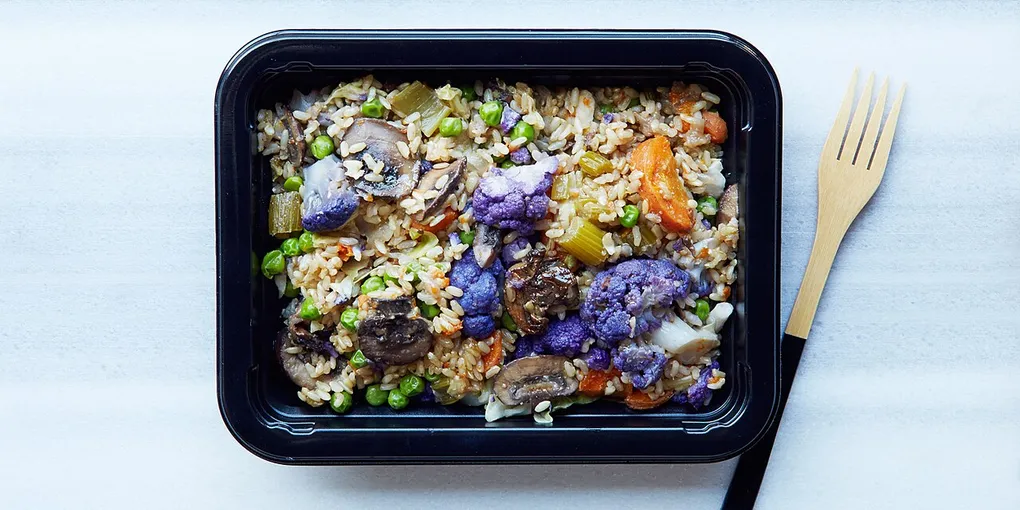
Hero image: Ella Olsson from Stockholm, Sweden, CC BY 2.0, via Wikimedia Commons.