How to Freeze Food: A Practical Guide to Safer, Less Wasteful Meals
Quick answer
Freeze food in portions after cooling it promptly, use packaging that limits air exposure, label each package with what it is and when it was frozen, and keep the freezer at 0°F (-18°C) or below. Thaw food in the refrigerator, cold water, or a microwave—not on the counter—and use official storage charts as quality guidance rather than treating them as a substitute for safe handling.
Freezing is most useful when it becomes a small routine rather than a last-minute rescue for food at the back of the refrigerator. A good routine lets you save a cooked batch, a sale purchase, or ingredients you will not use this week without creating a freezer full of anonymous parcels.
The safety basics matter more than a perfect container system. The FDA advises keeping a freezer at 0°F (-18°C) or below, getting perishables cold promptly, and leaving enough room for air to circulate. At that temperature, properly handled food remains safe, though its quality gradually declines. Freezing stops most bacteria from growing; it does not make unsafe food safe again.
Start with food that is still in good condition
Freeze food while it still looks, smells and feels normal. Do not use the freezer to postpone a decision about food you already suspect has spoiled. If a package is leaking, a leftover is unidentifiable, or food has sat too long at room temperature, the safer choice is to discard it.
For groceries and cooked food that need refrigeration, use the two-hour rule: refrigerate or freeze within two hours, or within one hour when the air temperature is above 90°F (32°C). The FDA’s safe-handling guidance also says not to thaw perishable food on the counter.
Pick portions you will realistically use
A frozen family-sized casserole is only convenient if your household will eat it. Before packing, decide how you will use the food later:
- single portions for lunch;
- a two-person dinner portion;
- ingredients for one recipe, such as cooked beans or chopped herbs;
- a larger batch for guests or a planned busy week.
Small, flat portions freeze and thaw more evenly than one deep block. They also stack well in a drawer or bin. For liquids, leave some headspace because they expand as they freeze.
Cool cooked food promptly, not endlessly
Do not leave a big pot on the counter for hours to reach room temperature. Divide hot leftovers into shallow containers so heat can escape faster, then refrigerate or freeze them promptly. The USDA notes that shallow containers help food cool rapidly.
If a container is still giving off a lot of steam, a brief uncovered cooling period in the refrigerator can be practical; cover it once it has stopped steaming and follow your appliance instructions. The important point is to avoid a long countertop wait and to avoid crowding the refrigerator or freezer so tightly that cold air cannot circulate.
Use packaging that keeps air out
Freezer burn is a quality problem caused by dry air reaching the food. It does not automatically mean the food is unsafe, but it can leave tough, dry or flavourless patches.
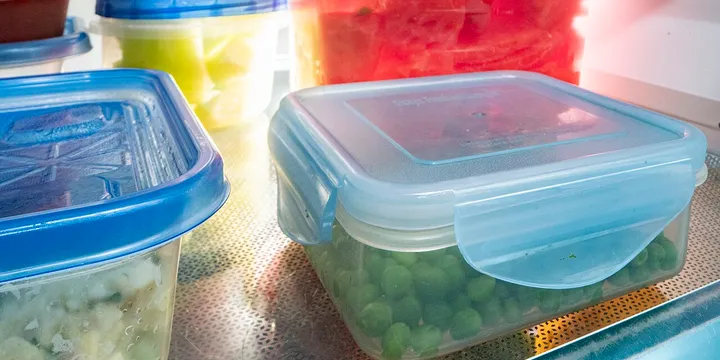
Choose freezer-safe bags, containers, wrap or paper. Press excess air from a bag before sealing it. For irregular food such as bread or raw meat, wrapping closely and then placing it in a freezer bag creates a useful second barrier. Make sure a lid is truly closed before laying a container on its side.
Avoid putting a thin retail bag straight into long-term freezer storage unless it is designed for that purpose. It tears easily and lets food absorb freezer odours.
Label every package before it disappears
A label turns a freezer into a usable inventory. Write three things directly on the package:
- What it is — be specific: “tomato soup,” not “red.”
- How much is inside — one portion, two servings, or 500 g, for example.
- The freeze date — use a clear format such as 2026-09-06.
If the food needs a simple next step, add that too: “thaw overnight” or “reheat from frozen.” Put newer packages behind older ones so the oldest good-quality food is easiest to reach first.
A short grocery list and a visible freezer list on the door can prevent duplicate shopping. For a small freezer, list only broad categories and cross an item off when the last portion is used.
Freeze in a single layer first
Lay bags or containers in a single layer until firm, then stack them. Flat bags freeze quickly and can be filed vertically like folders. This makes labels visible and reduces the need to dig through a frozen pile.
Keep raw meat, seafood and poultry contained so a leak cannot touch ready-to-eat food. Group similar items in a bin: breakfasts, vegetables, cooked meals, bread, or raw proteins. The system does not need matching containers; it needs clear boundaries and labels that are still readable when cold.
Keep the freezer cold enough
Use an appliance thermometer rather than trusting a dial alone. The FDA recommends 0°F (-18°C) or below for a freezer. A very full freezer can hold cold well, but air still needs room to move; do not block vents or force the door shut against an overfilled shelf.
Open the door with a plan. Take out several things at once, close it, then decide what to keep. During a power outage, keeping the freezer closed is usually more useful than repeatedly checking it. FoodSafety.gov provides specific outage guidance, including how long a full or half-full freezer can hold temperature and when food can be refrozen.
Use storage charts as quality planning tools
Freezer-storage charts can help you decide what to use first. They do not mean food becomes unsafe the day after a suggested period. The FoodSafety.gov cold-storage charts explain that freezer times are for quality when food stays continuously at 0°F (-18°C) or below.
Use that distinction to plan meals: give older bread, cooked dishes and highly seasoned foods priority, then replace them with a fresh batch. If a package has heavy frost, freezer burn or a strange appearance after thawing, decide based on the food’s condition and when it was handled—not just the date written on it.
Thaw with one of three safe methods
Plan thawing before dinner time. The FDA lists three safe methods:
| Method | Best for | What to remember |
|---|---|---|
| Refrigerator | Most meals and larger portions | Put the package on a tray to catch drips; allow time. |
| Cold water | A sealed package when you need it sooner | Keep the water cold and change it as needed; cook promptly. |
| Microwave | Food you will cook immediately | Some areas may begin cooking, so move straight to cooking. |
Never thaw food at room temperature on a counter. The centre may still be frozen while the outside is warm enough for bacteria to grow. If you use a microwave or cold-water method, cook the food promptly rather than returning it to the refrigerator for a long delay.
Build one weekly freezer check into your routine
A ten-minute check prevents the freezer from becoming storage for forgotten food. Before shopping or meal planning:
- scan labels for older packages;
- move one or two items into the refrigerator to thaw safely;
- add those items to your meal plan;
- discard packaging that has leaked or torn; and
- write down any staples you are close to running out of.
This works especially well with a small-kitchen organization routine: the freezer becomes part of the same visible, use-first system as the pantry and refrigerator.
A sensible rule for refreezing
Refreezing depends on how food was thawed and handled. The USDA’s freezing guidance says food thawed in the refrigerator can be safely refrozen, though quality may decline. Food thawed in cold water or a microwave should be cooked before refreezing.
When in doubt, choose safety over saving a package. Do not taste questionable food to test it, and use local public-health guidance if an outage, illness risk or unusual storage situation is involved.
A freezer that helps instead of hiding food
The best freezer organization is deliberately boring: safe temperature, small useful portions, close packaging, clear labels and one regular check. It makes food easier to find, reduces waste from forgotten leftovers, and gives you a practical backup for nights when cooking from scratch is not realistic.
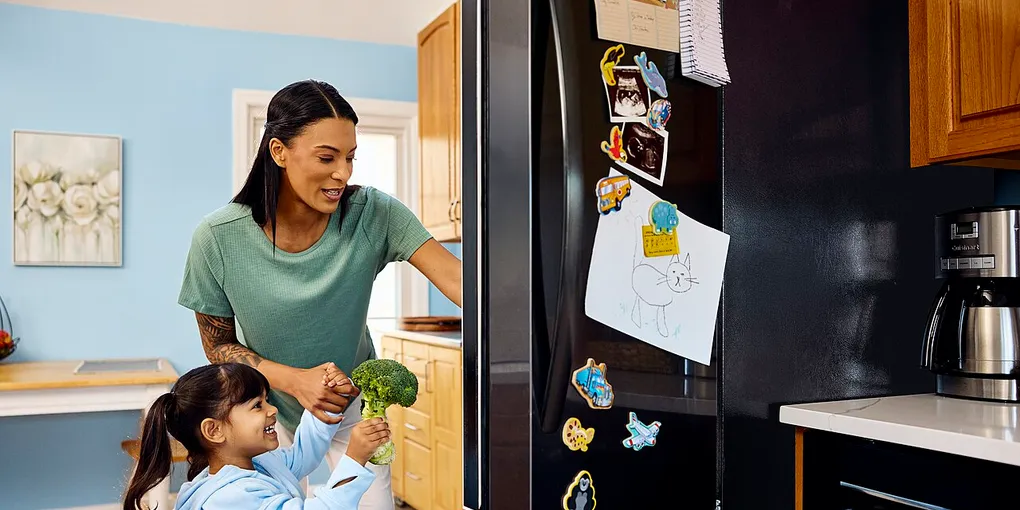
Hero image: USDAgov, Public domain, via Wikimedia Commons.
Sources
Frequently Asked Questions
What temperature should a freezer be?
Keep a freezer at 0°F (-18°C) or below and check it periodically with an appliance thermometer. That temperature keeps properly handled food safe, although quality can gradually decline during long storage.
Can I freeze leftovers?
Yes. Divide leftovers into shallow containers or smaller portions so they cool quickly, then refrigerate or freeze them promptly. The FDA says perishable food should not stay at room temperature longer than two hours, or one hour when it is above 90°F (32°C).
What is the safest way to thaw frozen food?
Thaw food in the refrigerator, in cold water, or in a microwave. Do not thaw it on the counter, where the outside can enter a temperature range that allows bacteria to grow while the centre is still frozen.
How long does frozen food last?
Food kept continuously at 0°F (-18°C) or below remains safe indefinitely when it was handled safely before freezing. Published freezer-storage times are mainly quality guidance: flavour, texture and moisture can decline over time.
_Food_and_Nutrition_Service%E2%80%99s_(FNS)_Special_Supplemental_Nutrition_Program_for_Women,_Infants,_and_Children_(WIC)_family_in_everyday_environments_-_87.jpg)