Quick answer
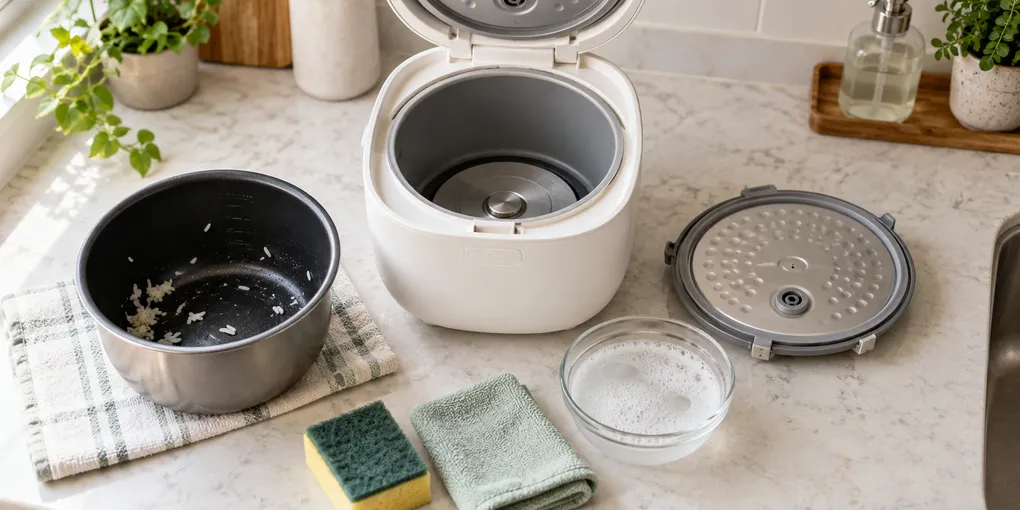
Unplug the rice cooker and let it cool. Wash the removable inner pot, lid, steam cap, paddle, and cup with warm water, dish soap, and a soft sponge; wipe the powered housing, heating plate, sensors, and cord with a wrung-out or dry cloth. Never immerse the base, use metal scrubbers, or reassemble parts while damp.
Cleaning a rice cooker is simple once you separate the washable parts from the powered housing. The inner pot, lid, steam cap, paddle, and measuring cup can usually be washed in the sink. The base, heating plate, controls, sensors, and cord should be cleaned with controlled wiping so water cannot reach electrical components.
The model manual always wins: removable lids, vents, gaskets, dishwasher instructions, and cleaning products vary. The routine below is a safe general starting point for most countertop rice cookers, based on the practical concern raised in this r/Cooking discussion and the manufacturer guidance from Tiger and Zojirushi.
What you need
Gather warm water, a small amount of dish soap, a soft sponge, a microfiber cloth, cotton swabs for narrow vent openings, and a dry towel. Keep a soft brush available only if your manual allows it. Do not reach first for steel wool, a stiff scouring pad, abrasive powder, or a sharp tool: these can scratch a nonstick pot, deform a seal, or damage a finish.
The safe after-use routine
1. Unplug and cool the cooker
Switch the cooker off, unplug it, and wait until the pot, lid, steam cap, and heating area are cool. This prevents burns and means you are not wiping a hot surface with a wet cloth. If the cooker has just finished its keep-warm cycle, give it extra time; warm residue is easier to soften than to scrape.
2. Remove only the parts your manual identifies
Lift out the inner pot with two hands. Detach the inner lid, steam cap, dew collector, gasket, paddle, and measuring cup only if your model is designed for removal. Take a quick photo before removing unfamiliar pieces so you can put them back in the correct order. Never force a lid or pry at a gasket with a knife.
3. Soften stuck rice instead of scraping it
Fill the removable pot with warm water until the dried rice is covered and let it sit. Once the starch loosens, wash with dish soap and a soft sponge. A plastic or wooden utensil can help lift a softened patch, but metal tools can score a nonstick coating. Empty the soak water into the sink; do not carry a full pot over the cooker base.
4. Wash and rinse the removable parts
Wash the pot, lid, cap, paddle, cup, and collector separately. Pay attention to the underside of the lid, the vent path, the gasket groove, and any seam where starch collects. Rinse away soap and place the pieces on a clean towel. If your manual says a component is dishwasher-safe, follow that instruction; otherwise hand-wash it.
5. Wipe the base, plate, sensors, and cord
Use a barely damp, well-wrung cloth on the outside and inside edge of the housing. Wipe the heating plate and center or side sensors carefully, removing loose grains before they harden. Use a dry cloth on the power cord. Keep water away from the control panel, vents, seams, and the cavity beneath the removable pot. Never rinse, hose, or immerse the base.
6. Dry completely before reassembly
Dry every removable part with a clean towel and leave it separated until no droplets remain in the vent, gasket, or lid recess. Before replacing the pot, wipe its outside and bottom dry. Moisture or a grain trapped between the pot and heating plate can affect heating and create a scorched smell. Reassemble only when the parts are fully dry.
Deeper clean for odor or buildup
When a normal wash does not remove an odor, inspect the inner lid, steam vent, gasket, dew collector, and the recess where the lid or cord connects. Wash removable pieces with warm soapy water, then rinse and dry them thoroughly. Clear a vent opening with a damp cotton swab or the method specified by the manual; do not push debris deeper.
Manufacturers disagree on specialty cleaners. Tiger’s model guide describes a sanitizing soak for removable parts, while Zojirushi warns that vinegar and harsh or abrasive cleaners can damage some components. That is why a labeled product and your cooker’s manual should determine whether a disinfecting solution is appropriate. Never mix bleach with vinegar, ammonia, or another cleaner, and do not put any chemical solution into the electrical base.
When cleaning is not enough
- If water entered the housing, unplug it immediately. Do not switch it on to “test” whether it still works; follow the manufacturer’s safety or service instructions.
- If a gasket has cracks, stays misshapen, smells after repeated washing, or allows steam to escape, look up the correct replacement for your model.
- If the inner pot coating is peeling, deeply scratched, or warped, replace the pot rather than continuing to cook in it.
- If mold remains in a porous or damaged part, or the cooker develops a persistent electrical smell, stop using it and contact the manufacturer or an authorized service center.
For everyday care, wiping the lid and rim after each use and washing the removable parts before starch dries prevents most difficult cleanups. A few minutes of gentle cleaning also protects the coating, keeps the vent open, and makes the next batch of rice easier to cook.
Related guides
For the same gentle, parts-first approach, see how to clean a coffee maker, how to clean a blender, and how to keep a home maintenance log.
Frequently Asked Questions
Can I put water inside the rice cooker base?
No. The powered housing, heating plate area, controls, and cord should be wiped with a damp or dry cloth rather than rinsed or immersed. If liquid has entered the unit, unplug it and follow the manufacturer’s instructions before using it again.
What is the safest way to clean a nonstick rice-cooker pot?
Soak stuck rice with warm water, then use dish soap and a soft sponge. Avoid steel wool, metal utensils, abrasive powders, and the rough side of a sponge because they can damage the coating.
How often should I clean a rice cooker?
Wipe the lid, pot rim, and exterior after every use, and wash the removable cooking parts before residue dries. Inspect the steam vent, gasket, sensors, and air openings during a deeper clean whenever odors or buildup appear.
Why does my rice cooker smell after cleaning?
Check the inner lid, steam vent, gasket, dew collector, and hidden recesses for starch or trapped moisture. Wash removable parts, dry them completely, and check the manual for replacement guidance if odor or mold remains.