Quick answer
Let the Moka pot cool, take it apart, empty the grounds, and rinse the parts with warm water. Dry every piece separately before reassembly. Descale only when needed, use the method your material and manual allow, and never put an aluminum pot in the dishwasher.
A Moka pot is easy to clean once you separate the everyday rinse from the occasional deep clean. The routine is mostly dry-handling and warm water: let the pot cool, empty the grounds, rinse each part, and let everything dry before you screw it back together. The tricky part is knowing when material, limescale, a tired gasket or your model’s manual changes the answer.
This guide is a safe starting point for common aluminum and stainless-steel stovetop pots. Your owner’s manual takes priority, especially if it specifies a detergent, dishwasher use, removable parts or a particular descaling product.
Before you start: identify the material
Traditional Moka pots are often aluminum, while newer models may use stainless steel or a mix of materials. Look at the base, packaging or manual before cleaning. Aluminum can discolor or develop a rough surface after harsh alkaline dishwasher detergent. Stainless steel is generally more tolerant, but that does not make every handle, valve or gasket dishwasher-safe.
Use this simple rule when advice conflicts:
| Part or situation | Safe starting point |
|---|---|
| Everyday coffee residue | Cool, disassemble, rinse with warm water, dry separately |
| Aluminum body | Avoid the dishwasher and harsh detergent unless the manual explicitly allows it |
| Filter plate and gasket | Remove only as directed; clear grounds gently and inspect for wear |
| Mineral scale | Use the maker-approved descaling method and rinse thoroughly |
| New pot | Follow the first-use instructions; they may allow mild soap or water-only cycles |
Set out a soft cloth and, if needed, a soft toothbrush. Avoid abrasive pads, metal picks and aggressive scrubbing. Have a stable place where the pot can air-dry in separate pieces.
1. Let the pot cool before taking it apart
Turn off the heat and wait until the metal is safe to touch. Do not cool a hot Moka pot under a sudden stream of cold water: the quick temperature change is unnecessary stress, and you can burn yourself on the handle, base or steam.
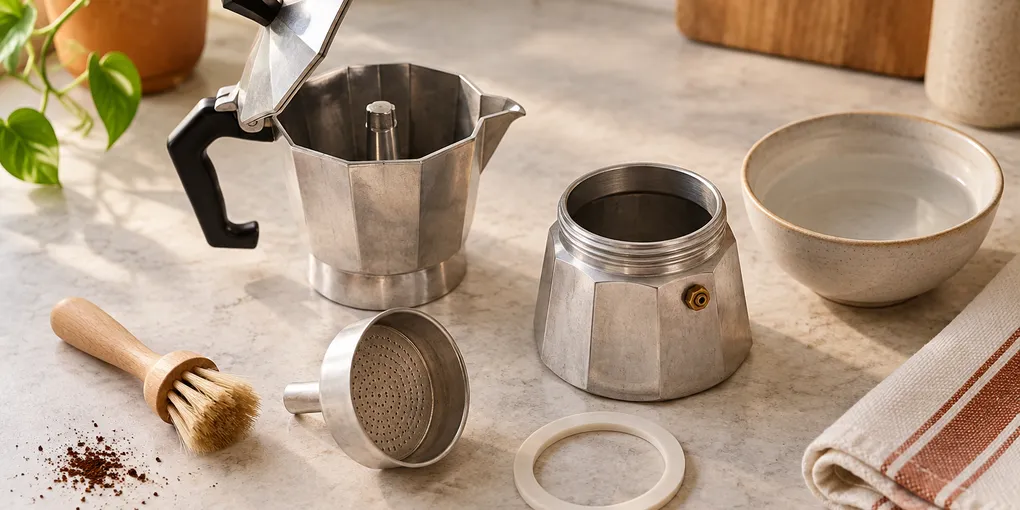
Once it is cool, unscrew the upper chamber from the lower chamber. Lift out the filter basket and empty the spent coffee into the compost or bin. Do not knock the basket hard against a countertop; a bent rim can stop the seal from closing properly.
2. Rinse after every brew
Rinse the upper chamber, lower chamber, basket and visible filter surfaces with warm running water. Rub away loose coffee oils and grounds with your fingers or a soft cloth. Check the underside of the filter plate and the area around the gasket, where fine grounds often hide.
For a traditional aluminum pot, warm water is the sensible default because it avoids leaving detergent behind and matches the daily-care guidance from Bialetti. If your manual specifically permits mild soap, use only a small amount, rinse exceptionally well, and do not assume that permission extends to the dishwasher.
Never leave a thick layer of old grounds sitting in the filter. A brief rinse each time is easier than trying to remove a hard, oily crust later.
3. Dry every part before reassembly
Dry the pieces with a clean, soft cloth or leave them separated until they are completely air-dry. Do not screw a damp Moka pot back together for storage. Trapped moisture can encourage stale smells, mold around the gasket and corrosion or oxidation on vulnerable metal.
Store the pot loosely assembled or fully separated, depending on the manufacturer’s recommendation. The useful principle is that air should reach the gasket and the inside chambers. If the gasket remains compressed and damp for days, it can age faster and smell stale.
4. Clean the gasket and filter plate gently
The gasket is the ring that seals the upper and lower chambers. On models designed for it, remove the gasket and filter plate periodically and wipe away coffee residue with a damp cloth. A soft toothbrush can clear the holes in the filter plate. Work gently; do not enlarge the holes or pry against the aluminum with a sharp object.
Inspect the gasket while it is out. Replace it if it is cracked, brittle, permanently flattened or no longer seals. A leaking seal is not fixed by tightening the pot harder. If coffee or steam escapes around the join, stop using it until the gasket and filter are correctly seated or replaced.
5. Descale only when the pot needs it
White or chalky deposits, slower flow, a blocked filter hole or a mineral taste are signs that limescale may be building up. Hard water makes this happen sooner. Rinsing after every brew does not remove mineral scale, so occasional descaling is a separate job.
Use the solution and proportions your manual recommends. Bialetti describes a water-only brew cycle with citric acid or vinegar, followed by discarding the solution and rinsing the pot. GROSCHE describes a diluted vinegar treatment and a final water-only cycle. These approaches are useful references, but they are not permission to improvise a stronger acid mix or leave the gasket soaking.
If you descale with a liquid, keep the process controlled: use the lower chamber, do not add coffee, stay nearby while the pot heats, discard the first solution, and rinse all parts thoroughly. Run a plain-water cycle if the manual allows one. Never mix vinegar with bleach or another cleaner.
6. Clean a new pot differently
First-use instructions are often different from the routine for an established pot. A new Moka may need a careful wash to remove manufacturing dust or residue, followed by one or more water-only brew cycles. Some makers allow mild soap for this initial clean even when they advise against regular detergent on an aluminum pot.
Read the manual before assuming that the “never use soap” rule is universal. The important follow-through is the same: rinse away every trace, run the recommended water-only cycle, and dry the pot fully before storing it.
Mistakes that shorten a Moka pot’s life
- Putting aluminum in the dishwasher: harsh detergent and heat can alter the finish and leave the surface rough or discolored.
- Reassembling it while damp: moisture and trapped coffee residue make smells and gasket problems more likely.
- Using an abrasive scrubber: scratches can hold residue and make soft aluminum harder to maintain.
- Forcing a blocked filter: clear holes with the method your manual permits; do not widen them with a sharp tool.
- Ignoring the gasket: a cracked or flattened seal can cause leaks and unsafe steam escape.
- Descaling without checking the material: acid, heat and seals need model-appropriate instructions.
A simple cleaning schedule
After every brew, cool the pot, empty the basket, rinse the pieces and dry them separately. Every few weeks—or sooner with hard water—inspect the gasket, filter plate and valve for residue or scale. Descale when deposits or flow changes appear, rather than forcing a calendar that does not match your water. Replace worn seals according to the maker’s schedule or when they stop sealing.
If the pot suddenly tastes metallic, leaks, clogs or sputters unusually, stop and check the gasket, filter, valve and manual. A clean Moka pot should be simple to maintain: warm water for daily care, gentle handling for the small parts, and a deliberate deep clean only when the material and manufacturer support it.
For better results in the cup, pair this routine with how to make coffee at home and keep the rest of your kitchen routine repeatable with a home maintenance log.
Sources checked
- Bialetti: How to clean the coffee pot at home
- GROSCHE: How to Clean a Moka Pot
- Reddit r/Coffee discussion
Hero image: OpenAI image generation, original image created for lejnel.com, 2026-09-13.
Sources
Frequently Asked Questions
Should you use soap to clean a Moka pot?
For a traditional aluminum pot, start with warm water and follow the maker's manual; many manufacturers advise against regular soap because residue or harsh dishwasher detergent can affect the material and taste. A new pot may have different first-use instructions, and stainless-steel models can differ, so the manual wins.
How often should you descale a Moka pot?
Descale when you see mineral deposits, the valve or filter holes look obstructed, water is hard, or the pot's flow and flavour change. Rinse after every brew and use filtered water if limescale builds up quickly.
How do you clean a Moka pot gasket?
When the pot is cool, remove the gasket and filter plate if the design allows it. Wipe the gasket with a damp cloth, rinse away trapped grounds, inspect it for cracks or stiffness, and let it dry fully before replacing it.