Quick answer
Start with a broad, low-fee index fund inside a tax-advantaged account, automate a fixed monthly contribution, and leave it alone for years. Do this only after paying off credit card debt (around 20%+ interest) and building a basic emergency fund — both cost more than investing earns.
Editorial note: This is general information, not professional advice. Check the linked sources and current local guidance before acting.
Investing sounds like something you graduate into: a salary, a spreadsheet, a handlebar-moustache advisor. The reality is more boring. You need three things — the right account, one boring fund, and an automatic transfer on payday. Everything in this guide exists to get you to those three things, in the right order.
Here is the order that matters: debt first, emergency fund second, investing third. Skipping that order is the most common beginner mistake, because some debt costs more than investing can reasonably earn.
1. Pay off expensive debt before you invest
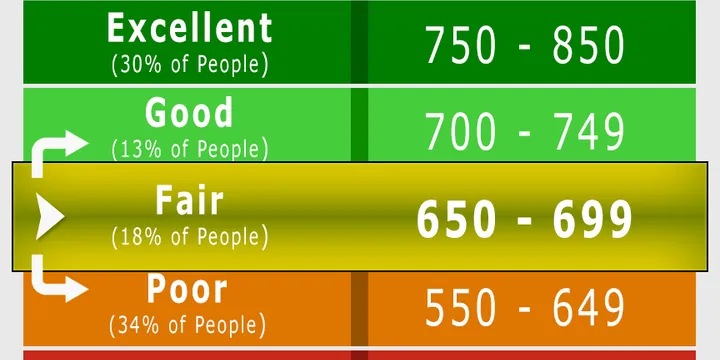
A credit card in the US carries an average interest rate of around 20–21% — more than double the stock market’s long-run average return. Paying down that debt is an instant, risk-free return of 20%. No investment reliably beats that. And paydown is also the fastest lever on your credit score — the 10 steps to improve it list the rest in order of impact.
The rule of thumb: any debt above roughly 7–8% interest should go before investing. Below that — a low student loan, a cheap car loan — it is usually fine to invest while you pay it down.
2. Build a basic emergency fund first
Investing is a long game. Your first year might end with your portfolio down — and it is exactly then that a car breaks or a laptop dies. If the emergency comes out of the portfolio, you lock in a loss. If it comes out of cash, the portfolio gets to keep working.
The target: 3–6 months of essential expenses in a savings account before you start investing. The full step-by-step is in the emergency fund guide — start small, automate it, and it arrives faster than you think.
3. Start early and stay put — time is the engine
The stock market’s long-run average is about 10% a year before inflation — historically around 7% after inflation. No single year looks like that. Years swing between +30% and −30%, and the average only appears over decades.
That is what makes every year you wait expensive. The same money started at 25 versus 35 has roughly twice as many decades to compound. You cannot control returns, but you can control time, and time is the bigger lever.
4. Open the right kind of account
Never let a broker pick your account type. The tax one answers your money first:
| Account type | What it is | Why start here |
|---|---|---|
| Tax-advantaged retirement account (401(k) in the US, pension schemes in many countries) | Money goes in pre-tax or with tax relief, grows untaxed | Often includes employer matching — free money |
| Tax-advantaged individual account (IRA in the US, ISA in the UK) | Same tax benefits, your own choice of funds | Best place for your own contribution |
| Regular brokerage account | Taxes on gains every year | Only after the above are used |
Two practical notes: if your employer matches contributions to a retirement plan, invest up to the match before anything else — that is a guaranteed 50–100% return. And most brokers now offer fractional shares, so a $100 deposit can buy a slice of an index fund even though one “full” share costs more.
5. Pick a boring fund — one fund is enough
Beginners do not need a portfolio. They need one broad index fund: a fund that owns hundreds or thousands of companies, tracking the whole market or the whole world.
The only number you care about is the fee, called the expense ratio. Good broad index funds cost 0.03–0.15% a year. Actively managed funds often cost 1% or more — and that 1% looks small until you do the math: over 30 years, a 1% annual fee silently removes about a quarter of your final balance. Fees are the one thing you can control; check them before anything else.
6. Automate a fixed monthly amount
Once the fund is chosen, set a monthly transfer and make it automatic — the day after payday. This is “pay yourself first” from the budget guide, pointed at your portfolio.
Regular fixed purchases also solve the timing problem: you buy more shares when prices are low and fewer when they are high, automatically. That is called dollar-cost averaging, and it removes the single most common beginner error — trying to guess when to enter.
7. Do not pick individual stocks yet
One company can go to zero. An index fund can’t — when one company collapses, the fund simply moves on. Diversification is the only free lunch in investing: you get most of the market’s returns without betting on any single story.
If stock picking tempts you, put it on a list and give it a date one year out. After a year of seeing your boring fund behave, you will likely agree the list was the better hobby.
8. Manage your own brain — the hardest step
Once the money is in, your job is almost done — and that is exactly where beginners sabotage themselves:
- Do not check the portfolio daily. A daily glance trains you to react to noise. A quarterly review is plenty.
- Do not sell during a crash. Selling after a 20% drop turns a temporary loss into a permanent one. The plan survives crashes; the panic doesn’t.
- Raise the amount, not the excitement. Each year or raise, nudge the monthly contribution up 1–2%. That compounding habit is what the whole game is about.
For the anxiety side of “waiting”, the overthinking guide has practical tools to keep a portfolio slump from becoming an 11 pm brain loop.
What about the risky stuff?
Crypto, options, single “hot” stocks, penny shares: treat these as money you can fully lose, capped at a small percentage you never need. They are seasoning, not the meal. Most beginners who try them first and learn later would have been better off in reverse.
Robo-advisors (automated services that pick and rebalance the funds for you) are a perfectly fine alternative to doing it yourself — they cost a bit more (roughly 0.25% a year) but require zero decisions.
Quick-win checklist
- Any credit card balance? Start there — 20% interest beats any investment
- Emergency fund at 3–6 months of essentials (see the guide)
- Employer match captured first, if you have one
- One broad index fund, expense ratio below 0.2%
- Automatic transfer set for payday — even $50
- Next review in 3 months, not tomorrow
Hero image: Unknown author, CC0, via Wikimedia Commons.
Sources
Frequently Asked Questions
How much money do I need to start investing?
Very little. Most brokers have no account minimum, and fractional shares let you buy a slice of a single index fund for a few dollars. A fixed $50 or $100 a month beats a vague plan to invest more later — the habit is worth more than the size of the first deposit.
Is investing safe? Will I lose my money?
In the short term, yes — the market regularly drops 20–30%, and you can lose money if you sell during a crash. Historically, broad index funds have recovered and ended higher over every 20-year stretch. That is why the whole method is built around time, automatic contributions and not selling in a panic.
What is the best investment for a beginner?
A broad, low-cost index fund — one that tracks the whole market rather than a single company, sector or country. It gives you instant diversification, and its fee (often 0.03–0.15% a year) matters more than any clever picking, because fees are the one cost you can control.
Can I invest with $100 a month?
Yes, and regular small amounts are actually a feature. Buying a fixed amount every month — no matter whether the market is up or down — averages your purchase price and takes timing out of the equation. That is called dollar-cost averaging, and it is the standard beginner approach.