How to Improve Your Credit Score: 10 Steps That Move the Needle
Quick answer
Start by pulling all three credit reports for free at AnnualCreditReport.com and fixing anything wrong. Then the real work is boring but effective: pay every bill on time (35% of a FICO score), keep card balances under 30% of the limit — ideally under 10% — and stop applying for credit you don't need. Utilization recovers within one or two billing cycles, while a single 30-day late payment can cost 60–100+ points and stay on your report for seven years.
Editorial note: This is general information, not professional advice. Check the linked sources and current local guidance before acting.
A better credit score is not a mystery. It is a formula with five inputs, and four of them are things you control this month. The fifth is time.
The honest headline first: there is no legitimate 30-day fix. The “raise your score 100 points by Friday” promise always ends at a subscription. But most people are surprised by how fast the two biggest levers work — utilization recovers within a billing cycle or two, and scores react to fixed errors within weeks.
Here are the ten steps that actually move the number.
1. Pull your real numbers first — all three of them
Before you change anything, know what you’re working with. In the US, your three reports (Equifax, Experian, TransUnion) are free every week at AnnualCreditReport.com — the only federally authorized site. Not once a year. Every week, permanently.
While you’re there, know which score you’re looking at:
- Free apps (Credit Karma, bank apps) show a VantageScore — fine for tracking trends, but most lenders pull a FICO score.
- FICO and VantageScore weigh things slightly differently, so a 690 in one app and a 715 in another is normal, not an error.
Pull all three reports, save or screenshot them, and write down your starting score from each. You can’t measure progress without a baseline.
2. Fix the errors on your reports
This is the highest-value step most people skip. In a large FTC study, about 1 in 5 consumers found an error on at least one of their reports — wrong balances, accounts that aren’t yours, even missed payments that were never late.
- Dispute directly with the bureau that shows the error (online is fastest). Disputes are free under the Fair Credit Reporting Act.
- The bureau must respond within 30 days; if it can’t verify the item, it has to remove it.
- Fix the payment history line items first — they’re 35% of a FICO score, so one wrong late mark is worth disputing hard.
- If you spot accounts you truly never opened, that’s identity theft: file a free fraud alert (an instant flag on your file) and consider a credit freeze — free at all three bureaus and blocks new accounts entirely.
3. Pay every bill on time — especially the ones you ignore
Payment history is 35% of a FICO score — the largest single factor. And the mechanics are brutal:
- A payment only gets reported as late after 30 days past due, so one genuinely late-by-a-day payment usually isn’t reported. But a 30-day late mark costs most people 60–100+ points, and higher scores fall the furthest — a 780 can drop over 100 points from one 30-day late.
- Late marks stay on your report for about seven years (Chapter 7 bankruptcy: ten years; Chapter 13: seven).
The fix is boring and reliable: set autopay to the minimum on everything so nothing ever misses, then pay the rest manually. A missed payment costs ten times more than the interest you’d save by paying manually.
4. Get utilization under 30% — ideally under 10%
Balances matter almost as much as payments: amounts owed is 30% of a FICO score, and the utilization ratio (what you owe ÷ your credit limit) is the measurable part most people can fix fastest.
- The classic rule: keep total utilization under 30%. Under 10% is where the lending-market advantages really live.
- Unlike late payments, utilization has no memory: pay a card down, and when the next statement reports, the score recovers. No waiting period.
- The trick most people don’t know: utilization is scored on what the statement date reports, not what you paid. Pay the balance before the statement posts and you can use the card all month while reporting near-zero.
- A tiny balance is fine — reporting 0% on every card carries a small penalty (roughly 15–20 points on some models). One card with a small balance posted is better than all zeros.
If cash flow is the reason balances stay high, start with the budget that sticks — then free up money with a subscription audit before you touch the cards.
5. Keep old accounts open
Length of history is 15% of a FICO score, and it counts the average age of your accounts — including the ones you barely use.
- Closing a card doesn’t erase its history from your report, but it stops it from aging, which drags the average down over time.
- Closing also removes its credit limit from your utilization math — pay off a $2,000 card with a $20,000 limit and your stated utilization jumps tenfold, even with no new spending.
So: don’t cancel the card you’ve had since college because you only use it twice a year. Use it twice a year for tiny purchases and pay it off.
6. Stop applying for credit you don’t need
New credit is 10% of a FICO score. Every application for a card or loan triggers a hard inquiry, and a cluster of them says “this person is ramping up debt” to the model.
- A single hard inquiry costs a few points, they stay on the report for about two years, and the hit mostly fades after about a year.
- The one big exception: shopping for a mortgage, auto or student loan. Inquiries for the same loan type within 14–45 days (depending on the scoring model) count as one inquiry. Do all your rate shopping in a tight window.
- Credit card applications do not get that treatment — each one is a separate hit. If you’re pre-approved for three cards, that’s a marketing letter, not a score hack.
7. The 30-day myths — and what “fast” actually means
The autocomplete says people want “fast”, “quickly” and “in 30 days”. Here’s the honest version:
- What IS fast: utilization paydown (1–2 billing cycles), a fixed error (weeks), and removing a collection that’s incorrectly reported.
- What is NOT fast: a 100-point jump from a “credit repair” service, “authorized-user rentals”, or any service that sells you a tradeline. Credit repair companies use the same free dispute process you do — and charge you monthly for it.
- What is fast and free: asking for a credit limit increase on a card you’ve had for a while. Same balance, more limit, lower utilization, reported next cycle. Usually a soft pull, so it doesn’t even cost an inquiry.
8. Build history with the right tools
Credit mix is the last 10% — having both revolving (cards) and installment (loans) accounts shows you can manage both. But never take on debt just to round out the mix:
- Secured card: you put down a deposit that becomes your limit. It reports to the bureaus like a normal card, and after 6–12 months of on-time payments most issuers upgrade you to a regular card and return the deposit. The standard tool for building from scratch.
- Store cards or a small installment loan: only if you genuinely need it. A $100 loan that costs you $20 in interest to “fix” your mix is a bad trade.
- Authorized-user spot on a family member’s old card: legitimate — but only on an account with clean history. Check who’s pulling the strings.
9. Handle collections and old negatives head-on
Negatives have their own logic, and knowing it changes your choices:
- Pay-for-delete: collectors will often remove a paid collection from your report entirely if you negotiate it in writing before paying. Legitimate, common, worth trying — the collector wants the account closed, you want the mark gone.
- Newer scoring models are kinder: VantageScore 4.0 ignores paid collections and unpaid medical collections entirely; FICO 9/10 disregard paid third-party collections; classic FICO may disregard collections with an original balance under $100. The score a lender pulls decides what you get — so ask if the model used is the latest.
- Never ignore a collection in the hope that it will vanish: it won’t, but the seven-year clock (ten for Chapter 7 bankruptcy) does run. After that, it has to fall off on its own — no credit repair service needed.
10. Build the buffer, then maintain the machine
A score is only worth something when you’re sitting on the other side of the desk — and after a bankruptcy or rebuild, the most important thing is a six-month stretch of no new negatives. The gains compound quietly.
- Check one report a month (rotate through the three — each is free weekly). Read it like a bill, not a diary.
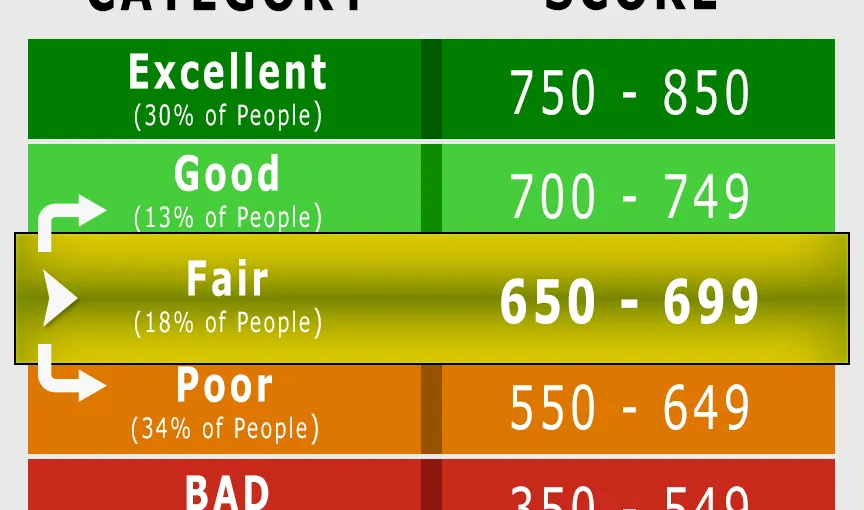
- A general rule of thumb for the FICO bands: 580–669 fair, 670–739 good, 740–799 very good, 800+ exceptional. The rate differences between 700 and 760 are where the real money is.
- Once your debt is under control and the score is climbing, the next money question isn’t the score — it’s what your money should be doing next. That’s the beginner’s guide to investing and the emergency-fund plan.
What moves the needle fastest
| Fix | Movement | Time to see it |
|---|---|---|
| Pay down card balances | 20–60+ points depending on utilization | 1–2 billing cycles |
| Remove an erroneous late payment | Can be 50–100+ points | Weeks (after dispute) |
| Pay-off collection with pay-for-delete | 10–40 points | After it’s removed |
| New on-time history | Steady, 3–6 months to compound | Months |
| A single new 30-day late | −60–100+ points | Instant, stays 7 years |
Quick wins today
- Pull all three reports at AnnualCreditReport.com — free, weekly, five minutes.
- Turn on autopay (minimum) for every account.
- Call or log in and request a credit limit increase on your oldest card.
- Pay your biggest-balance card down before its statement date.
- Dispute any wrong entry you spot — in writing, with evidence.
Hero image: Daniil Vin, CC BY-SA 2.0, via Wikimedia Commons.
Sources
Frequently Asked Questions
How fast can I actually improve my credit score?
The fastest wins are utilization and errors: paying balances down (or getting a higher limit) moves your score within one or two billing cycles, and correcting a wrong entry on a report can also show up quickly once the bureau removes it. Building long-term history is slower — most people see solid gains over 6–12 months of on-time payments. There is no legitimate way to add 100 points in 30 days; anyone promising that is selling something.
Is 700 a good credit score?
Yes. Under the most common FICO bands, 670–739 is 'good' and 740–799 is 'very good' — a 700 gets you approved for most credit cards and loans, but you'll see the best rates around 740 or higher. The score that matters is the one a lender pulls (usually a FICO score), not the VantageScore most free apps show you.
Do credit repair companies actually work?
Anything a credit repair company can do, you can do yourself for free: request your reports, dispute errors directly with the bureaus, and negotiate pay-for-delete with collectors. Disputes are free under the FCRA and the bureaus must investigate within 30 days. Save the monthly fee and spend it on your debt instead.
Does checking my own credit score hurt it?
No. A soft pull — your own check, a credit app's score update, or a pre-approval check — never affects your score. Only hard inquiries, which you trigger when you apply for a credit card or loan, count, and even then the hit is small and temporary. Checking your own reports is always free and always safe.