How to Plan a Road Trip: 10 Steps to a Smooth, Stress-Free Drive
Quick answer
Start with the trip's shape — dates, budget and who is coming — then plan the route in reverse from a realistic daily driving limit (roughly 500–700 km / 300–450 miles). Build the itinerary around two anchors a day (a morning drive and an afternoon stop), book only refundable lodging, and check the car and your offline maps before you leave.
A road trip is the best kind of vacation: you control the schedule, the playlist and the stops, and the detours are the point. The trips that go wrong are almost never the ones with bad weather — they are the ones where nobody decided the budget, the days were 12 hours of driving, and the “I thought you booked” moment happened in a parking lot.
The fix is a short planning routine. Ten steps, one evening of work, and the trip becomes a set of decisions instead of a pile of surprises.
The honest headline first: plan the trip backwards. Decide how far you can drive in a day, add the stops you care about, and let the calendar fill in the gaps. Build up from the constraints — not down from the fantasy.
1. Decide the trip’s shape before the route
Five numbers define everything: dates, days, budget, who’s coming, and the style (loop or point-to-point).
- Dates lock in everything else. Shoulder season saves money and roads — the guides in the cheap weekend getaway guide change the numbers, not the plan.
- Budget cap — decide the total before you look at hotels and fuel so booking decisions make themselves.
- Who is coming — kids, a dog, or a second driver change the daily distance and the stops.
- Loop or one-way? A loop lets you book nothing in advance. A one-way trip usually needs a plan for getting back (or a flight home).
2. Set your real daily driving limit
This is the step that decides whether the trip is fun. Be honest about your pace:
| Drivers | Comfortable daily distance | Daily driving time |
|---|---|---|
| Two drivers, no kids | 600–700 km / 375–450 miles | 6–8 hours |
| One driver | 400–500 km / 250–310 miles | 5–6 hours |
| Kids or pets in the car | 350–400 km / 220–250 miles | 4–5 hours |
| Electric car | 300–500 km, then charging | 5–7 hours |
Then multiply: a 10-day trip with one driver is roughly 4,500 km of driving, not 8,000. Everything you want to see must fit inside the daily limit — or the trip gets one extra day.
3. Build the itinerary around two anchors a day
Instead of a stop-by-stop schedule, plan two anchors per day:
- A morning drive — the long stretch, done while everyone is fresh.
- An afternoon stop — one sight, one town, one meal worth stopping for.
The stops in between are free: a viewpoint, a diner, a lake. This structure keeps the driving in the morning (better roads, better light, happier passengers) and gives every day a highlight without turning the trip into a checklist.
Write the anchors down — screenshot, paper, or a note — including a backup for bad weather and one for closed roads. The Google Maps guide explains how to check place details, compare routes and save an offline fallback before you go.
4. Price the whole trip before you book anything
Fuel is the biggest surprise for first-time road-trippers because it is invisible when you book. The math:
- Fuel: total distance ÷ your car’s fuel consumption × fuel price. A 2,000 km round trip at 7 L/100 km and €1.70/L is about €240.
- Electric: use official range numbers, not the marketing ones — plan a charging stop every 250–320 km and multiply the price per charge by the number of charges.
- Lodging, food, activities, tolls — estimate per day per person.
- Add 20% on top and treat it as the real budget. This is exactly what an emergency fund is for — a road trip is the best use of unexpected money you’ll ever have.
5. Book only what must be booked
The two things worth booking in advance: lodging on the two or three nights when you know exactly where you’ll be, and anything time-slot-based (a guided tour, a national park entry, a ferry).
For everything else: refundable rates, free cancellation, and last-minute booking opens up options. In high season or popular parks, book ahead; everywhere else, keep the days loose.
6. Give the car a proper pre-trip check
- Tires — tread depth and pressure (check cold, not after driving).
- Fluids — oil, coolant, washer fluid.
- Battery and belts — an old battery dies on a cold night at a gas station.
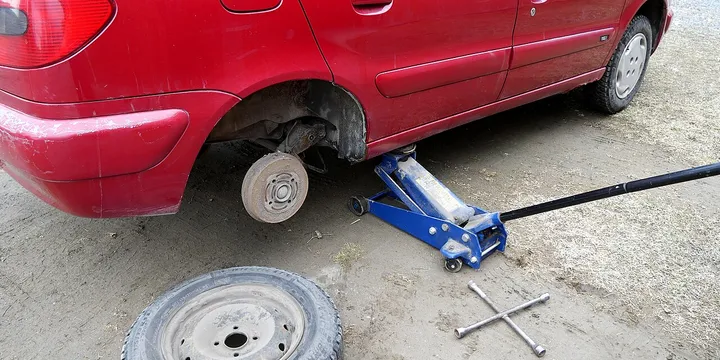
- Spare tire or repair kit — check the kit isn’t expired, and review the flat-tire guide before you need it.
- Jumper cables — know how to use them before you need them; the jump start guide walks through it step by step.
Give the exterior lights, mirrors and windshield a quick clean too; the at-home car-washing guide covers a paint-safe wash when the car needs more than a wipe-down.
Driving a rental instead? Same check, plus make sure the rental company’s roadside number is in your phone before you leave the lot.
7. Pack light, but pack a car kit
You drive, so you can carry more than a suitcase — but more stuff is more stuff to haul around. Use the carry-on mindset: lists, not piles.
Car kit (stays in the car the whole trip):
- Water (a few liters per person) and snacks.
- Phone charger and cables — one per person.
- A paper map or saved offline routes (dead zones exist everywhere).
- Rain jacket and a warm layer each.
- First-aid kit and a flashlight.
- Kids: an entertainment bag that only comes out in the car.
8. Sort out tech before you leave the driveway
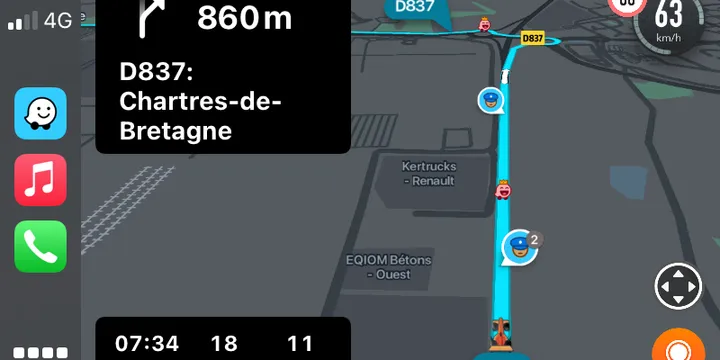
- Offline maps. Download the whole route, not just the destination, for both the driver’s and the passenger’s phones.
- Offline playlists and audiobooks — a dead 4G tower shouldn’t silence the car.
- Car phone mount and a right-angle cable so the driver’s phone isn’t a distraction.
- Share the route (and the daily check-in plan) with a friend or family member at home. It’s the cheapest safety net a road trip has.
- Test the charging setup the day before — the phone battery guide has the rule you need: cables fail, batteries drain slowly, and a drained phone at a dead junction is the worst travel companion there is.
9. Set the driving rules before you start
Agree on these before the first ignition, not at hour four:
- Night limit: driving after dark is for the last 100 km of the day, not the middle.
- Breaks: 15 minutes every 2 hours, no exceptions. Pull over and stretch.
- Driver swap at a fixed point — not “when someone feels like it.”
- No phones behind the wheel. The passenger navigates, the driver drives.
- Eat lunch early (11:30–12:30) — restaurants are calmer and the driving is better afterwards.
10. Build in the slack — it’s the plan, not a failure
Every good road-trip plan has at least one empty slot:
- One afternoon with nothing scheduled.
- One backup stop per day for weather and closures.
- One “no-plan” dinner option in the evening.
A road trip is not a flight — you can afford to arrive late. The trip you remember is the one where the detour fit.
Cross-country: the long-distance version
The ten steps above are the same for a coast-to-coast drive — only the numbers get bigger. Five extra decisions:
- Choose the corridor before the stops. A US crossing is really three routes: northern (I-90/I-94 — cooler, Yellowstone country), middle (I-70/I-80 — fastest, straight through the Rockies), southern (I-10/I-40 — deserts, brutal in midsummer). Pick by season first, scenery second — and the daily limit from step 2 still decides the length of the trip.
- Plan two weeks minimum. At the honest daily limit, a 5,000 km crossing needs 8–10 driving days before you have seen anything. Add the step-10 slack and it fits.
- Book the middle, not just the start. Once your pace settles after day two or three, lock in lodging for the stretches where you know exactly where you will sleep, and leave the rest loose — same rule as step 5, applied further down the route.
- Add roadside assistance. AAA in the US (or your credit card’s roadside benefit) pays for itself on a long trip — save the number, and check what your card covers before you leave.
- Check the weather windows. Snow in the Rockies from October, desert heat from June. A winter crossing means the southern corridor — and several states require chains during winter storms, so check the rules before you commit.
Day-of checklist
- Fuel up and check tire pressure — cold.
- Offline maps downloaded and route shared.
- Car kit and snacks in the back seat.
- Cash or card for tolls — actually, both.
- Weather check for the first two days.
- An empty cup and a full cooler.
That’s the whole plan: one evening of decisions, one honest daily limit, and a few anchors per day. Now the only thing left is to start the engine.
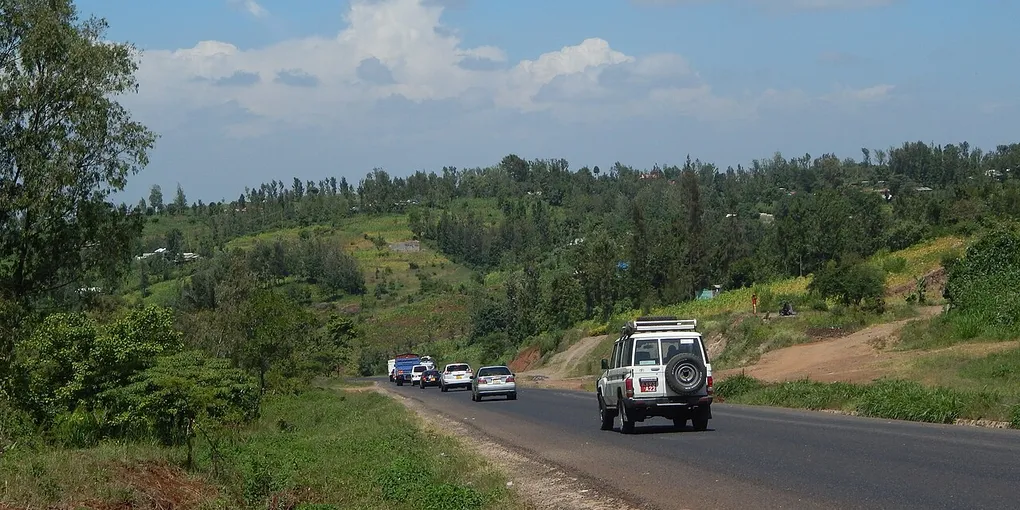
Hero image: Artelnjeru, CC BY-SA 4.0, via Wikimedia Commons.
Frequently Asked Questions
How many miles can I realistically drive in a day on a road trip?
With two drivers and no kids, 500–700 km (300–450 miles) per day is comfortable — that's about 6–8 hours behind the wheel including stops. With one driver, plan 400–500 km. With kids, 400 km or less. The rule that keeps trips enjoyable: a 15-minute break every 2 hours and no more than 8 hours of driving a day, no matter how good the playlist is.
How do I plan a road trip route on Google Maps?
List your must-see stops first — then let Google Maps order them. Add each stop with Add stop, drag the route to adjust, and check the live traffic and closed-road icons for your travel dates. When the route is final, download it for offline use, and keep a paper map or saved screenshot as a backup for dead zones.
How much does a road trip cost per day?
Fuel is roughly (distance ÷ fuel economy) × fuel price — a 1,000 km trip in a 6.5 L/100 km car at €1.60/L costs about €105 in fuel. Add lodging, food and activities, then add a 20% buffer on top. For a 2-person, 4-day trip, $150–250 per day is a realistic planning range in most regions — write it down before you leave, not during.
How do you plan a road trip with kids?
Shorten the days (400 km max), put a break every 1.5–2 hours, and plan one anchor per day — a playground, a pool, a viewpoint — instead of trying to stack sights. Pack a snack box and an entertainment bag that only comes out in the car, and let them pick one stop per day. The trip is the destination when there are kids in the back.
How do I plan a cross-country road trip?
Plan backwards from a 2-week minimum: at 500–700 km a day, a 5,000 km crossing takes 8–10 driving days before any sightseeing. Choose the corridor by season (northern, middle or southern route across the US — see the cross-country section above), book the middle of the trip once your pace settles, and keep one empty slot per day. Add roadside assistance and check the weather windows before you commit.
Should I get AAA or roadside assistance for a long road trip?
If the trip crosses several states or any long stretch with no service, yes — a membership (AAA starts around $60–70 a year in the US) or your credit card's roadside benefit covers towing, jump starts and lockouts. Check what your card already covers before you leave, save the number in your phone, and remember it is cheaper than a single tow.