Quick answer
Park in shade, let the paint cool, and use a dedicated car-wash soap rather than dish detergent. Rinse loose grit first, clean the wheels with separate tools, wash the body from top to bottom in small sections, rinse often, and dry with a clean microfiber or chamois towel. Check local rules before sending soapy water into a driveway or storm drain.
A clean car is not created by scrubbing harder. It comes from removing loose grit before touching the paint, keeping the dirtiest tools away from the body and rinsing often enough that soap never dries onto the finish.
This guide covers a careful at-home exterior wash. The Consumer Reports hand-washing guide recommends dedicated car soap, separate tools for wheels and a top-to-bottom process; the steps below turn those principles into a repeatable routine. If you are cleaning the seats, dashboard or carpets too, use the separate car-interior cleaning guide rather than putting interior products on exterior paint.
1. Choose a cool, shaded place
Park on a stable surface with room to walk around the vehicle. Shade makes the job easier because direct heat dries water and soap quickly. Do not wash immediately after a long drive or while the body is hot from direct sun; Consumer Reports warns that faster drying increases the chance of spots and deposits.
Check the weather and local rules before filling a bucket. Some communities restrict outdoor washing or control where wash water may flow. Keep the car away from a storm drain when possible, and never block a public road or driveway shared with other vehicles.
2. Gather paint-safe supplies
Use a dedicated car-wash soap, two buckets if you have them, a soft wash mitt or sponge, a hose nozzle, separate wheel tools and several clean drying towels. Keep one towel for glass and another for paint. A grit guard is optional, but clean water for rinsing the mitt is more important than buying a large collection of detailing products.
Do not substitute hand soap, dishwashing detergent or household glass cleaner on painted panels. Consumer Reports says those products are not made for automotive paint and may strip protective wax. If a product is intended for wheels, check that it is compatible with your wheel finish before using it.
3. Clean the wheels with separate tools
Wheels and tires collect sand, brake dust and road grime. Use a separate mitt or soft wheel brush for them so that abrasive debris does not travel onto the paint. Work on one wheel at a time with the cleaner recommended for that wheel’s material, then rinse it thoroughly.
Do not use an aggressive wheel chemical simply because it promises fast results. Stop if a finish becomes cloudy, damaged or unusually hot, and follow the wheel or vehicle maker’s instructions. A simple soap-and-water wash is enough for many tires; a glossy tire dressing is optional, not a requirement for a clean vehicle.
4. Rinse the whole car before touching it
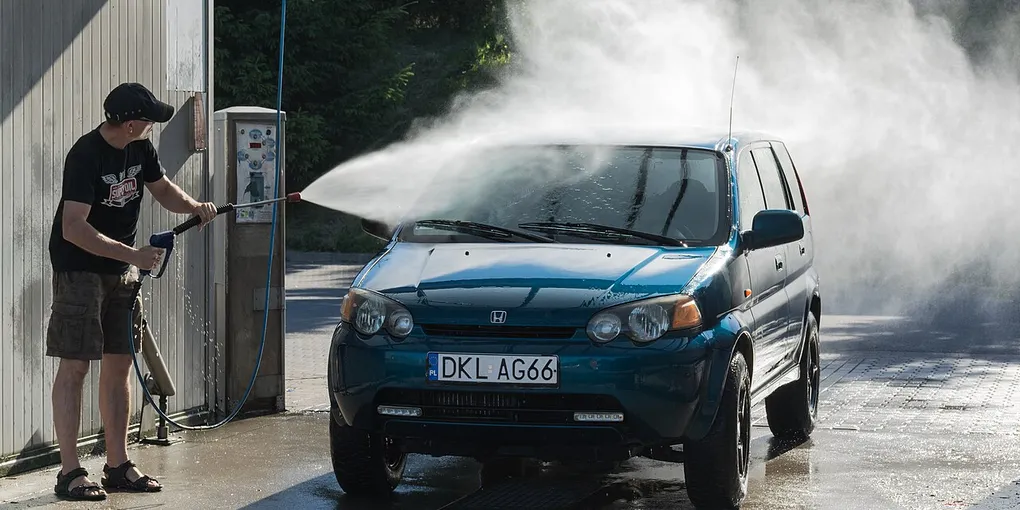
Use a wide spray to flush loose dust, sand and mud from the roof, glass, panels, bumpers and lower edges. Start at the top and let the dirty water run down. The rinse is not wasted time: every particle removed before the mitt touches the paint is one less particle that can be dragged across it.
Avoid forcing water into damaged trim, open electrical connectors or a cracked light. If mud is thick, give it more time under the rinse rather than attacking it with a dry brush or sponge.
5. Wash from the roof down
Fill the wash bucket with the soap dilution on its label. Dip a clean mitt, then wash the roof, upper glass and upper panels first. Move in straight, overlapping passes instead of vigorous circles. Clean one small section, rinse the mitt in the plain-water bucket, reload it with soap and continue downward.
The lower doors, rocker panels and rear bumper are usually dirtiest, so leave them until last. If the mitt falls on the ground, set it aside and use a clean one; rinsing a heavily contaminated mitt is not a reliable way to make it paint-safe. The AAA car-washing guidance also recommends washing and rinsing from top to bottom and cleaning wash tools between uses.
6. Treat bugs, tar and stubborn spots separately
Do not press harder when a mark does not lift. Road tar, bugs and greasy deposits around wheel arches may need a dedicated bug-and-tar remover that is labelled safe for the surface. Apply it as directed, give it the stated dwell time and rinse it away before returning to the normal wash.
Never use a razor, kitchen scrubber or abrasive pad on paint. If a mark remains after a safe wash and an approved product, photograph it and consider a professional detailer rather than turning a small blemish into a large scratched area.
7. Rinse soap before it dries
After washing each section, rinse it completely. On a polished finish, allowing a gentle sheet of water to flow from the top can carry soap downward; otherwise use a wide spray and inspect the panel from different angles. Work around the car until no slippery film remains in seams, mirrors, handles or trim.
Use less soap, not more, if the bucket becomes difficult to rinse. The EPA recommends limiting detergent and using it sparingly. More suds do not compensate for dirty water or a contaminated mitt.
8. Use water responsibly
Home washing has an environmental side as well as a paint-care side. The EPA says commercial car washes often handle wastewater properly and may filter or recycle water. If you wash at home, the EPA recommends phosphate-free, water-based products, restricted water flow and directing wash water to a pervious surface such as grass or gravel rather than the street.
Do not pour a bucket of dirty wash water into a storm drain. Empty it where local rules allow, such as an appropriate sink or sanitary drain, and check your municipality’s instructions first. A commercial wash may be the better choice when your driveway drains directly to a storm system or local regulations prohibit runoff.
9. Clean glass and exterior details carefully
Use a clean towel for windows and mirrors. Spray glass cleaner onto the cloth rather than directly onto the vehicle, as AAA advises, so overspray does not reach upholstery, switches or other materials. Wipe headlights, taillights, licence-plate areas and door jambs with products suitable for those surfaces.
If the car has a ceramic coating, matte paint, paint-protection film or a recent repair, follow its care instructions instead of assuming a generic wax or cleaner is safe. Do not clean an engine bay as part of a routine wash unless the vehicle maker provides a procedure; water and chemicals in the wrong places can create an electrical or mechanical problem.
10. Dry, inspect and store the tools
Do not leave the car to air-dry if you want to minimise mineral water spots. Consumer Reports recommends a soft chamois or terry towel and says blotting is preferable to dragging an abrasive or dirty towel across the paint. Use several clean towels if necessary, starting with the glass and upper panels, then moving to lower areas.
Open doors and the hatch briefly to remove trapped water from accessible edges, but keep the interior protected. Inspect for missed soap in mirrors, badges and panel gaps. Rinse the mitts and towels separately from greasy garage cloths, wash them according to their care instructions and store them where dust cannot settle into the fibres.
The best wash is the one that leaves no new scratches and no mystery chemical residue. With shade, dedicated soap, separate wheel tools, a top-down sequence and a careful final dry, a short routine can keep the finish clean without turning every wash into a full detailing project. If you are about to take the car on a long trip, the road-trip planning checklist covers the separate preparation work, including route, fuel and roadside contingencies.
Hero image: Jacek Halicki, CC BY-SA 4.0, via Wikimedia Commons.
Sources
Frequently Asked Questions
What soap should you use to wash a car?
Use a dedicated car-wash product made for automotive paint. Consumer Reports and AAA both advise against household or dishwashing detergent, which is not formulated for a car's finish and can remove protective wax.
Should you wash a car in the sun?
Shade is easier because heat and direct sun make water and soap dry faster. Wash when the body is cool, work in small sections and rinse before the solution dries on the paint.
Can I wash my car in my driveway?
Check local rules first. If home washing is allowed, use soap sparingly, restrict water flow, and keep soapy water away from storm drains; grass or gravel can be a better surface than street pavement.
How do you dry a car without water spots?
Do not simply let the car air-dry. Use a clean, soft chamois or microfiber-style drying towel to blot or gently lift water, changing to a dry section before the towel becomes dirty or saturated.