How to Remove Candle Wax from Glass: Safe Methods That Protect the Jar
Quick answer
Let a candle jar cool completely, then choose the least aggressive method: freeze a removable wax disk, soften a thin residue with gentle warmth, or use a plastic scraper. Avoid sudden temperature changes, sharp tools, flames and pouring wax into the drain. Collect the wax in the trash or for reuse, wash the glass with warm soapy water, and stop if the jar is cracked or not intended for heat.
Removing candle wax from glass is usually a small recovery job, not a reason to attack the jar with a knife. The safest method depends on what is in front of you: a thick disk inside a sturdy candle vessel, a thin film on a table or mirror, or an unknown piece of decorative glass.
Start with the least aggressive option. Let the glass cool completely, protect the work surface, and collect the wax instead of melting it into a sink. Candle containers deserve extra caution because the U.S. Consumer Product Safety Commission lists a dedicated glass-container standard for candles, and recalls show that some candle jars can crack or break during use.
Before you start: check the glass
Do not heat or freeze glass that is cracked, chipped, visibly stressed, very thin, or valuable. Do not assume that an ordinary drinking glass, vase, mirror or decorative vessel is a heat-safe candle container. Remove the wick tab only if it lifts without force; prying at the base can damage the glass.
Put on closed shoes, clear the area, and work over a tray or towel. You need paper towels, a spoon or blunt plastic scraper, dish soap, warm water and a waste container. Avoid knives, razor blades, abrasive scouring pads and an open flame. A sharp tool can scratch glass or slip into your hand, while direct flame creates a new fire and heat hazard.
Method 1: freeze a solid wax disk
This is the best first choice for a sturdy, intact candle jar with a substantial block of hardened wax.
- Let the jar reach room temperature, wipe off soot or loose debris, and place it upright in a freezer-safe bag or on a level tray.
- Freeze it for several hours until the wax is firm and has pulled slightly away from the sides. Do not force the jar into a crowded freezer where it can be knocked over.
- Remove the jar and wait briefly. Use a plastic scraper, wooden spoon or ordinary spoon to lift the wax from the edge. Work in small pieces rather than twisting the glass.
- Put the wax into a container for reuse or into the trash. Do not wash it down the sink.
If the wax does not release easily, stop prying. Let the jar warm naturally and try a gentler approach. A freezer is a useful option, not a test of how much force the glass can take.
Method 2: soften a thin film with gentle warmth
Use gentle, controlled warmth when only a thin layer remains or when the wax is soft. Place the glass on a stable, heat-resistant surface and warm the outside with a hairdryer on a low setting, moving constantly. As the wax softens, wipe it onto paper towels. Never aim heat at one point for long, hold the dryer against the glass, or leave it unattended.
This approach works well for residue because it avoids filling the vessel with water. It also gives you control: stop as soon as the film is soft enough to wipe. Let the glass cool before washing it.
Method 3: use warm water only when the vessel is suitable
Warm water can make wax float and harden as a removable disk, a method demonstrated by Simply Organized. However, a rapid temperature change can crack glass. The CPSC candle guidance identifies glass-container safety as a distinct concern, so do not treat every jar as interchangeable.
If you choose this method, use only an intact, room-temperature candle jar that you reasonably know was made as a candle vessel. First warm it gradually with lukewarm water. Then add warm—not violently boiling—water slowly, leaving room at the top. Keep the jar in the sink or a deep tray, wear heat-resistant gloves, and never handle it as if the glass cannot fail. Let the wax cool and solidify before lifting it out. Strain every piece and wipe the container; do not pour wax or waxy water into plumbing.
Skip this method for cracked, thin, unknown, decorated or temperature-sensitive glass. The freezer or room-temperature scraping method is safer.
Method 4: remove cold wax in small pieces
For a table, mirror or glass surface that should not be heated, let the wax harden fully. Place a bag of ice over a cloth beside the spot for a few minutes if needed, without wetting the glass. Lift the edge with a plastic card or scraper held almost flat, then peel or flick away small pieces. Do not drag grit across the surface.
Once the bulk is gone, use a barely damp cloth with a drop of dish soap. Wipe, rinse the cloth, and dry the glass. For coated, tinted or antique surfaces, follow the maker’s care instructions before using alcohol, vinegar or any solvent.
Clean the sticky residue
First wipe the remaining oil or fragrance film with a dry paper towel. Then wash the glass with warm water and dish soap, rinse, and dry with a lint-free cloth. Repeat rather than escalating immediately to a strong solvent.
Do not mix cleaners. Avoid pouring wax, solvent or a large amount of oily water into the drain. Let used paper towels and cooled wax solidify, then place them in the appropriate household waste stream; local rules vary. If you saved clean wax, label it and keep it away from children, pets and heat until you decide whether it is suitable for a future craft use.
When to stop and discard the vessel
Stop if you see a crack, star-shaped mark, sharp edge, clouding that was not there before, or a jar that becomes unusually hot. Do not reuse a vessel for food merely because it looks clean: candle fragrance, soot, wick adhesive and residues may make it unsuitable unless the container is clearly designed and cleaned for that purpose. A safer second life may be a desk organizer, planter liner or decorative holder, depending on the vessel and its condition.
The reliable sequence is simple: cool the glass, remove the bulk of the wax with cold or mild warmth, collect every piece, wash gently, and inspect before reuse. Patience protects both the jar and the plumbing.
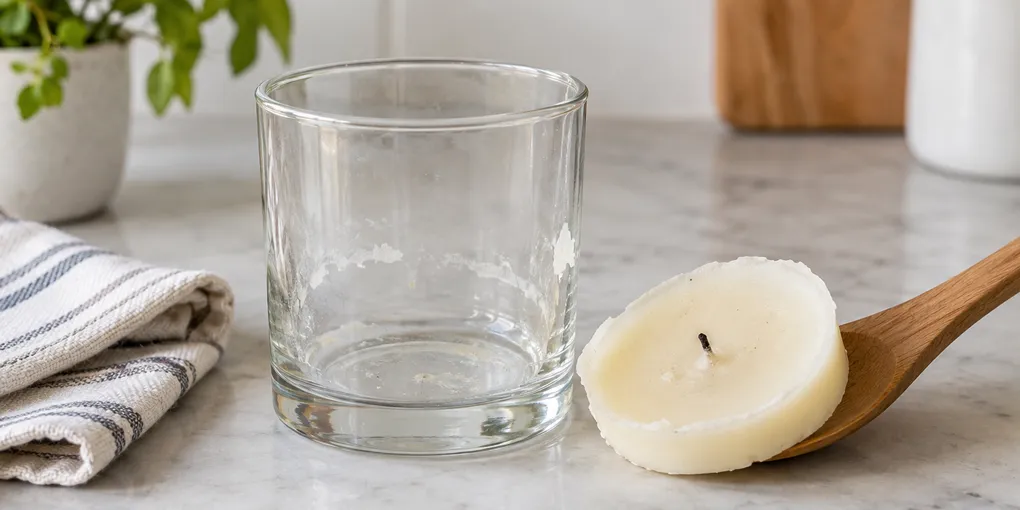
Hero image: OpenAI-generated conceptual illustration showing a cooled wax disk beside a reusable glass candle vessel; no real removal test is depicted.
Sources
Frequently Asked Questions
What is the easiest way to remove candle wax from a glass jar?
For a small candle jar with a solid wax disk, freeze the completely cool jar until the wax contracts, then lift it out gently with a plastic scraper or spoon. If the jar is thin, cracked, decorative or not known to tolerate cold, let it reach room temperature and remove the wax in small pieces instead.
Can I put boiling water into a candle jar?
It is safer not to pour boiling water into an unknown, cold or thin glass jar. Sudden temperature changes can crack glass. If the vessel is an intact candle container and you choose a warm-water method, let it warm gradually, use water that is not violently boiling, protect your hands, and keep the wax out of the drain.
How do I remove candle wax without scratching glass?
Use the freezer method first, or soften a thin film with gentle warmth and wipe it with paper towels. A plastic scraper, old gift card or wooden spoon is safer than a knife or metal blade. Test any cleaner on a small area and avoid abrasive pads.
Can candle wax go down the sink?
No. Keep solid and melted wax out of the drain. Let liquid wax cool in a disposable container or absorb it with paper towels, then follow local waste guidance. Do not chase wax with hot water because it can harden farther along the pipe.