Quick answer
Start by removing food, water and entry access, then identify the ant trail. If you use a pesticide, choose a product whose label covers ants and the place you will treat, follow that label exactly, and keep bait inaccessible to children and pets. Do not mix homemade pesticide recipes or spray over an active bait. Carpenter ants, stinging ants, recurring trails and hidden nests need professional advice.
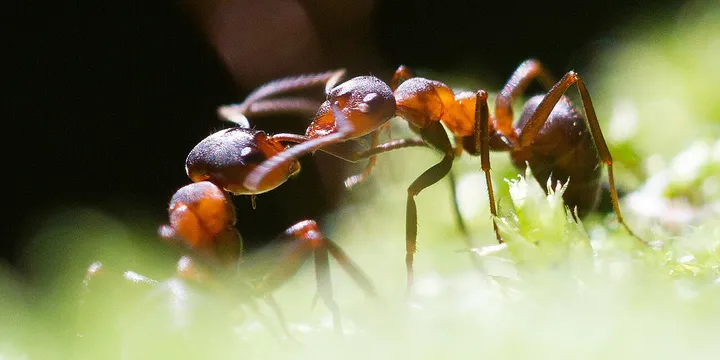
One line of ants moving across a kitchen floor is usually a foraging trail between food or water and a nest. The right response depends on the species, the entry point, and the product label. Start with observation, sanitation and exclusion; use a labeled bait only when its directions fit the site and the people or animals who use it.
Pause before spraying: a contact spray may kill visible ants without addressing the nest. It can also contaminate food-preparation areas or interfere with baiting. Read the label first, and keep people and pets away from any treated area as directed.
1. Find the trail first
Before you use a product, watch the trail and note where it enters. This helps you clean, seal and describe the problem if professional advice is needed.
- Observe from a distance rather than adding food to the area.
- Note likely entry points: baseboards, window frames, gaps around pipes, outlet plates and floor-wall joints.
- Re-check at another time of day; activity can vary by species and conditions.
- Mark the entry point with removable tape so you can find it again in daylight.
This observation gives you a starting point for cleaning, sealing and choosing whether a labeled product is appropriate.
2. Clean the trail
Ants can follow chemical trails, so cleaning food residue and the traveled surface may reduce repeat traffic temporarily. It does not remove the nest.
- Wipe the path with a suitable household cleaner, following its label and keeping it away from incompatible surfaces.
- Work from the food or water source toward the entry point, then dry the area.
- Vacuum visible ants if practical and empty the vacuum according to the appliance instructions.
Repeat cleaning when residue returns. If ants continue, move to exclusion and a labeled control option rather than assuming a home remedy will end the colony.
3. Remove what they came for
Ants enter for two reasons: food and water. Take away the food and the trail loses its purpose.
- Store open food in airtight containers or the fridge — sugar, honey, crumbs, pet food.
- Wipe counters, tables and floor edges every evening; a single crumb sustains a trail.
- Rinse out bowls and cans before recycling, and take out the bin when it’s full, not when it smells.
- Clean spilled pet food areas, and keep pet bowls in a shallow tray of soapy water as a moat.
- Fix the crumbs first — see the declutter home plan if the clutter itself is making the pantry hard to keep clean.
4. Seal the entry points
While the trail is active, you can see exactly where the ants come in — close that door.
- Fill gaps around baseboards and window frames with caulk or sealant.
- Add or repair weatherstripping under exterior and garage doors.
- Squeeze expanding foam into larger gaps around pipes and vents.
- Check the kitchen exhaust or outlet plates — ants love the gap where the electrical box meets the wall.
This may reduce re-entry, but it does not prove where the nest is or guarantee that ants will not use another route.
5. Use bait only by the label
Some labeled baits work because foragers carry food back to the colony, but species and products differ. Choose a product whose label covers ants, the indoor or outdoor site, and the way you intend to use it.
- Prefer a ready-to-use bait station when its label permits it, and place it only where children and pets cannot access it.
- Do not mix, dilute or transfer pesticide products, and do not make homemade pesticide recipes from household ingredients.
- Keep bait away from food-contact surfaces and follow the label for placement, monitoring, storage, first aid and disposal.
- Do not spray over active bait unless the product label specifically permits that combination.
If ants ignore a product or the trail returns, do not keep adding product or change mixtures. Re-check identification and site conditions, then seek local extension or pest-professional advice.
6. Commercial gel baits and stations
Ready-made stations or gels may be easier to place, but “commercial” does not mean universally safe or suitable.
- Read the entire label before buying or applying a product, including approved sites, precautions and re-entry instructions.
- Use a station rather than exposed gel when the label and site call for it, but still keep the station inaccessible and inspect it as directed.
- Never assume a bait is safe because it is enclosed; follow the label and the product’s first-aid instructions.
Do not rotate products or combine active ingredients just because a trail continues. Product choice should follow identification, label directions and professional advice where needed.
7. Be cautious with powders
Loose powders can become airborne and may be misapplied. “Food-grade” does not by itself make a pest-control use safe.
- Avoid airborne dust around children, pets, food and ventilation systems.
- Use a powder only if the product is registered and its label specifically covers ants, the surface and the application method.
- Follow the label’s protective-equipment, ventilation, cleanup and disposal directions; ask a professional if those directions are unclear.
Do not use a powder as a substitute for fixing moisture, sealing entry points or identifying a recurring infestation.
8. Natural repellents — honest but limited
Vinegar, cinnamon, citrus peels, cayenne and coffee grounds are often suggested online. At most, a strong scent or cleaned surface may alter a trail temporarily; these ideas do not establish reliable colony control.
- Use ordinary cleaning and exclusion where appropriate rather than scattering powders or food ingredients.
- Keep any cleaner away from food, eyes and children, and never mix household cleaners.
If the trail persists, use a labeled product or professional advice based on the species and site.
9. Ants in the kitchen or bathroom: think moisture
A trail in the bathroom, or along the wall behind a dishwasher, is often a water problem, not a food problem.
- Check for leaks under the sink — a slow-dripping drain is a watering hole for ants.
- Fix drips and dry the area. A blocked or slow drain can hold water constantly — see how to unclog a drain for the fixes that actually work.
- Ants moving between a water source and a wall gap may be using the area as a route; do not infer the nest location from the trail alone.
10. When it’s time to stop DIY
Some infestations are appropriate for careful homeowner action; others need identification or professional help:
- Carpenter-ant signs — ants associated with damp or damaged wood, frass or structural areas warrant inspection rather than a surface-only treatment.
- Stinging or aggressive ants — do not handle unfamiliar mounds or rely on generic indoor advice; contact local extension or a pest professional.
- Recurring or hidden activity — repeated trails, wall voids, inaccessible nests or water damage need diagnosis before more product is applied.
- Exposure concerns — get advice when children, pets, food-preparation areas or a person with respiratory sensitivity could be exposed.
In rental or shared housing, document moisture or structural issues and notify the responsible owner or manager rather than treating inaccessible areas yourself.
Decide what to do next
| What you observe | Safer next step |
|---|---|
| Small indoor trail near food or water | Clean, dry and seal the route; use a labeled product only if its site and precautions fit. |
| Bait is ignored or activity keeps returning | Stop adding products; re-check identification and contact local extension or a professional. |
| Sawdust, damp structural wood or wall-void activity | Arrange inspection for moisture and structural damage. |
| Stinging, aggressive or unfamiliar outdoor ants | Keep people and pets away and seek local species-specific advice. |
| Children, pets or food-preparation areas are exposed | Remove access to the area and follow the product label or obtain professional help. |
A practical first-day checklist
- Photograph the ants and trail if identification may be needed.
- Remove food residue, standing water and accessible pet food.
- Clean the traveled surface with a suitable cleaner; never mix cleaners.
- Seal a clearly identified gap when the repair is appropriate for the surface.
- If using a pesticide, record the product name and follow its label exactly; keep people and pets away as directed.
Check the area again over the following days. A persistent trail is a signal to reassess the species, moisture source and entry route—not to increase the dose or invent a stronger mixture.
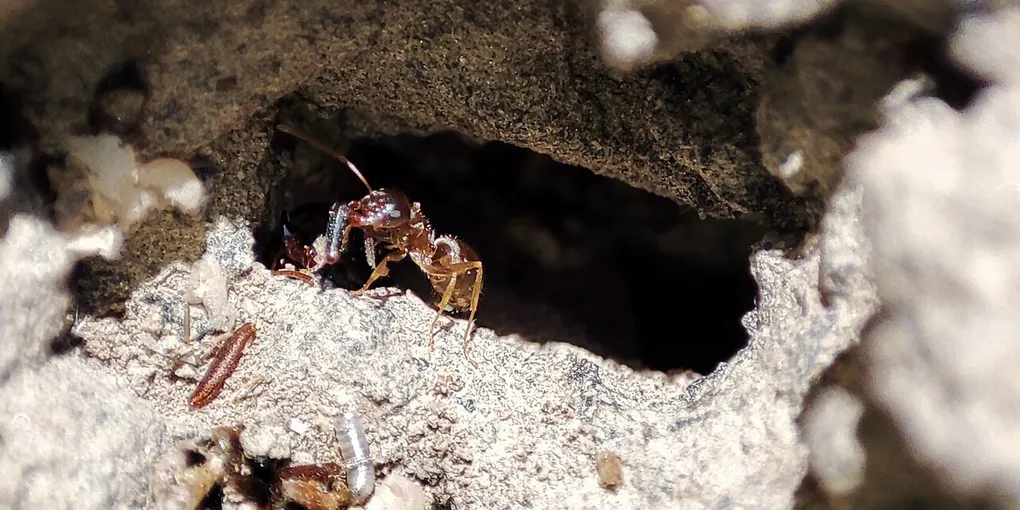
Hero image: Humoyun Mehridinov, CC BY-SA 4.0, via Wikimedia Commons.
Sources
Frequently Asked Questions
Why do ants keep coming back after I kill them?
The visible ants are only part of the colony, and a new trail may appear if the nest or entry point remains. Remove food and moisture, follow the product label if using bait, and avoid spraying over bait because it can interfere with feeding.
Does vinegar really get rid of ants?
A cleaner may temporarily remove food residue and disrupt a trail, but it does not remove the nest. Use sanitation and exclusion first, and follow a labeled bait product's directions if chemical control is needed.
Is borax safe to use around pets and children?
Do not assume a household ingredient is safe because it is common. Use a ready-to-use product only as its label directs, keep it out of reach of children and pets, avoid food-contact surfaces, and follow the label's first-aid and disposal instructions.
When should I call a professional exterminator?
Get professional advice for carpenter ants, stinging ants, hidden or structural nests, contaminated water, recurring trails, or any situation where children, pets or a sensitive person could be exposed. A small visible trail is not automatically safe to treat without identifying the product and reading its label.