How to Clean a Refrigerator: 10 Steps for a Fresher, Safer Fridge
Quick answer
Move food into a cold place, discard anything unsafe, and clean the empty refrigerator with warm water and mild detergent or a model-approved baking-soda solution. Rinse and dry shelves, walls, gaskets and drawers completely, then restore food promptly and keep the refrigerator at or below 40°F (4°C).
Editorial note: This is general information, not professional advice. Check the linked sources and current local guidance before acting.
A refrigerator can look tidy while dried spills collect under drawers, crumbs sit in the door seal and a forgotten container quietly changes the smell of the whole compartment. Cleaning it well is less about making every surface shine and more about combining appliance care with food safety.
This ten-step method works as a general starting point, but your owner’s manual wins when it gives different instructions. Shelf materials, water dispensers, filters, drain openings and condenser covers vary by model. Before removing a part or applying a cleaner, check the manual for that exact refrigerator.
1. Choose a short, cool cleaning window
Plan to clean just before shopping or cooking a meal, when there is less food to hold temporarily. Gather a cooler or insulated bags, ice packs, mild dish soap, warm water, soft cloths, a non-scratch sponge, a soft toothbrush and clean towels. Keep a bin nearby for packaging and a separate bag for food you will discard.
Avoid turning a deep clean into an all-day project. The less time perishable food spends outside refrigeration, the easier it is to protect both quality and safety.
2. Protect the food before opening everything
Put meat, seafood, dairy, eggs, leftovers and other perishable food into a cooler with ice packs, or leave them in a closed refrigerator while you work in sections. The FDA’s food-storage guidance says to keep a refrigerator at or below 40°F (4°C) and not to leave foods requiring refrigeration at room temperature for more than two hours—or one hour when the air is above 90°F (32°C).
Do not rely on a cold-looking shelf as proof that food stayed safe. If food has been warm too long, discard it rather than tasting it to decide.
3. Remove food and make a calm discard decision
Take out one shelf or zone at a time. Check containers for leaks, visible mold, unusual texture or a date that tells you the food is no longer wanted. Put questionable items in the discard bag without opening them over the clean refrigerator.
The FDA notes that a “use by” date is generally the manufacturer’s recommendation for best quality, not a universal safety test. Follow the product’s storage directions, your local food-safety guidance and your own caution. Wipe the outside of reusable containers before setting them on a clean counter.
4. Turn off or isolate the appliance as the manual says
For a full clean, use the temperature-control and power instructions in the owner’s manual. Some manufacturers advise switching the control off and unplugging the refrigerator; others have model-specific procedures. Do not pull a heavy appliance away from the wall by yourself or spray water near electrical components.
Put towels on the floor for drips. If you smell burning, see damaged wiring, find a large amount of water or cannot safely reach a component, stop and arrange qualified service instead of improvising.
5. Remove shelves and drawers without thermal shock
Take out removable bins, racks and drawers, photographing the arrangement if the layout is confusing. Let cold glass shelves warm toward room temperature before washing them. GE warns that putting a cold glass shelf under hot water can cause it to break from the temperature change.
Carry glass with both hands and place it on a folded towel. Do not force a drawer past its stops; look up the removal procedure when a rail, clip or cover does not release easily.
6. Wash the removable parts
Use warm water, mild dish soap and a soft sponge for shelves, drawers, rails and door bins. Work over a basin or on a towel so a dropped glass shelf has less distance to fall. Rinse until no detergent film remains, then dry each part completely.
Whirlpool recommends hand-washing interior parts with mild detergent and avoiding harsh cleaners. Do not put a plastic bin or shelf in a dishwasher unless the manual explicitly says it is dishwasher-safe. Clean grooves and corners with a soft toothbrush, not a knife or abrasive pad.
7. Wipe the interior from top to bottom
Mix the solution your manual allows. A common manufacturer-approved option is warm water with mild detergent; GE also describes one to two tablespoons of baking soda in one quart of water for interior surfaces. Wipe the ceiling, rear wall, side walls, bottom, shelf supports and door liner with a soft cloth.
Use a second cloth with clean water to remove residue, then dry every surface. Do not flood vents, lights, control panels or drain openings. If a spill has entered a sealed panel or has frozen into an inaccessible channel, use the manual’s service instructions rather than prying at it.
8. Clean the gasket, handles and dispenser
Open the folds of the rubber door gasket gently and remove crumbs with a damp cloth or soft toothbrush. Wipe the gasket with mild soapy water, rinse the cloth and wipe again. GE specifically advises mild soap and warm water for gaskets and warns against bleach or cleaners other than mild detergent on them.
Clean handles, the door edge and the water or ice dispenser recess separately. Keep the dispenser area dry, and follow the manual before cleaning a water filter, ice maker or internal water line. A filter replacement interval is model-specific; do not guess from a different refrigerator.
9. Deal with odors and a spoiled-food spill
Odor removal starts with finding and removing the source. Wash the container, shelf and nearby walls, then rinse and dry them. For ordinary lingering smells, an open container of baking soda can help absorb odors; USDA food-safety guidance recommends an opened box or a shallow container, but your appliance manual should still guide placement.
A spoiled-food or recall cleanup may require more than ordinary wiping. Use only a sanitizer labelled for the relevant food-contact surface, follow its dilution and contact-time instructions, and rinse when the label says to do so. Never combine bleach with vinegar, ammonia, dish soap or another cleaner: clean products one at a time and ventilate the room.
10. Reload by zone and restore the cold chain
Replace dry shelves and drawers in their original positions. Keep raw meat and seafood contained and below foods that are ready to eat, cover leftovers, and avoid packing the compartment so tightly that cold air cannot circulate. The FDA also recommends keeping eggs in their carton inside the refrigerator rather than on the door, where temperatures can be warmer.
Put the food back promptly, close the door and return the control to its normal setting. Check the refrigerator with an appliance thermometer if you have one. Finish by wiping the handle and floor, then write down any damaged gasket, noisy fan, blocked drain or failed temperature reading that needs attention.
A simple maintenance rhythm
Clean a fresh spill immediately, check leftovers and produce during each grocery run, and wipe the handle and gasket when they feel sticky. Use the deep-clean interval in your manual as the baseline; a monthly reminder is practical for many households, but it is not a substitute for model-specific care. If you are also working through the kitchen, the dishwasher-cleaning guide covers the filter, spray arms and drain area, while the home-inventory guide helps document appliance models and serial numbers before a move or claim.
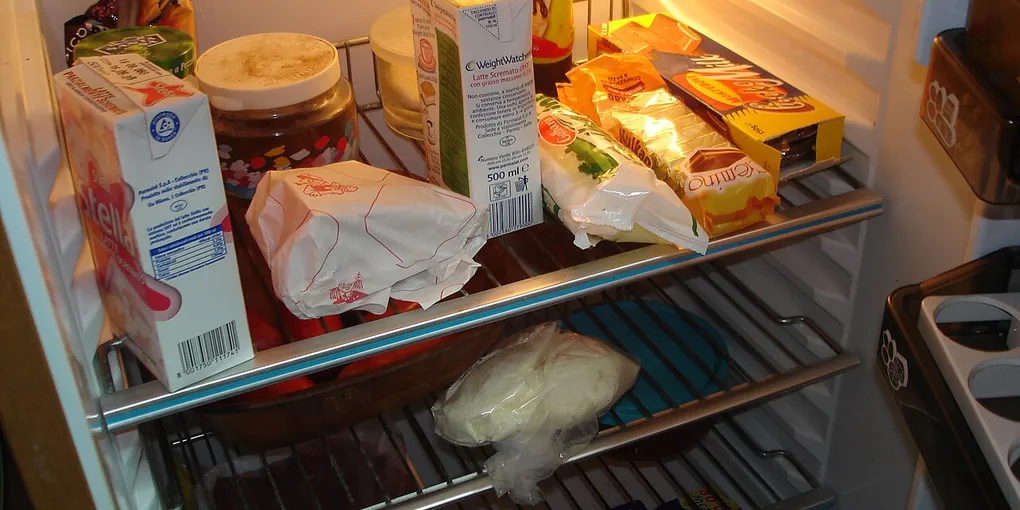
Hero image: Cosoleto, public domain, via Wikimedia Commons.
Sources
Frequently Asked Questions
What is the best thing to clean the inside of a refrigerator with?
Start with warm water and mild dish soap, or use the baking-soda solution allowed by your appliance manual. Wipe with a clean cloth, rinse away residue and dry the surfaces before replacing food.
How often should you clean a refrigerator?
Do a small spill clean immediately and inspect food regularly. A deeper clean every month or on the schedule in your owner's manual is a useful routine, but model instructions take priority.
How do you get a bad smell out of a refrigerator?
Remove the source, wash the interior and gasket, rinse and dry everything, then leave an open container of baking soda inside if your manual permits it. Persistent odors after a spoiled-food spill may need the manufacturer's or food-safety guidance.
Can you use bleach or vinegar to clean a refrigerator?
Do not improvise with strong cleaners. Use only a product and dilution approved for your model and follow its label; never mix bleach, vinegar, ammonia or other cleaning products.