Quick answer
Read your dishwasher manual, empty and isolate the appliance, then clean the removable filter with warm soapy water, clear the spray arms and wipe the door seal. Run only a manufacturer-approved dishwasher cleaner or vinegar cycle—never hand dish soap—and reinstall every part before testing.
A dishwasher can look clean while its filter, spray arms and door seal collect food, grease and mineral film. That buildup can leave grit on glasses, create a stale smell and reduce the water reaching the dishes. The fix is not a handful of detergent and a hotter cycle: clean the parts that catch soil, then run an approved maintenance cycle.
This ten-step method suits many household dishwashers, but parts and finishes vary. Read the owner’s manual before removing a filter, spray arm or cover. GE notes that some models do not have a removable filter, while others require a particular procedure. Your model’s instructions take priority over any generic cleaning tip.
1. Empty the dishwasher and read the manual
Remove dishes, cutlery and anything stored on the racks. Find the manual by searching the model number printed on the door frame or control panel. Confirm whether the appliance has a removable filter, where the drain screen sits, which cleaners are approved and whether the racks or spray arms may be removed.
Do not guess that a filter from another brand fits the same way. Some systems have a manual filter; others use a self-cleaning or food-disposal design. Whirlpool’s filter instructions also warn that the filter must be locked correctly before the dishwasher runs.
2. Turn the appliance off and protect the floor
Press cancel, wait for the cycle to finish draining and switch the dishwasher off. If you will work near electrical parts, follow the manual’s power-isolation instructions. Do not reach into a machine that can start unexpectedly.
Put a towel in front of the appliance. Wear gloves if you are handling old food or cleaner, and ventilate the room. Never mix cleaning products. In particular, do not combine bleach with vinegar, ammonia or an acidic descaler: the mixture can release dangerous fumes.
3. Remove the racks and clear loose debris
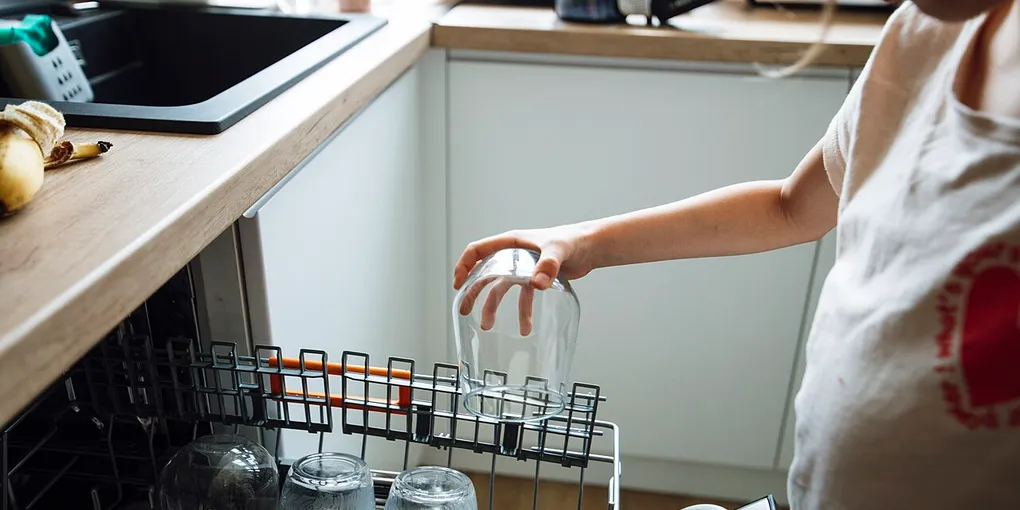
Pull out the lower rack and lift out the upper rack only if the manual explains how. Pick up bones, labels, glass fragments and large scraps with gloved hands or a paper towel—never push them toward the drain. A soft brush can loosen debris around the rack wheels and corners.
Set racks aside on a towel. If they have stuck-on food, soak them in warm water with a little dish soap in a basin, rinse thoroughly and dry. Keep hand-washing liquid out of the dishwasher itself; automatic-dishwasher detergent is formulated to produce very little foam, while regular dish soap can overflow.
4. Remove and wash the filter
The filter is commonly beneath the lower spray arm, but its shape and release mechanism differ. Remove it exactly as the manual says. Rinse it under warm running water first, then use a soft brush and mild dish soap for grease or trapped particles. Bosch gives the same basic sequence: detach the filter, rinse it, and use warm soapy water and a soft brush when it is very dirty.
Do not use a knife, wire brush or abrasive pad that can damage the mesh. Inspect the filter against a light. If the screen is split, warped or still blocked after cleaning, replace it rather than running the machine without filtration. Keep small parts together so the filter can be reassembled in the correct order.
5. Check the sump and drain opening
With the filter removed, look into the shallow area beneath it using a flashlight. Wipe out accessible food, paper or broken glass with a cloth or tongs. Do not dismantle the pump cover or put bare fingers into an unseen opening; follow the service instructions if something is stuck below the removable parts.
A little water below the filter can be normal on some designs. Standing dirty water, repeated drain errors or a sewage smell is different. Do not keep running cycles to hide those symptoms. Check the manual’s drain-hose guidance and call a qualified appliance technician or plumber if the obstruction is not safely accessible. For a household sink-side blockage, the drain-unclogging guide covers the separate plumbing problem.
6. Rinse the spray arms
Inspect the holes in the upper and lower spray arms. Food particles and hard-water deposits can block the jets, so rinse the arm under warm water and gently clear visible debris with a soft brush or a wooden toothpick if the manual permits. Do not enlarge a jet with a metal tool.
Spin each arm by hand before replacing the racks. It should turn freely without hitting the filter, rack or tall dish. If an arm is removable, take a photo before detaching it and keep its washer or clip safe. Never run the machine with a spray arm or filter left out unless the manual explicitly says it is safe.
7. Wipe the door, gasket and edges
Food often hides where the door closes: along the rubber gasket, lower lip, hinge-side corners and detergent-dispenser edge. Wipe these areas with a damp microfibre cloth and a small amount of mild dish soap, then wipe again with clean water. Use a soft toothbrush for grooves, not a scouring pad.
Keep liquid away from the control panel, latch and vent openings. Do not pour cleaner into the door seam. If the gasket is torn, permanently flattened or coated in mold that will not wipe away, replace it through the manufacturer or have it serviced rather than flooding the door.
8. Clean the exterior and detergent dispenser
Wipe stainless steel or painted panels with the cleaner recommended for that finish, applying it to the cloth rather than spraying into buttons or seams. Dry in the direction of the grain on stainless steel. Clean the detergent cup’s rim and hinge with a damp cloth so old powder does not stop the lid opening.
Use only automatic-dishwasher detergent in the dispenser. The American Cleaning Institute’s detergent-safety guidance is a useful reminder to follow the product label and keep detergent and rinse aid away from children. More detergent is not automatically cleaner; excess can leave film.
9. Run an approved cleaning or descaling cycle
Reinstall the filter and any covers before running a cycle. For grease or odor, use a dishwasher-cleaning product labelled for your appliance and follow its instructions. Do not add hand soap, oven cleaner or an improvised chemical mixture.
Some manufacturer directions allow two cups (500 mL) of white vinegar in a dishwasher-safe container on the lower rack, with a normal cycle and heat dry turned off. Whirlpool describes that method, but a model manual can prohibit vinegar or warn that frequent acid use may damage parts. Treat it as an optional, manufacturer-approved method—not a universal rule. For white mineral film, use the approved descaler and set the water hardness or rinse-aid level as your manual directs.
10. Reassemble, test and set a maintenance rhythm
Rinse and dry the filter, lock it into place, reinstall the spray arms and return the racks. Run an empty short cycle or the test procedure in the manual. Watch for leaks, unusual noise, a drain error, standing water or a spray arm that cannot rotate. Stop and arrange service if any of those problems persists.
Use this quick diagnosis table after the clean:
| Symptom | First check |
|---|---|
| Grit on dishes | Filter, spray-arm jets and detergent dose |
| Stale smell | Filter, sump, gasket and drain path |
| White film | Water hardness, rinse aid and approved descaler |
| Dirty water remains | Drain hose, sink connection and pump area |
| Dishes stay wet | Rinse aid, selected cycle and heating fault |
Inspect the filter more often if you scrape little food from plates or run many loads. Wipe the seal monthly and run a manufacturer-approved maintenance cycle at the interval in your manual. A clean filter and freely turning spray arms usually do more for performance than a stronger chemical.
If your dishwasher leaks, trips a breaker, smells of burning, exposes wiring or repeatedly leaves wastewater inside, stop using it. For the surrounding kitchen surfaces, the oven-cleaning guide and streak-free window guide cover similar low-abrasion, rinse-and-dry methods without putting cleaner into an appliance. If the next appliance on your list is cold storage, the refrigerator-cleaning guide covers food protection, shelves, gaskets and safe reloading.
Hero image: Shixart1985, CC BY 2.0, via Wikimedia Commons.
Sources
Frequently Asked Questions
How often should I clean my dishwasher?
Inspect the filter and wipe the door seal whenever performance or smell changes, then follow your model's manual for a schedule. A heavily used dishwasher may need a filter clean every few weeks, while a lighter-use model may go longer. A monthly cleaning cycle is a reasonable reminder only when it matches the manufacturer's instructions.
Can I put vinegar in my dishwasher to clean it?
Some manufacturer guidance allows white vinegar in a dishwasher-safe container on the lower rack with the heat-dry option off, but check your manual first. Vinegar is not right for every finish or seal and should not be used frequently without approval. Never mix vinegar with bleach or another cleaner.
Why does my dishwasher still smell after cleaning?
Check that the filter, sump area, door gasket and spray arms are free of food, and confirm the drain hose is installed as your manual specifies. If dirty water returns, the appliance leaves standing water or the odor smells electrical or like sewage, stop using it and arrange qualified service.
Can I use regular dish soap in a dishwasher?
No. Hand-washing liquid creates excessive suds and can leak onto the floor or interfere with the machine. Use only detergent labelled for automatic dishwashers, in the amount and compartment your manual recommends.