Quick answer
Let the French press cool, scoop the grounds into trash or compost, and rinse the plunger and carafe. Wash with warm water and a little mild dish soap, disassemble the filter for a deeper clean, rinse thoroughly, and dry every part before reassembly. Follow your model's manual for dishwasher use.
Cleaning a French press takes only a few minutes, but the order matters. Let the carafe cool, get the spent grounds out without sending a thick slurry down the drain, separate the filter when residue needs attention, and let every component dry before you put it back together.
This routine works for the common glass carafe with a stainless-steel plunger. Your owner’s manual wins if it gives different instructions for dishwasher use, removable seals, coated metal, plastic parts, or a specific cleaning product. Bodum’s CHAMBORD care page, for example, identifies borosilicate glass, stainless steel, and polypropylene parts and says to wash with warm, soapy water before first use (Bodum).
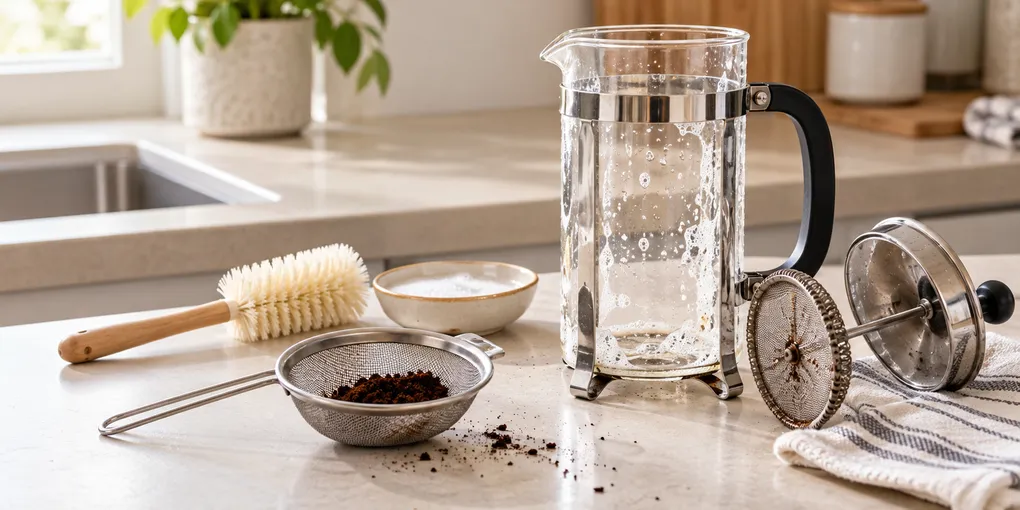
What you need
- A soft sponge or bottle brush
- Mild dish soap and warm water
- A small spatula, spoon, or grounds scoop
- A fine-mesh strainer if you want a low-mess disposal method
- A soft toothbrush and baking soda for occasional filter residue
Do not reach for steel wool, a metal pick, or an abrasive scouring pad. Scratches can hold coffee oils, and a sharp tool can bend a filter screen or chip a glass carafe.
1. Cool the press and remove the plunger
After pouring the coffee, wait until the carafe is comfortable to handle. Hot glass and metal can burn you, and plunging or rinsing in a hurry makes breakage more likely. Lift the plunger straight up and set it on a towel.
Never force a stuck plunger. Add a little warm water, wait for the grounds to loosen, and try again gently. If the glass is cracked, chipped, or feels unstable in its frame, stop using the press and replace the damaged part.
2. Empty the grounds without clogging the sink
Scoop the thick layer of grounds into compost or the trash. A flexible spatula is useful because it does not scrape the glass. The Kitchn specifically warns against putting a substantial amount of grounds in the sink, while the r/Coffee discussion shows why people look for a cleaner apartment-friendly method: fill the press with water and pour it through a small mesh strainer, then discard the captured grounds.
Use that method over a bowl or the sink: add enough water to suspend the grounds, swirl once, and pour slowly through the strainer. Empty the strainer into the compost or bin and rinse the strainer separately. The goal is to remove the bulk of the grounds before rinsing—not to flush a dense coffee paste into your plumbing.
3. Do the quick clean after every brew
- Rinse the empty carafe and plunger with warm water.
- Add a few drops of mild dish soap and enough warm water to cover the lower part of the carafe.
- Put the plunger in place and move it up and down slowly several times. This loosens oils from the mesh and sides.
- Pour out the soapy water, rinse, and use a soft sponge or bottle brush on the bottom and corners.
- Rinse until there are no bubbles or slippery patches left.
Do not leave wet grounds in the press while you wait for later. Dried coffee residue takes more scrubbing, and a damp, closed press develops stale smells quickly. A five-minute rinse is easier than a rescue clean.
4. Disassemble the filter for a deeper clean
The filter is where fine grounds and coffee oils hide. Unscrew the filter assembly only if your model is designed to come apart. Lay the pieces on a towel in the order you remove them so the screen, cross plate, spring, and retaining nut go back correctly.
Rinse each piece from both sides. Work a soft toothbrush or bottle brush around the screen, threads, and underside of the plates. If the mesh still feels slick, make a loose paste from baking soda and water, brush gently, and rinse very thoroughly. Baking soda is optional; warm water and mild soap should be the default.
For chalky white hard-water marks on the carafe or metal, a diluted vinegar-and-water treatment can help, but check the manual first and keep acid away from parts it does not approve. Never mix vinegar with bleach or another cleaner. Rinse several times so no cleaner remains to affect the next cup.
5. Inspect the parts before reassembly
Hold the filter up to a bright light. The mesh should look open rather than packed with brown residue. Check that the screen is flat, the retaining nut still holds the assembly securely, and the rod moves without wobbling.
Inspect the carafe, frame, lid, and any silicone seal. Replace a torn seal or a bent filter rather than compensating by tightening harder. If the manual says the parts are dishwasher-safe, follow its rack and temperature advice; do not assume that one manufacturer’s instructions apply to every French press.
6. Rinse and dry completely
Rinse each part under clean water, then place everything separately on a clean towel or drying rack. Do not screw a wet filter back together. Moisture trapped between mesh layers can create musty odors and makes old oils linger.
For storage, leave the press disassembled or loosely assembled so air reaches the filter and seal. Before the next brew, a quick water rinse removes dust or cabinet odors. This is especially important if you only use the press on weekends or pack it for travel.
Daily clean or deep clean?
| Situation | Best response |
|---|---|
| After every brew | Scoop grounds, rinse, wash lightly, rinse again, and dry separately |
| Coffee tastes stale or bitter | Disassemble the plunger and clean the mesh carefully |
| Brown film or slick screen | Use a soft brush and optional baking-soda paste; rinse well |
| Chalky white marks | Use the maker-approved descaling method |
| Cracked glass, bent mesh, or damaged seal | Stop and replace the affected part |
Planetary Design’s stainless-steel guide adds a useful limited-water approach: use one container for the initial wash and another for rinsing, while still taking the filter apart and drying it before packing. At home, the same principle helps when you are cleaning in a small sink.
The best habit is simple: grounds out first, gentle wash second, filter care when needed, and full drying every time. For more coffee maintenance, see how to clean a coffee maker and how to clean a coffee grinder. When the equipment is clean, how to make coffee at home helps you put the routine to work.
Sources checked
- The Kitchn: How To Clean a French Press
- Planetary Design: How to Clean Stainless Steel French Press
- Reddit r/Coffee discussion on grounds disposal
- Bodum CHAMBORD product care
Hero image: OpenAI image generation, original image created for lejnel.com, 2026-09-13.
Sources
Frequently Asked Questions
Should coffee grounds go down the sink?
Avoid pouring a full slurry of grounds into the sink. Scoop or strain out most of the grounds first, then rinse the small residue that remains. Local plumbing guidance can vary, so use your utility's advice if you have a disposal or septic system.
Can you use dish soap on a French press?
For most glass-and-stainless presses, a small amount of mild dish soap is a reasonable routine when the parts are rinsed thoroughly. Follow the manufacturer's manual, especially for coated, plastic, aluminum, or specialty models.
How often should you deep-clean a French press?
Rinse and wash after every brew. Disassemble and clean the filter when it looks oily, feels slick, smells stale, or coffee tastes bitter despite a sound brewing method; daily brewers often benefit from a weekly deeper clean.