Quick answer
Choose a cordless drill by listing your likely projects first. A compact 12V drill is enough for most furniture, shelves and small repairs; choose an 18V or 20V-class platform for larger holes and fasteners, and compare the battery system, chuck, clutch, speed control, balance and return policy before you buy.
The best cordless drill is not the one with the biggest number on the box. It is the one that fits your projects, your hands, and the battery system you are willing to keep buying into.
Consumer Reports separates drills by light, general, and heavy-duty work, while the practical lesson from experienced tool users is simpler: decide what you will actually drill, then hold the tool with its battery attached. This guide turns those ideas into a buying decision for ordinary home projects.
1. Start with the jobs, not the brand
Write down the work you expect in the next two years. Be specific: assembling furniture, hanging shelves, drilling pilot holes in softwood, making large holes for plumbing, or driving structural screws are different demands.
| Likely work | Sensible starting point |
|---|---|
| Flat-pack furniture, curtain rods, small repairs | Compact 12V drill/driver |
| Shelves, cabinets, general wood and metal work | 12V or 18V/20V general-use drill |
| Large holes, long fasteners, repeated renovation work | 18V/20V drill with a larger chuck |
| Frequent long screws and lag bolts | Drill plus an impact driver |
| Regular masonry drilling | Hammer drill or rotary hammer suited to the material |
These are starting points, not laws. A well-balanced 12V drill can be more useful than a bulky 20V model if you work overhead or in tight cupboards.
2. Understand 12V, 18V and 20V labels
Voltage is a rough class indicator, not a complete power score. A 12V drill is usually smaller and lighter. An 18V or 20V-class tool generally offers more reserve for large bits and stubborn fasteners, but it also brings a bigger battery, more weight, and often a higher price.
Do not treat 18V and 20V as automatically different power classes. DEWALT explains that its 20V MAX label refers to maximum initial voltage, while nominal voltage is 18V. Compare tested performance, size, price, and the work you need instead of comparing labels alone.
3. Choose the battery platform deliberately
The first battery may be the least expensive part of a cordless-tool decision. A kit with a charger and two batteries costs more today but may be good value if you will add a light, saw, trimmer, or driver later. A bare tool can be sensible when you already own compatible batteries.
Compatibility is not universal. Battery families can differ by voltage and platform even when the brand name is the same. Makita, for example, documents compatibility within its 18V LXT system. Before buying, list the tools you might realistically add and check that the exact battery family covers them. Do not buy an ecosystem for imaginary projects.
Amp-hours describe capacity, not a guarantee of runtime. A larger battery can last longer but may make a small drill awkward. For occasional work, one compact battery and a reasonable charging routine may be more useful than the biggest pack.
4. Get a useful chuck and clutch
The chuck holds ordinary drill and driver bits. A 3/8-inch chuck covers most household work; a 1/2-inch chuck accepts larger shanks and is more common on heavy-duty drills. Check the bits you already own and the largest hole you expect to make.
The numbered clutch is what stops screwdriving at a repeatable resistance. Start low, drive a test screw into scrap, and increase the setting only when the bit stalls too early. This helps prevent stripped heads, crushed softwood, and screws driven below the surface. The clutch is one reason a drill is more pleasant than an impact driver for delicate work.
5. Compare speed, trigger and motor type
Two speed ranges are useful: low speed for controlled screwdriving and high speed for many drilling tasks. A variable-speed trigger lets you start a bit without a sudden lurch. Forward and reverse should be easy to change with one hand while the other hand steadies the work.
Brushless motors can offer efficiency and durability advantages, but do not let the word erase the other trade-offs. A comfortable brushed drill that you use twice a month may be a better purchase than an expensive brushless tool whose battery platform and weight do not suit you.
6. Decide whether you need an impact or hammer function
An impact driver is excellent at driving long screws and lag bolts. It uses a 1/4-inch hex collet and pulsing torque, so it is compact and forceful. It is not the best single tool for every homeowner: ordinary drilling, delicate screws, and quick bit changes are often easier with a drill/driver.
A hammer-drill mode adds a percussion action for masonry. It can be useful for occasional brick or block holes, but demanding concrete work may call for a rotary hammer. If masonry is occasional, renting the right tool can prevent you from carrying extra weight and buying accessories you rarely use.
7. Hold the exact tool before buying
Put the battery on the tool and hold it as if you were drilling above your head. Check the trigger, forward/reverse switch, chuck collar, balance, grip, and whether your knuckles touch the speed selector. If the tool feels tiring in a store, it will not become lighter on a ladder.
Look for a work light, belt hook, charger speed, included bits, and the warranty only after the fundamentals fit. Check the return policy and buy from a seller that clearly lists the exact battery, charger, chuck, and model number.
8. Use it safely and maintain it
Wear eye protection when drilling or driving can throw chips or fragments; OSHA’s hand-and-power-tool guidance treats flying objects and particles as a reason for appropriate eye or face protection. Secure the workpiece, check behind walls for pipes and cables, remove the battery before changing a bit, and use the bit intended for the material.
Keep vents clear, let a hot tool cool, and store batteries according to the manufacturer’s instructions. If a chuck, battery, cord, or housing is damaged, stop using it and follow the maker’s service guidance rather than improvising a repair.
For a project that involves repeated holes, plan the work before you buy: our raised garden bed guide and security-camera setup guide show why material, location, and fastener choice matter as much as the drill.
The short buying checklist
Before paying, you should be able to answer these questions:
- What are the three jobs I will actually do?
- Is a light 12V drill enough, or do I need 18V/20V reserve?
- Which battery platform will I still want in two years?
- Do my bits fit the chuck, and do I need a clutch?
- Would an impact driver or rented hammer drill solve a special job better?
- Can I hold the exact tool comfortably with its battery attached?
If the answers are clear, the choice usually becomes smaller and cheaper. Buy the drill that matches your real work, keep the battery system intentional, and let comfort and control beat a headline specification.
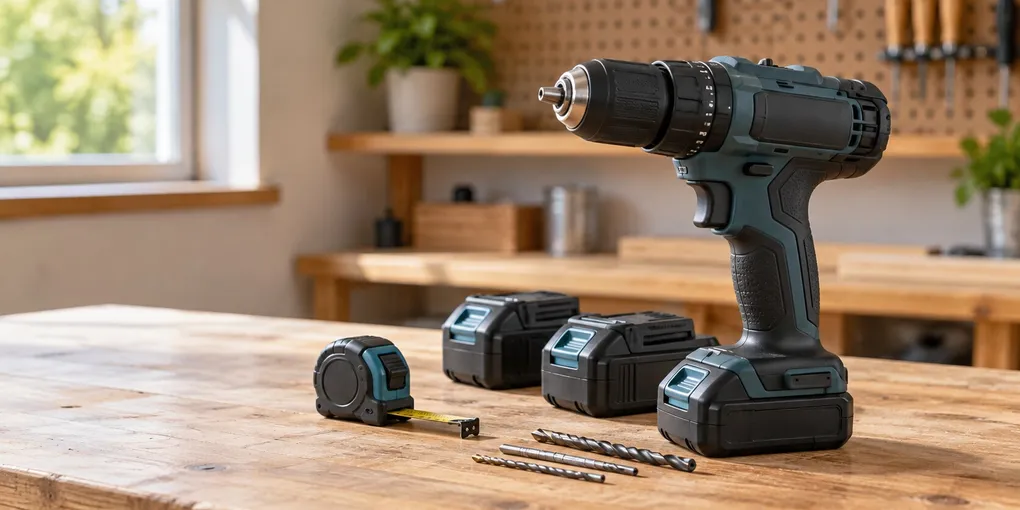
Hero image: original OpenAI-generated artwork, created for Lejnel.com.
Sources
Frequently Asked Questions
Is a 12V or 18V cordless drill better for home use?
A 12V drill is usually the easier choice for furniture, shelves, pilot holes and small repairs because it is lighter. Choose an 18V or 20V-class drill when you regularly make larger holes, drive long fasteners, or want more headroom; match the tool to the work rather than buying voltage for its own sake.
What chuck size should a cordless drill have?
A 3/8-inch chuck suits most general household drilling and driving. A 1/2-inch chuck can accept larger-shank bits and is useful for heavier work, but the drill is often larger and heavier. Check the bits you expect to use before paying for capacity you will not need.
Should I buy a drill or an impact driver?
Choose a drill when you need controlled holes, a clutch, and a chuck that accepts ordinary drill bits. Choose an impact driver for frequent long screws and lag bolts. It is not a universal replacement: its hex collet and pulsing torque are less convenient for delicate screwdriving or many ordinary bits.
Do I need a hammer drill at home?
Only if you regularly drill masonry and the manufacturer says the tool is suitable for that work. For an occasional concrete hole, renting an appropriate hammer drill may be cheaper and easier; do not use a normal drill as a substitute for a rotary hammer on demanding masonry.