Editorial note: This is general information, not professional advice. Check the linked sources and current local guidance before acting.
If you regularly lie awake at 2 a.m. while your phone glows blue beside you, the problem is rarely “you are not tired enough.” Sleep is a system with several adjustable parts: timing, light, temperature, caffeine, and habits. Each part is under your control, and fixing them one by one works far better than another “sleep app” that mostly counts your snoozes.
Here are nine evidence-based fixes, ordered roughly from most effective to nicest to have. Apply them in a week — not all in one night.
Step 1: Anchor your wake time — every day
Your body clock runs on its own 24-hour cycle of roughly 24.2 hours, so it drifts later every day unless something pulls it earlier. The strongest puller is consistency: wake up at the same time every day, including weekends, whether or not you got enough sleep.
This is counterintuitive: if you slept badly, your instinct is to “catch up” by sleeping in. That catch-up shifts your clock later, and then Monday becomes brutal. Instead, keep the anchor fixed, and your bedtime will start drifting earlier on its own within a few days.
Practical start: pick your wake time, set an alarm for it, and hold it for one week. The average person’s sleep debt repairs itself within days once circadian timing is stable.
Step 2: Use light as a signal, morning and evening
Light is the master switch of your body clock, and you can use it deliberately:
- Morning: get 10–15 minutes of outdoor light (even cloudy sky works) within an hour of waking. This sets your clock for the day and improves alertness for hours.
- Evening: dim the lights an hour before bed. Replace ceiling lights with a bedside lamp; screens are not the only problem — bright overhead light suppresses melatonin at night too.
If you must use a screen late, turn on the night/dim mode and drop the brightness. When we wrote our digital detox guide, the same rule came up again and again: the evening is not for scrolling, and if the phone leaves the bedroom, the temptation leaves with it.
Step 3: Make the bedroom cool, dark, and quiet
Sleep happens when your core body temperature drops about one degree. That is why a warm, stuffy room makes it hard to fall asleep, and why most people sleep best in a room around 18–19 °C.
Three cheap upgrades go a long way:
- Cool: lower the heating in the bedroom — this also cuts your energy bill, as we cover in our home energy guide.
- Dark: a curtain rod with blackout curtains, or a simple sleep mask, if your curtains leak street light.
- Quiet: earplugs or a white-noise sound are enough for most people; a fan does both jobs at once. If a partner’s snoring is the noise you cannot escape, the snoring guide helps address the cause rather than only masking it.
Your phone does not belong in the bedroom anyway — and if it has to stay, put it in airplane mode and face-down.
Step 4: Cut caffeine early, alcohol before bed
Caffeine’s half-life is roughly five hours. If you drink a coffee at 4 p.m., half of it is still in your system at 9 p.m., and a quarter at 2 a.m. — enough to lighten sleep even when you fall asleep “fine.” Set a simple rule: no caffeine in the eight to ten hours before bed. For a 10 p.m. bedtime, that means a last coffee before noon or early afternoon.
Alcohol is the other sleep thief. It makes you fall asleep faster, but it fragments the second half of the night and reduces deep sleep — you wake up tired even after “a good night.” If you drink in the evening, finish at least three hours before bed.
Step 5: Build a wind-down routine
Sleep is not a switch with an “on” button; it is a ramp. Give yourself 30–60 minutes of the same low-stimulation order every night: dim lights, warm shower, paper book, stretching, your evening checklist, then bed. Same order, every night — the brain learns the routine as “sleep is coming.”
Turn off work email and messaging apps for this window. One of the strongest sleep killers is the message that arrives at 10:40 p.m. and opens a 20-minute reply session. Silence everything that is not a human emergency — the same rule as in our digital detox guide, applied at night.
Step 6: Use the 15–20 minute rule
If you are in bed and awake for more than about 20 minutes, get up. Staying in bed frustrated teaches your brain that bed is a place to worry. Get up, sit somewhere dim and boring, and do something calm until you feel drowsy — a paper book, quiet music, a podcast on low volume. Do not turn on the phone. When you feel sleepy, go back.
This is the single most underrated sleep tip, and it works because it breaks the worry loop at the source: you stop competing with your own mind in the dark.
Step 7: Schedule meals and exercise at the right time
Two timing rules that quietly wreck sleep:
- Meals: a heavy meal within two to three hours of bed raises your temperature and puts your digestion in the “awake” state. If you are hungry late, go for something light — yogurt, a banana, a few nuts.
- Exercise: training improves sleep quality, but intense sessions within about two hours of bed raise your core temperature and adrenaline at exactly the wrong moment. Morning or afternoon workouts help the night most.
Step 8: Handle the racing mind on paper
The classic 2 a.m. problem: a fully functioning brain with a to-do list. Write it down. Keep a small notepad on the nightstand, or use your phone’s notes app at dusk — capture everything that is circling, from “call the plumber” to “that email I forgot.” Our personal knowledge base guide describes exactly this capture habit: writing a thought down in two seconds frees your memory to rest.
If the mind still races, try breathing against the anxiety: inhale through the nose for 4 counts, hold for 7, exhale slowly for 8. Four or five rounds slow the heart and give the racing loop something else to do. It sounds like meditation-woo, but the slow exhale genuinely activates the body’s calming response. If the loop is bigger than a to-do list — replaying a conversation, worrying about tomorrow — the 9 techniques for stopping overthinking add a 15-minute worry window and a brain dump.
For a structured version of that slow-attention practice, see the beginner meditation guide.
Step 9: Keep a two-week sleep log
For 14 days, write three numbers every morning: when you went to bed, when you woke, and how rested you feel (1–5). Also note caffeine after noon, alcohol, and late screens.
Patterns appear fast: Monday mornings are bad because of Sunday’s 1 a.m. finish; the evenings after gym days are your best sleeps; Tuesday’s bad night always follows Tuesday’s late coffee. Once you see your own patterns, the fixes from steps 1–8 become precise — you stop guessing and start adjusting the two or three things that actually move your night.
When you can’t sleep at all
Some nights the routine fails anyway: it is 2 a.m., you are wide awake, and every tip above feels like homework. This is the moment that matters most, and what works is a short sequence, not a bigger effort:
- Get up after 15–20 minutes. The rule from Step 6, and the one that saves the night. Staying in bed teaches your brain that bed is a place to worry — the night only gets worse from there.
- Sit somewhere dim and do something boring — a paper book, quiet music, a glass of water. No phone in this window: the feed makes the loop tighter, not looser.
- Write the loop down. One sentence per thought, then close the notepad. The brain keeps replaying what it fears it will forget — written down, it can let go (the same capture habit as our knowledge base guide).
- Breathe slow. Four counts in, seven held, eight out — five rounds, from Step 8. If anxiety is what is running the loop, the overthinking guide adds a 15-minute worry window and a brain dump, made for exactly this night.
- Do not start the clock. Checking the time every few minutes is its own fuel. Phone face-down, and trust the wake-time anchor from Step 1: even a bad night gets repaired by the same wake time tomorrow.
Two special cases:
- Summer nights. The bedroom needs to sit around 18–19 °C to fall asleep, and a warm night quietly shreds that. Cheap fixes that beat a fan on full blast: cool the room in the evening and shut the windows before the outside air warms up, aim the fan at the wall instead of the bed, swap the duvet for a thin sheet, and take a warm shower about an hour before bed — after a shower the body sheds heat faster, which is the classic reason a warm bath still works as a sleep aid.
- Waking after five or six hours. Early waking is the same problem with the clock set too early, or with a bedroom too bright at 5 a.m. The fixes are the same: no caffeine in the 8–10 hours before bed, blackout curtains, and the get-up rule above instead of lying there.
The quick-win checklist
If you only have one day: set the same wake-up time for tomorrow, keep the bedroom cool and dark, and put the phone in another room before 10 p.m.
- Wake at the same time every day, weekends included.
- Get 10 minutes of daylight within an hour of waking.
- Dim the lights after dinner; no bright overhead light.
- No caffeine in the 8–10 hours before bed.
- Bedroom at 18–19 °C, dark, and quiet.
- Same wind-down routine, 30–60 minutes, every night.
- Out of bed after ~20 minutes of wakefulness — do something boring, dim, and phone-free.
- Heavy meal at least 2–3 hours before bed; hard exercise earlier in the day.
- Write tomorrow’s to-do list at dusk, then leave it alone.
Sleep is the one health habit with an immediate, measurable return: better mood, sharper focus, and more patience with everything else in your day. The fixes above are not exotic — they are the boring, proven ones, applied consistently for one week.
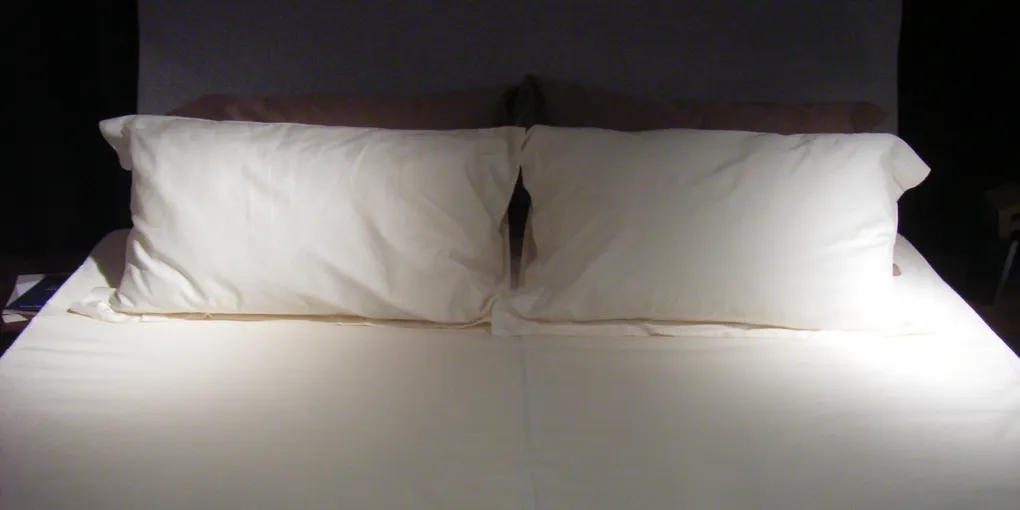
Hero image: Lpinaye, CC BY-SA 3.0, via Wikimedia Commons.
Sources
Frequently Asked Questions
How long does it take to fix a sleep schedule?
Most people notice a difference within three to seven days of waking up at the same time every day, including weekends. The first few days are the hardest because your body clock is still catching up — the trick is to keep the wake time fixed and let bedtime adjust itself.
What should I do when I just cannot fall asleep?
If you have been in bed for about 15–20 minutes without falling asleep, get up. Sit in dim light somewhere boring and do something calm — reading a paper book, listening to a quiet podcast — until you feel sleepy, then go back to bed. Do not scroll your phone and do not stay in bed frustrated.
Is it okay to take melatonin every night?
Melatonin is a useful short-term tool for shifting your clock, especially across time zones or night shifts. It is not a sleeping pill and it does not work for everyone. Talk to a pharmacist or doctor before using it regularly, and combine it with a consistent sleep schedule rather than relying on it.
How many hours of sleep should I aim for?
Most healthy adults need seven to nine hours. If you need an alarm on weekends too, or you feel foggy mid-afternoon every day, you are probably on the low side. Try adding one hour of sleep time for a week and see how you feel.
Why can't I sleep in the summer?
Heat is the usual cause. The bedroom needs to be around 18–19 °C to fall asleep, and a warm night raises your core temperature at exactly the time it should be dropping. Cool the room in the evening, shut the windows before the night air warms up, use a fan, swap the duvet for a thin sheet, and take a warm shower about an hour before bed.