How to Meditate: 10 Beginner Steps for a Calmer Practice
Quick answer
To meditate, sit comfortably, choose one anchor such as your breath, notice when your attention wanders, and gently return to that anchor without judging yourself. Start with five minutes, then build toward 10 minutes most days; the practice is the returning, not an empty mind.
Editorial note: This is general information, not professional advice. Check the linked sources and current local guidance before acting.
Meditation is often described as clearing your mind, which makes it sound like a test you can fail. A more useful definition is simpler: you practise placing attention on the present, noticing when it has wandered and bringing it back.
That means a busy mind is not a reason to wait. You can meditate in a chair, on a walk or while doing a routine task. The beginner practice below takes about 10 minutes once you have learned the sequence. The NHS mindfulness guide describes the same basic loop: pay attention to thoughts, sounds, breathing or body sensations, then return when the mind wanders.
1. Choose a small, honest starting time
Begin with five minutes. Put the session after something that already happens, such as brushing your teeth, making coffee or shutting down your computer. A timer removes the need to keep checking the clock.
Five minutes is not a lesser version of meditation. It is long enough to notice several rounds of attention and distraction, but short enough that resistance does not grow into a reason to skip. After a week, try 10 minutes if five feels ordinary rather than heroic.
2. Pick a place that is comfortable and safe
Use a chair, sofa edge or cushion where you can stay upright without fighting pain. Your feet can rest on the floor, your hands can sit loosely in your lap and your shoulders can drop. There is no prize for sitting cross-legged.
Choose a reasonably quiet place, but do not wait for perfect silence. A ticking clock, traffic or another person moving around can become part of the practice. Keep the phone on do-not-disturb and set the timer before you begin.
3. Set your posture without making it rigid
Let the spine lengthen naturally, as if the top of your head were gently rising. Keep the chin level, jaw unclenched and eyes closed or softly lowered. Open eyes are completely acceptable if closing them makes you sleepy or uncomfortable.
The goal is alert ease: awake enough to notice what is happening, relaxed enough not to brace. If you feel sharp pain, numbness or dizziness, change position. Meditation should not require you to endure an injury.
4. Choose one simple anchor
An anchor is the neutral experience you return to. For most beginners, breathing is convenient: feel the air at the nostrils, the chest moving or the abdomen rising and falling. You do not need to control the breath or breathe in a special pattern.
You can also use the sound of a fan, the contact between your feet and the floor, a short word such as “here” or the feeling of each step. Choose one anchor for the session so you are practising attention rather than constantly redesigning the exercise.
5. Follow the beginning, middle and end of each breath
Notice the next inhale from its first sensation to its last. Notice the pause, if there is one, then follow the exhale. Keep the attention close to what is actually happening instead of narrating whether the breath is good, bad, deep or shallow.
If the breath feels uncomfortable, switch to the soles of your feet or the sounds around you. Meditation does not depend on forcing a slow or deep breath. Normal breathing is enough.
6. Name distraction gently
Sooner or later you will notice a thought: a message you forgot to send, an argument, a memory, a plan for dinner. Use one quiet label — “thinking,” “planning,” “worrying” or “remembering” — and return to the anchor.
Do not debate the thought and do not finish the mental task before coming back. The label creates a little distance without turning the session into a fight. The NHS beginner instructions use a similarly plain approach: notice the inhale and exhale, then begin again when attention moves.
7. Treat every return as one repetition
You may return to the breath dozens of times in five minutes. That is not evidence that you are bad at meditation; it is the exercise itself. Each return is a small repetition of noticing and redirecting attention.
Try removing the scorecard. You do not need a silent session, a special feeling or a dramatic insight. “I noticed I was gone and came back” is a successful round, even if the same thought returns immediately.
8. Work with restlessness, sleepiness and discomfort
For restlessness, make the next minute smaller: feel only one inhale and one exhale at a time. For sleepiness, open your eyes, sit more upright or meditate earlier in the day. For ordinary itchiness, notice the sensation for a few breaths before deciding whether to move.
Movement is allowed. Adjusting your posture mindfully is better than turning discomfort into a test of endurance. If you have an injury, chronic pain or a condition that makes stillness difficult, try a shorter session or walking meditation.
9. Try walking meditation instead
Walking meditation is useful when sitting makes you agitated, drowsy or overly focused on physical discomfort. Walk slowly in a safe, uncluttered space. Feel the foot lift, move forward and meet the ground. When attention wanders, return to the next step.
You can also practise while waiting for a kettle or walking from one room to another: notice three sights, two sounds and the contact of your feet with the floor. This is not a way to multitask through every moment. It is a short opportunity to notice the present without needing a cushion.
10. End clearly and repeat without chasing results
When the timer rings, do not spring up immediately. Notice the room, your posture and your mood. Take one normal breath, then decide what you will do next. A clear ending helps the practice feel contained rather than like an interruption.
For the next two weeks, track only whether you practised and for how long. Do not grade calmness. If you want a useful progression, use five minutes for days 1–4, seven minutes for days 5–8 and 10 minutes for days 9–14. Missing a day is information, not a verdict: attach the next session to a more reliable cue or make it shorter.
How to meditate effectively without overcomplicating it
A few choices make the routine easier to keep:
- Use the same cue. A fixed after-coffee or before-bed slot removes a daily decision.
- Keep the method boring. Change one thing at a time instead of downloading a new app whenever your attention wanders.
- Use guidance when it helps. A trusted audio track can provide structure, but silence works too.
- Choose movement when sitting is a poor fit. Walking, gentle stretching and a body scan are still attention practices.
- Pair meditation with real-life moments. Notice one complete breath before answering a difficult message, or feel your feet before opening a door.
The American Psychological Association notes that mindfulness meditation can take time to feel natural. That is a useful expectation: the benefit of a routine is not that every session feels peaceful, but that you become more familiar with noticing what is happening before reacting automatically. The NCCIH review of meditation and mindfulness also describes the evidence as varying by practice and outcome, so treat meditation as a skill for general wellbeing, not a guaranteed cure.
When to pause or ask for help
Meditation is not suitable as a do-it-yourself replacement for urgent care or mental-health treatment. Stop if a practice repeatedly brings overwhelming panic, dissociation, traumatic memories or a worsening of symptoms, and discuss what happened with a qualified professional. A shorter, eyes-open, movement-based practice may be a better starting point for some people, but you do not need to push through distress to prove commitment.
Start with a chair, five minutes and one breath. Notice the wandering, return without an argument and do the same thing tomorrow. That is how to meditate: not by emptying the mind, but by practising the return.
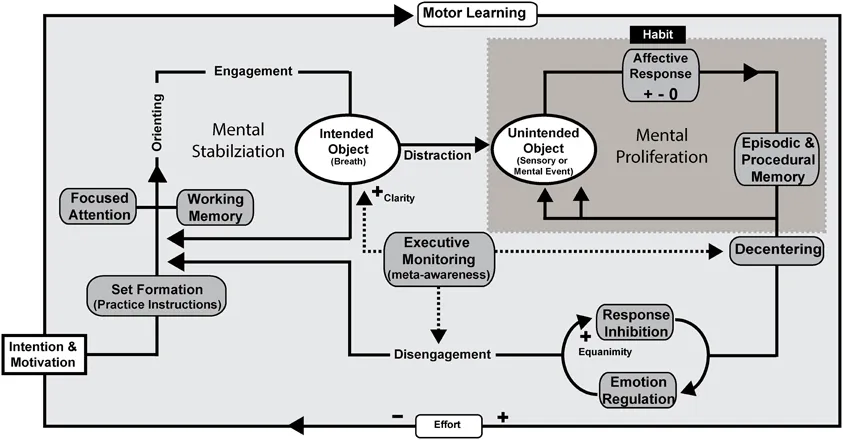
Hero image: Vago DR and Silbersweig DA, CC BY 3.0, via Wikimedia Commons.
Sources
Frequently Asked Questions
How long should a beginner meditate?
Start with five minutes and increase to 10 minutes when that feels repeatable. A short practice you do most days is more useful for building the skill than an occasional 30-minute session you dread.
What should I think about while meditating?
You do not need to think about anything particular. Use the physical feeling of breathing, a sound, a word or the sensations of walking as an anchor; when thoughts appear, notice them and return to the anchor.
How do I meditate if I cannot stop thinking?
Do not try to stop thoughts by force. Label the event briefly — planning, remembering, worrying or hearing — and bring attention back to the next breath. The return is a repetition that builds attention, not a failure.
Can meditation replace treatment for anxiety or depression?
No. Meditation may support general wellbeing, but it is not a substitute for assessment or treatment. If practice increases distress, panic, dissociation or difficult memories, stop and speak with a qualified health professional.