Quick answer
Snoring has several possible causes, so no single fix works for everyone. If there are witnessed breathing pauses, gasping or choking, marked daytime sleepiness, or morning headaches, ask a clinician about sleep-apnea assessment before relying on home remedies. Otherwise, track position, alcohol, congestion and sleep changes one at a time, and stop anything that worsens breathing or sleep.
Editorial note: This is general information, not professional advice. Check the linked sources and current local guidance before acting.
Snoring comes from somewhere boring: your airway. While you sleep the muscles of your throat relax, the tongue and soft palate drop back, and every breath squeezes past them. The narrower the passage, the louder the sound — and the lighter your sleep.
The honest part: there is no single anti-snoring cure, because snoring has more than one possible cause. Some low-risk changes are reasonable to test, but improvement does not prove that sleep apnea or another underlying problem is absent. This guide starts with the medical boundary, then gives a controlled way to try simple changes without promising a result.
1. Rule out sleep apnea before you self-treat
Loud snoring alone is mostly a nuisance. Snoring combined with gasping, choking or pauses in breathing is a medical condition: obstructive sleep apnea. Each pause wakes you slightly — dozens or hundreds of times a night — which is why people with untreated apnea wake up exhausted even after eight hours in bed.
If your partner has heard you stop breathing, or if you wake with headaches or significant daytime sleepiness, do not spend weeks on pillows and sprays. Ask a clinician whether sleep-apnea assessment is appropriate. If apnea is diagnosed, treatment is selected with a clinician; CPAP is one established option, but this article cannot choose a device or predict how quickly symptoms will change.
2. Sleep on your side — the biggest free win
Back sleep is the classic snorer’s position: gravity tips the tongue straight back into the airway. Side sleeping removes that problem in one move, which makes it the first thing to try — and the thing that works for the most people.
- Stay in position. The old trick still works: sew a tennis ball into the back of a pajama shirt, so rolling onto your back wakes you before your throat gets the chance to snore. A full-length body pillow works for the same reason.
- Elevate slightly, not dramatically. A wedge pillow raising your head 10–15° helps some people; raising it much more tends to pinch the neck. Pillow height matters for your neck alignment too — the same geometry covered in the posture guide.
3. Keep alcohol away from bedtime
Alcohol is a muscle relaxant, including for your throat. A drink in the evening makes the soft palate floppier exactly during the hours you want it firm. The effect shows up even in people who never snore otherwise.
The practical version: compare nights with and without alcohol near bedtime, without treating a short experiment as medical proof. Do not change prescribed sedatives or sleeping medicines without the prescriber’s advice; ask about them if snoring or daytime sleepiness changed after starting one.
4. Open up your nose
Snoring through a stuffy nose is snoring with the volume up: a blocked nose forces you to breathe through your mouth, and mouth breathing pulls the jaw back. Nasal dilation and decongestion are a fast, cheap first move:
- Nasal strips may help when the obstruction is at the nose, but they cannot treat every cause of snoring.
- Saline spray or rinse may ease some congestion when used as directed. For persistent congestion, ask a clinician or pharmacist about the cause and safe product use rather than using a decongestant indefinitely.
5. If you carry extra weight, that matters more than any gadget
Fat around the neck narrows the airway directly, and it is the one cause that gets worse over time. The good news: it does not take dramatic weight loss to hear the difference. Even a modest reduction can noticeably reduce snoring in people who gained weight around the neck.
If weight change is one of your goals, use a gradual plan appropriate to your health and discuss it with a clinician if you have a condition, take medication or have a history of disordered eating. Weight change may affect snoring for some people, but this page cannot predict an individual result.
6. Train your tongue and mouth
Exercises marketed for the tongue and mouth have mixed evidence and are not a substitute for sleep-apnea assessment. If you try one, use a reputable clinician-provided routine and stop if it causes pain, choking or jaw problems.
A simple set, a few minutes a day:
- Tongue slide: push the tip of your tongue along the roof of your mouth from front to back, 20 times.
- Tongue curl: curl your tongue back as far as you can and hold for 10 seconds, repeat 5 times.
- Say your vowels: exaggerate A-E-I-O-U for a minute — it works the same muscles as the airway.
7. Fix the room, not just the bed
Dry air irritates the throat; dust and allergens make the nose stuffy; and a warm room makes sleep lighter overall. Three cheap adjustments:
- Keep the bedroom cool and dark — the full checklist is in the sleep better guide.
- A humidifier on dry nights helps if you wake with a dry, sore throat.
- Wash pillows and bedding regularly if you suspect dust mites — allergy-driven congestion is a common, fixable snoring cause.
8. Consider a mouthpiece or chin strap — with honesty
If your snoring comes from the jaw falling backward during sleep, a dental appliance that holds the lower jaw slightly forward can genuinely help. The reliable version is dentist-fitted; internet one-size-fits-all devices are a gamble on a part of your body you will wear every night.
A chin strap can be uncomfortable and is not appropriate for everyone, especially when nasal breathing is impaired or sleep apnea is possible. Do not use it to force the mouth closed when breathing is difficult.
9. Know when it’s doctor time
Arrange clinical advice promptly if any of these describe you; do not wait for a home experiment to finish:
- Your partner has witnessed pauses or gasping.
- You wake with headaches, or you need a nap every single day despite normal bedtime.
- The snoring is so loud it disturbs the whole house — and it never stops in any position.
- You have high blood pressure or recently gained weight around the neck.
A sleep study is usually simple: many are done at home with a small monitor. If the result is apnea, CPAP or a dental appliance changes the conversation from “quiet the noise” to “treat the condition.”
Which fix, for which snorer
| What you notice | Reasonable next step | Do not assume |
|---|---|---|
| Snoring mainly when supine, with no warning signs | Try comfortable side sleeping and record the result | Improvement proves the airway is otherwise healthy |
| Snoring after alcohol or a medicine change | Avoid alcohol near bedtime; ask the prescriber about medicine effects | Stopping prescribed medicine yourself is safe |
| Nasal blockage | Address the cause with pharmacist/clinician guidance | A nasal strip treats throat obstruction or sleep apnea |
| Witnessed pauses, gasping/choking or marked sleepiness | Seek sleep-apnea assessment | A gadget or pillow rules it out |
| Persistent, disruptive or worsening snoring | Arrange clinical review | Loudness alone identifies the cause |
When you can’t sleep through the night
If you can’t sleep through the night because the snoring is yours, listen for gasping or choking, witnessed breathing pauses, morning headaches, or daytime sleepiness. These are reasons to ask a clinician about sleep apnea—not to keep adding pillows. Both the NHLBI and the NHS snoring guidance describe warning signs. If it is your partner who cannot sleep, earplugs, white noise and a calm conversation can help while you arrange an assessment.
If you can’t sleep after drinking alcohol, do not add sleeping pills on your own: the NHS notes that they can sometimes cause snoring. Skip more alcohol and try the side-sleeping and nasal steps instead. If anxiety, summer heat or another insomnia trigger is the real problem rather than snoring, the sleep-better guide covers that separate problem.
If your partner is the snorer
If you are the one lying awake, be kind and be practical: earplugs and a white-noise machine are not giving up — they are the standard solution while your partner works through the list above. And if their snoring is the loud, gasping variety, it is their sleep that is being wrecked, not just yours — that conversation is the one worth having.
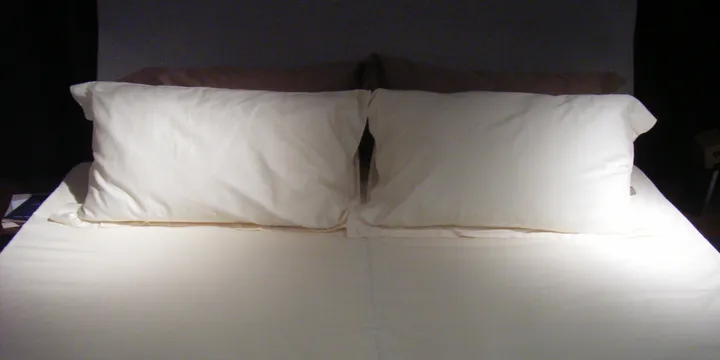
Hero image: Pöllö, CC BY 3.0, via Wikimedia Commons.
Sources
Frequently Asked Questions
Why do I snore when I sleep on my back?
Back sleeping can worsen snoring for some people because sleep position changes the upper airway. Side sleeping is a reasonable low-risk trial, but it does not remove every cause. Use a body pillow or another comfortable position aid if it helps, and stop if it creates pain or disrupts sleep.
Does snoring mean I have sleep apnea?
Not always, but snoring with witnessed pauses, gasping or choking, morning headaches, or significant daytime sleepiness deserves clinical assessment. A clinician decides whether a home or laboratory sleep study is appropriate; do not self-diagnose from volume alone.
Is there any way to stop snoring immediately?
You can try side sleeping, avoiding alcohol near bedtime, and addressing obvious nasal congestion, but there is no dependable instant cure. Treat these as short, low-risk observations rather than proof of the cause. If warning signs are present, seek assessment instead of stacking more remedies.
Do anti-snoring mouth guards work?
A mandibular-advancement device may be considered for some people, but suitability and fit need professional assessment. Do not use an online device as a substitute for evaluating possible sleep apnea; discuss oral appliances with a clinician or qualified dentist.