How to Save Money on Groceries: 12 Tips to Cut Your Bill
Quick answer
The fastest grocery savings come from four habits: plan meals around the sale flyer, always compare unit prices (price per kilogram, not per package), fill your basket with store brands, and stop food waste. Together, these can cut a typical grocery bill by 20–30% with no change in how much you eat.
Editorial note: This is general information, not professional advice. Check the linked sources and current local guidance before acting.
Most people think saving money on groceries means coupon clipping and hunting for 50-cent discounts. It does not. The real savings are in the shopping system: what you buy, how you compare prices, and what ends up in the bin at the end of the week.
The good news is that none of this requires willpower. It requires a few habits, and you can start them on your very next shop.
1. Plan meals around what is on sale
Before you write a list, open the store’s weekly flyer — most supermarkets publish it as an app or a digital leaflet. Whatever is discounted this week becomes the starting point for your menu: chicken on sale becomes stir-fry night, the cheap vegetables become the side dish.
Planning meals first is also the single biggest anti-waste move there is: a weekly meal plan means every ingredient you buy has a job. When you decide dinner in the aisle, you buy things that “might be useful” — and those are the things you throw away.
2. Never shop hungry, never shop without a list
Shopping hungry measurably increases spending — hungry shoppers buy more desserts, snacks and impulse items. Eat before you go, or shop online after a meal if that is your style.
The list is not a suggestion. Write what you need for the planned meals plus the essentials you are out of, and treat everything else as an exception, not a default. A 2-minute list made at home beats an hour of temptation in the store.
3. Compare unit prices, not package prices
The price on the shelf tag is almost a marketing trick. The number that matters is the small “price per kg” or “price per liter” printed next to it.
- A 500 g bag at 3.50 is 7.00 per kg.
- A 750 g bag at 4.90 is 6.53 per kg.
The bigger bag is cheaper per kilogram even though the shelf price is higher. Getting into the habit of reading the unit price takes about two seconds per product and beats every coupon you will ever clip. The same rule applies online: compare the price per unit, and include delivery fees.
4. Move your eyes to the store brand shelf
Store brands — the ones with the store’s own label — are the biggest honest discount in the store, typically 20–30% less than the name-brand equivalent. For staples like flour, oats, rice, sugar and frozen vegetables, the difference is usually invisible, and the products are often made in the same factories as the famous labels.
Strategy: try the store brand of each product once. If you cannot tell the difference, you just saved 25% on that item forever. If you can, switch back for that one product.
5. Shop the eye level — and then look up and down
Supermarkets rent out eye-level shelf space to the brands that pay the most. Your own best-value options are one shelf up (snacks and cereals) or down on the bottom shelf (own-brand, bigger packs).
Getting in the habit of scanning the whole column, not just the middle, takes a little longer per trip and is worth it: the cheapest versions of most products are never at eye level.
6. Buy “family packs” only when the unit price is lower
Bigger packs are often — but not always — cheaper per unit. The correct rule is simple: a big pack is a good deal only when its unit price is lower AND you will use all of it before it spoils.
This is where planning pays off again: a huge pack of yoghurt is fine if your menu actually includes five yoghurt meals this week. It is a bad deal if you buy it because it looks like a bargain and eat half of it.
7. Fill the basket with frozen and canned vegetables
Frozen vegetables are picked and frozen within hours, and they keep their nutrients at least as well as fresh produce — usually better, since fresh produce spends days in transport and on shelves. And because they do not spoil, they eliminate the biggest waste category in most households: vegetables.
Canned beans, tomatoes and fish are similarly cheap, stable and shelf-ready for a late dinner. Eggs are the other classic cheap protein — a batch of boiled eggs in the fridge covers breakfast and lunches for days (the boil-eggs guide shows the exact times and the peeling trick). A freezer with frozen peas and a cupboard with canned tomatoes means the “there’s nothing to eat” emergency almost never happens.
8. Buy fruits and vegetables in season
Seasonal produce is cheaper, fresher and simply better. The price difference between in-season and out-of-season is often 30–50% for the same product. This is also a natural nutrition tip: in-season produce is at its peak.
9. Make the “use it up” meal a weekly ritual
Food waste is money waste. A typical household throws away a significant part of what it buys — and the average person’s grocery bill could drop simply by wasting less.
One evening a week, cook “whatever is left”: the half-onion, the end of the rice, the two tomatoes about to wilt. Connect leftovers into tomorrow’s meals — roast chicken becomes soup, bread becomes croutons. This is the same trick as the meal-planning approach: every ingredient gets used, and the bill gets smaller.
10. Use club cards and apps — but never buy for the discount
Loyalty cards and their apps give you automatic discounts on items you would buy anyway. The catch: the same apps are designed to drive impulse purchases with “special” offers. Use the listed deals, skip the rest.
The rule that keeps this safe: a discount on something you were not going to buy is not a saving — it is an expense.
11. Compare your supermarkets’ basics once
Stores price their loss leaders differently: one is cheapest on dairy, another on meat, another on produce. Once or twice, buy the exact same baseline basket — milk, eggs, rice, chicken, vegetables, coffee — at two or three stores and compare the totals. One store will surprise you, and from then on, you shop the winner for the basics.
12. Track the grocery line like a budget line
Groceries should be a number in your budget, not a mystery. Note what you spend for two or three weeks — the receipt totals are enough — and set a realistic weekly target. Then watch the effect of the other eleven tips in the numbers.
The weekly amount you free up is the same money that fills an emergency fund and fights the other budget leaks like subscriptions you forgot about. Stack grocery savings with a lower energy bill and the same household spending starts working twice as hard.
Quick-win checklist
- Plan the week’s meals around the current sale flyer
- Only shop with a list, and after a meal
- Compare unit prices, not package prices
- Try every store brand once and keep the ones you cannot tell apart
- Check the bottom shelf and the top shelf at least
- Buy frozen and canned for the emergency cupboard
- Cook one “use it up” meal a week
- Set a weekly grocery budget and track it for two weeks
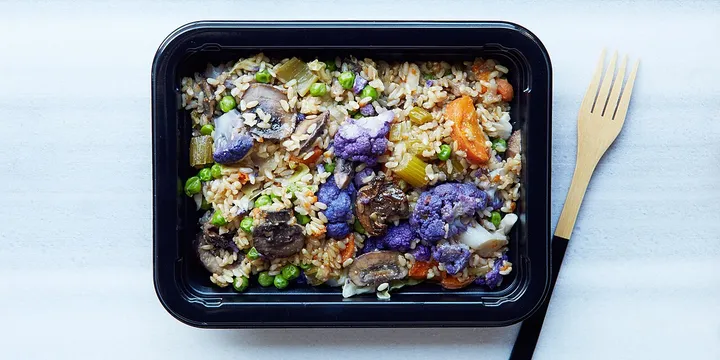
Hero image: Basile Morin, CC BY-SA 4.0, via Wikimedia Commons.
Sources
Frequently Asked Questions
How much money can you actually save on groceries?
Most households can cut 20–30% off their grocery bill with planning, unit-price comparisons, store brands and less waste. A family spending 400 a month could save roughly 80–120 — that is a thousand a year or more, with no change in how much they eat.
Do store brands taste worse than name brands?
Not usually — many store-brand products are made in the same factories as name brands, and blind taste tests regularly find no meaningful difference. The typical saving is 20–30%. Try a few first: for staples like flour, sugar, rice and oats, the difference is usually zero.
Is buying in bulk always cheaper?
No. Bulk is only cheaper when the unit price is genuinely lower and you will use the product before it expires. A giant jar of a spice you use twice a year is not a saving — it is money sitting on a shelf. Always compare the price per kilogram, including membership fees.
Are coupons worth using?
Digital and club-card deals are usually better than paper coupons, because they apply automatically. Use them when they match something you would buy anyway — never buy something just because it is discounted. Real money is in the shopping habits, not the coupon clipping.