How to Read an Electricity Bill: Find the Numbers That Matter
Quick answer
Read an electricity bill in this order: confirm the account and billing dates, find total kWh used, separate the energy rate from fixed and delivery charges, check the amount due and due date, then compare the same billing period with a similar month. Labels, taxes and rate structures differ by provider, so use the bill's own definitions and contact the utility when a charge is unclear.
Editorial note: This is general information, not professional advice. Check the linked sources and current local guidance before acting.
An electricity bill is easy to misread because it combines two different questions: how much energy did you use? and what does your provider charge to serve your address? Start by separating those questions. A higher total does not automatically mean you used more electricity, and a lower kWh figure does not guarantee a lower amount due.
This guide uses common terms found on U.S. bills. Names, taxes, support programs and rate rules differ by country and provider, so treat your own bill and tariff as the final reference.
First, make a five-line note from the bill
Before studying every line, write down these details from this month and the comparable bill from last year or last month:
| Field | Why it matters |
|---|---|
| Billing start and end dates | A longer period can raise the total even if daily use is unchanged. |
| Total kWh | This is the basic measure of energy consumed. |
| Energy charge or supply charge | Usually the part linked to energy use or its rate. |
| Fixed, delivery and other charges | These may not rise or fall in direct proportion to kWh. |
| Total due and due date | This is the payment decision, including any prior balance or credit. |
The U.S. Energy Information Administration explains that a watt measures power at a moment, while a watt-hour measures energy used over time; utilities generally use kilowatt-hours (kWh). That makes kWh the best starting point for comparing your household’s use.
Check the account, address and billing period
Confirm that the account number, service address and dates are right. This sounds basic, but it prevents a comparison between a partial bill and a full month, or between the wrong meter and your home.
Count the days in the billing period. If you want a fairer comparison, divide total kWh by the number of days:
total kWh ÷ billing days = average kWh per day
That is only a comparison tool, not a verdict. Weather, visitors, a new appliance, working from home and heating or cooling can all change daily consumption. Keep a simple note beside your home energy-saving routine rather than trying to diagnose a whole year from one bill.
Find the total kWh before looking at the money
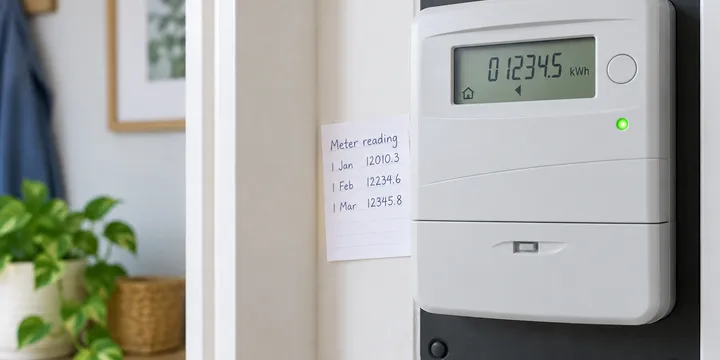
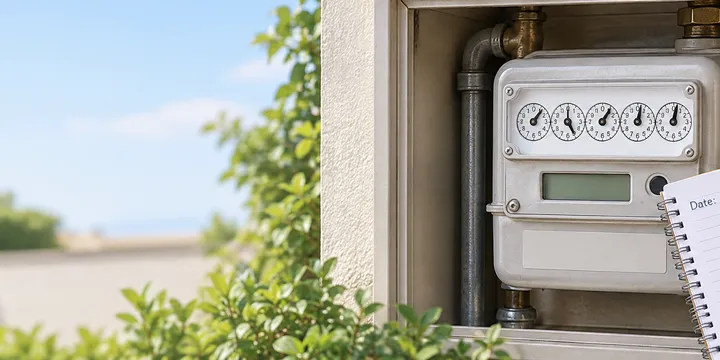
Look for “usage,” “consumption,” “energy used” or “kWh.” Some bills show a meter reading from the start and end of the period; others show the total directly or state that the reading was estimated.
If a reading is marked estimated, note it. A later actual reading can produce a correction. Do not assume an unusual month means a faulty appliance until you know whether the provider read the meter or estimated your use.
A useful comparison is not just this month versus last month. Compare the same season in the previous year where possible. Cooling and heating patterns make an April-to-August comparison far less meaningful than August-to-August.
Separate energy from the charges around it
Bills use different labels, but the total commonly includes more than one type of amount:
- Energy or supply charge: often connected to the kWh you used and the applicable rate.
- Delivery, transmission or distribution charge: costs associated with getting electricity through the system; the naming and structure vary.
- Fixed customer or service charge: an amount not directly tied to each additional kWh.
- Taxes, riders, credits or adjustments: provider- and location-specific items that can change the final amount.
- Previous balance or payment: money carried from an earlier bill, which is not new electricity use.
The EIA’s overview of electricity prices describes generation, transmission and distribution as factors behind electricity prices. The exact way those costs appear on a household bill is a provider decision, which is why copying a charge name from another utility is rarely helpful.
Do not divide the total bill by kWh and call the result your “electricity rate” without a note. That calculation can be useful for tracking what you paid overall per kWh, but it blends fixed charges, taxes and adjustments with energy use.
Check whether the rate changes by time or amount
Some accounts have a flat rate. Others use time-of-use periods, tiers, seasonal pricing or a plan with demand-related terminology. The Department of Energy notes that bills can be short or highly detailed and that different charges may appear without an obvious explanation; its utility-bill guidance is a useful introduction to the terminology.
Look for a rate name, a peak/off-peak table or a line showing different kWh blocks. If you find one, do not change your routine based on the heading alone. Read the dates and hours that apply to your account, then make one modest change—such as moving a flexible appliance cycle—before judging the result.
Demand charges are more common on commercial accounts, but a bill may still use “demand,” “peak” or “load” language. The Department of Energy’s rate-options guide recommends using bills to identify current consumption and peak demand. If the terminology is unfamiliar, ask the provider to explain how it affects your tariff rather than guessing.
Compare the right lines, in the right order
When the total rises, work through this short checklist:
- Did the billing period contain more days?
- Did total kWh or average daily kWh change?
- Was the reading estimated or actual?
- Did the energy rate, fixed charge or a listed adjustment change?
- Is there a prior balance, late fee, credit or payment on the statement?
This order prevents an expensive false conclusion. For example, replacing appliances will not remove a fixed customer charge, and a carried balance will not be fixed by reducing tomorrow’s kWh use.
Keep two or three bills and record the five fields in a spreadsheet. The simple spreadsheet guide can help with a small table; no elaborate dashboard is needed. After several periods, you will have a clearer baseline for testing a thermostat change, a new work schedule or a suspected appliance.
Treat a confusing bill as a question for the provider
A bill should provide a contact route and often a glossary, rate name or web address. Contact the provider using the number or account portal printed on the bill when you cannot identify a charge, a meter reading looks wrong, or a payment is missing. Have the bill date, account number and the line you are asking about ready.
If paying is difficult, contact the utility before the due date rather than waiting for a notice. For U.S. readers, USAGov’s energy-bill help page links to assistance and weatherization programs; eligibility is local and the information is not a substitute for the options offered by your own provider.
Turn a bill into a useful monthly check
The goal is not to understand every acronym once. It is to make each bill easier to interpret than the last one. Check the dates, kWh, rate structure, non-usage charges and amount due; write down one unusual change; then compare like with like next month.
That small habit makes a bill a practical record of your home rather than an unexplained number. It also gives you better evidence before you change your energy use, call the provider or make a larger home upgrade.
Hero image: Wikideas1, CC0, via Wikimedia Commons.
Sources
Frequently Asked Questions
What does kWh mean on an electricity bill?
A kilowatt-hour (kWh) measures energy used over time. It is different from kW, which measures power at a particular moment. Utilities generally measure household electricity consumption in kWh.
Why can my bill rise if I used similar electricity?
The billing period may have more days, the rate or fixed charges may have changed, or the bill may include a balance, credit, tax or adjustment. Compare the same fields across two bills before assuming that usage changed.
What is a fixed charge on an electricity bill?
It is a charge that does not directly vary with the number of kWh used during that bill. Its exact name and purpose vary by provider, so the bill or the provider's rate information is the right place to check its definition.
What should I do if I cannot pay an energy bill?
Contact the utility before the due date and ask about its payment options. In the United States, USAGov lists energy-bill assistance and weatherization programs; eligibility and support differ by location.