How to Prepare for a Job Interview: 10 Steps to Walk In Ready
Quick answer
Start about a week out: decode the job post, research the company, write four to six STAR stories that map to the requirements, rehearse the five classic questions out loud, and prepare three to five questions of your own. On the day, arrive 10–15 minutes early, and send a short thank-you email within 24 hours.
Interviews are nervous situations where everyone is pretending to be relaxed. The good news: most of the outcome is decided before you walk in. Not by luck — by preparation. This is the 10-step version that takes about five hours and turns a vague feeling of dread into a plan.
1. Decode the job post like a test
Read the post three times with a pen. The first time: what is the job? The second time: underline every skill, tool and outcome mentioned. The third time: rank them — which three matter most?
Now build a match list. For each underlined requirement, write one line on how you have done it before, even indirectly. The goal is not to be perfect for the role — it is to know your five strongest cards before you sit down, so the interviewer can see them.
2. Research the company properly
“Do you know anything about us?” is a gatekeeper question. Five minutes of prep beats a vague “I love what you do.”
- What they sell, to whom, and how they make money
- 2–3 recent news items (products, funding, hires, awards)
- Who the biggest competitors are
- Company size and the team you would join
- Anything on the interviewer themselves — a profile or LinkedIn presence
Pick two or three specific facts you can drop naturally into the conversation. “I saw you opened a new warehouse in Rotterdam” is ten times better than “I did some research on your company.”
3. Write your STAR stories
Interviewers rarely remember your résumé — they remember stories. Prepare four to six of your own, each in the STAR format:
- Situation — one line of context
- Task — what you had to do
- Action — what you did, concretely
- Result — what happened, with a number if you can
Good story topics: a big achievement, a difficult problem you solved, a conflict you handled, a time you failed and recovered, a project you led, and a time you improved something boring. A story that ends with “so we saved 20% on the monthly cost” beats a résumé line any day.
4. Rehearse the five classic questions
Interviewers recycle the same questions — so should you. Rehearse out loud, in a mirror or on a voice note, until each answer runs in about 60–90 seconds.
| Question | What they are really testing |
|---|---|
| “Tell me about yourself” | Can you tell a tight, relevant story? |
| “What are your strengths?” | Self-awareness — do your strengths fit the role? |
| “What is your greatest weakness?” | Honesty, and proof you fix things |
| “Why do you want to work here?” | Did you do the homework — or just job-hunt? |
| “Why are you leaving your job?” | Professionalism (never badmouth an employer) |
For the weakness: pick a real one, and pair it with the system you built to manage it. “I used to overcommit; now I keep a capacity sheet and say no out loud” is a strong answer.
5. Get your number straight
Know the market range for the role before the interview — using three or more sources: salary sites, the job post’s own range if given, and people in your network. Candidates who answer the pay question with a researched range are asking for a number instead of guessing at one.
If they ask early, give a confident range anchored to research, and stop talking. The full script — including what to say when they answer “we don’t have budget” — is in the salary negotiation guide.
6. Prepare questions to ask
An interview is a two-way street, and “no questions” reads as disinterest. Prepare three to five ahead of time:
- What does success look like in this role after six months?
- Who would I work with day to day?
- What is the biggest challenge the team is facing right now?
- How are decisions made here?
- What are the next steps and the timeline?
Skip pay, holidays and remote-policy questions in the first round — they are easier to raise once you are the leading candidate.
7. Set up like a studio if it is a video interview
Video interviews have their own failure modes, and they are all avoidable in 15 minutes:
- Test camera, microphone and internet the day before, not 10 minutes before
- Camera at eye level — stack the laptop on books
- Light in front of you, not behind
- A quiet, plain background; notifications and phone silenced
- Charge everything and close every app that chimes
The full home-office setup — desk, lighting and video-call angles — is covered in the home office guide.
8. Lock the logistics
The day is lost before it starts if you are late. Decide everything the day before:
- Route, parking and backup route — test the journey if it is unfamiliar
- Arrival target: 15 minutes early, never later than 5 minutes before
- Outfit: what the team wears, plus one step up. A clean ironed shirt beats a brand-new suit
- Two printed copies of your résumé and a list of references — if yours has not been refreshed since your last search, the 10-step resume guide is the fastest update
- Water, phone charged and silent, and a notebook and pen
9. Use the first five minutes well
The first impression is formed by minute one — handshake or greeting, eye contact, a real smile. Then let the interviewer lead. Sit up, keep hands visible, and take one beat before answering: a two-second pause reads as thoughtful, not slow.
Nerves are normal; the fix is in the body. If your heart is racing, slow your breathing (in for four, out for six) and remember that the interviewer wants you to do well. The presentation preparation guide has a fuller rehearsal and delivery plan for calming the same pre-event nerves; the stop overthinking guide has a 5-minute pre-game routine.
10. Send the thank-you email within 24 hours
Hiring decisions often happen within a day of the last interview — be the candidate they remember. Send a short email (3–5 sentences): thank them, restate why you fit, and mention one specific thing you discussed (“I enjoyed hearing about the new client portal”).
Use the professional email guide if you want a repeatable structure for the subject, clear request, details and attachment check.
Then keep interviewing. Follow up after five to seven business days if you hear nothing, and keep the other applications moving until an offer is signed. The best negotiating position is the one where you are still wanted elsewhere.
A practical 48-hour preparation plan
If your interview is soon, do not try to memorise the whole internet. Use the time in this order:
- 48 hours before: reread the job post, highlight the three most important requirements, and make a one-page match list. Research the employer’s product, customers, recent news and the team you would join. Write four STAR stories, including one about a problem, disagreement or mistake.
- 24 hours before: say your 90-second introduction and five likely answers out loud. Record one run-through and cut filler, unsupported claims and long background. Prepare three questions that test what success looks like, how the team works and what happens next.
- The evening before: confirm the time zone, address or video link, route, dress and equipment. Put your résumé, notes, water and pen in one place. For a video interview, test the camera, microphone, lighting and backup connection; do not install a new app minutes before the call.
- The final 15 minutes: stop cramming. Check the interviewer’s name, open only the documents you need, silence notifications and arrive or join 5–10 minutes early. Keep a short prompt sheet nearby, but use it as a reminder rather than reading answers word for word.
This order answers the practical question behind “what should I prepare?”: first tailor your evidence to the role, then practise saying it, then remove avoidable logistics problems. If the interview is technical, a case interview or a panel, use the same sequence but reserve an extra practice block for the format-specific task.
Quick-win checklist
- Job post decoded — top three requirements known
- 3 specific company facts you can mention
- 4–6 STAR stories written and numbered
- The five classic questions rehearsed out loud
- Salary range researched, three-plus sources
- 3–5 questions prepared to ask
- Video setup tested (or route planned) the day before
- Thank-you email drafted and ready to send
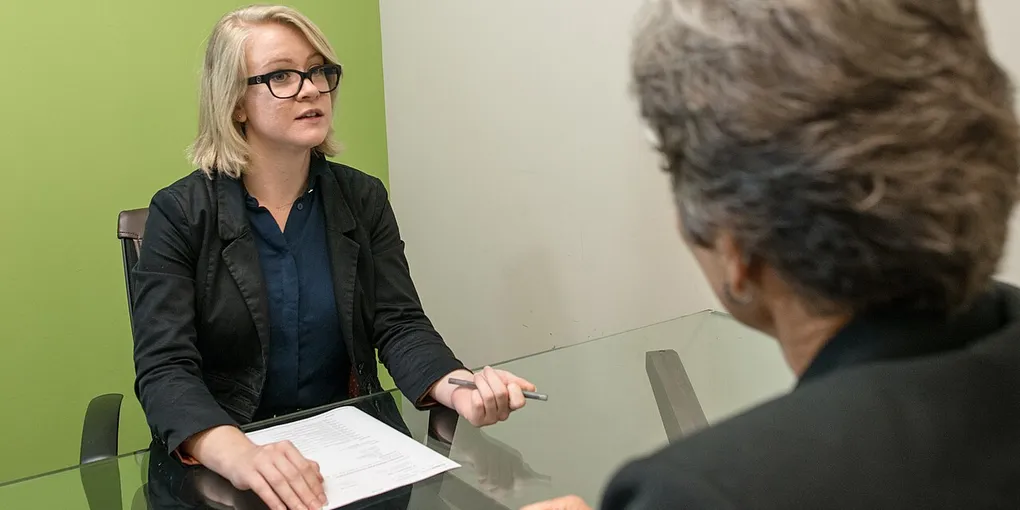
Hero image: amtec_photos, CC BY-SA 2.0, via Wikimedia Commons.
Frequently Asked Questions
How long should I prepare for a job interview?
Four to six hours in total, spread over the week before. Roughly: 60–90 minutes decoding the job post and researching the company, 60–90 minutes writing your stories, 30–45 minutes rehearsing out loud, and 30 minutes on logistics and the day itself. Technical, case or panel interviews deserve an extra session.
What should I say when they ask 'Tell me about yourself'?
Keep it to about 90 seconds and follow a simple arc: where you are now (current role plus one or two concrete wins), the relevant path that brought you here, and why this specific role and company. Practice it out loud until it sounds natural — not memorized.
Is it okay to bring notes to an interview?
Yes. A folder with two printed resumes, the job post with your annotations, your story sheet and your questions is normal — glance at it, don't read from it. On video calls, sticky notes placed beside the camera work well and are invisible to the interviewer.
Should I ask about salary in the first interview?
Don't bring it up first — it usually comes at the offer stage. If they ask you directly, give the researched range you prepared and anchor it to market data. The salary negotiation guide walks through the full conversation.