Quick answer
Set the tent up, shake out loose dirt, spot-clean with mild soap, and hand-wash the fabric only when it needs a deeper clean. Rinse thoroughly, never twist the fabric, air-dry completely in shade, and follow the care label before applying any waterproofing treatment. Never use a washing machine or dryer unless the manufacturer specifically allows it.
Cleaning a tent after camping is mostly a drying and handling job. Shake out the grit, remove the worst spots gently, wash by hand only when necessary, and give the fabric enough time to dry completely before storage. That routine protects the waterproof coating and prevents a damp weekend from turning into mildew, odors, or damaged seams.
This guide is for ordinary nylon or polyester camping tents. Always read your tent’s care label first: coatings, fabrics, and manufacturer instructions vary. The goal is to remove dirt without treating a technical shelter like a bedsheet.
Decide whether the tent needs a full wash
Start by setting the tent up on a clean tarp or a patch of grass. Open the doors and vents, remove the rainfly, and shake the tent body gently to release sand, leaves, and loose soil. Inspect the floor, corners, mesh, zippers, and seams.
Use spot cleaning when the tent is generally clean and only has a few muddy footprints, sap marks, or food splashes. A full hand wash makes sense after a particularly dirty trip, a spill, or storage in a way that left the fabric grimy. If you see established mold, strong musty odor, flaking seam tape, or a failing coating, pause before choosing a stronger chemical. Those are repair or replacement questions, not simply “more soap” problems.
What you need
- A large tub, bathtub, or clean outdoor basin
- Cool or lukewarm water
- A soft sponge or microfiber cloth
- A soft-bristled brush for zippers and stubborn spots
- Mild, non-fragranced soap or a cleaner made for outdoor waterproof gear
- A clean tarp or shaded drying area
Purpose-made cleaners such as Nikwax Tech Wash are designed for technical waterproof gear. Coleman likewise recommends mild soap, clean water, and gentle tools in its official tent-care guide. Do not reach for bleach, ordinary laundry detergent, fabric softener, abrasive powder, or a scented household spray. These products can leave residue or interfere with coatings.
How to clean a tent step by step
1. Brush and shake out dry debris
Before adding water, remove everything that will come off dry. Turn the tent body and rainfly inside out where practical, unzip the doors, and shake each piece over the tarp. Brush grit away from the floor and sweep debris out of pockets. Sand left in the fabric can act like fine abrasive when the tent is folded and packed.
2. Spot-clean stains first
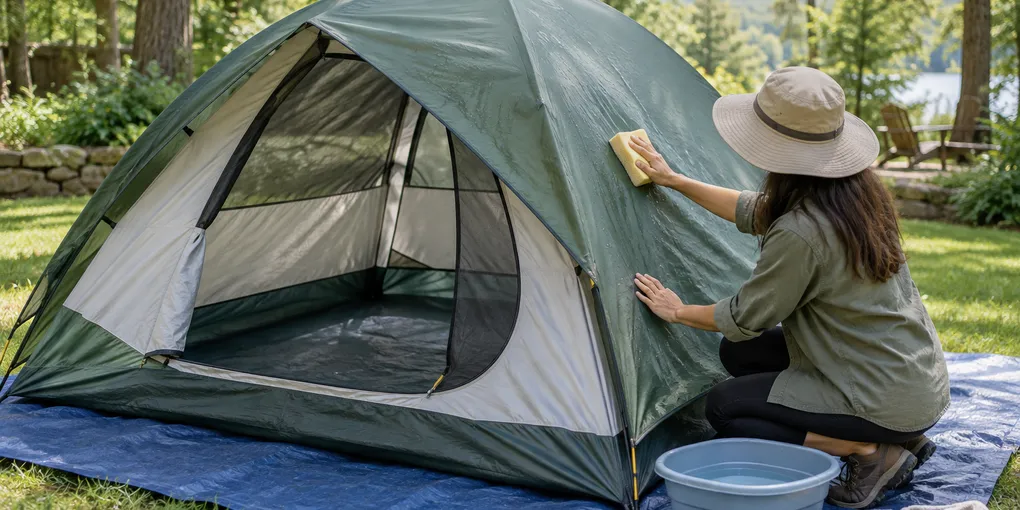
Dampen a sponge with water and a tiny amount of mild soap. Press and wipe the dirty area rather than scrubbing hard. For tree sap or sunscreen, give the solution time to soften the mark, then lift it gradually. Use a soft brush only on a zipper or a durable floor area, and keep the brush away from delicate mesh.
Rinse the cloth often so you do not spread mud across clean panels. If a stain does not release with gentle treatment, accept a small mark rather than damaging the coating by escalating to a harsh solvent.
3. Hand-wash the tent in a tub
Fill a clean tub with cool or lukewarm water and add the amount of gear cleaner stated on its label. Unzip the tent fully, submerge it, and let it soak for the recommended time. Move the fabric through the water with your hands; do not twist, wring, or scrub it aggressively.
Drain the dirty water and refill the tub. Press and lift the tent gently to flush cleaner from the fabric. Repeat the rinse until the water is clear and no slippery residue remains. Wash the rainfly separately if the tub is too crowded. A crowded tub makes it harder to rinse every seam and corner.
4. Clean mesh, zippers, and the floor carefully
Use a soft cloth on mesh panels and never drag a stiff brush across them. For zippers, remove grit with a soft toothbrush and wipe along the teeth. Check the zipper sliders for trapped sand before closing anything.
The floor is usually tougher than the mesh, but it still has a coating worth protecting. Keep the same gentle pressure and rinse both sides. Do not scrape dried mud with a knife or hard plastic edge.
5. Rinse, dry, and inspect
Lift the tent from the tub and support its weight rather than allowing one seam or corner to bear the load. Let excess water drain; do not twist it to speed the process. Set the tent up in a shaded, breezy location with doors and vents open. Hang the rainfly separately so air reaches both sides.
Drying can take several hours or even a few days in cool or humid weather. Check the underside of the floor, seam lines, pockets, and folds by touch. Pack the tent only when the fabric is completely dry. If you had to pack it wet during a trip, set it up as soon as you get home and repeat this drying check.
Prevent mold and extend the tent’s life
The most useful mold prevention step is simple: never store a damp tent. During a trip, ventilate the shelter to reduce condensation, keep wet clothing in the vestibule when possible, and remove shoes before entering. At home, store the dry tent in a cool, dry place rather than a damp basement or sealed hot car.
If the tent already smells musty or shows dark growth, do not assume a normal wash has solved it. Follow the manufacturer’s care instructions and consider a cleaner specifically intended for outdoor gear. Persistent mold, damaged seam tape, or a coating that is peeling or sticky may need professional advice or replacement. Avoid mixing cleaning chemicals, especially bleach with acids or other household products.
Once the tent is clean and fully dry, inspect the rainfly and floor for water beading and obvious coating wear. Cleaning and waterproofing are separate jobs: Nikwax’s guidance distinguishes its cleaner from products intended to restore water repellency or add UV protection. Apply a reproofing product only if the care label and product instructions support it.
Mistakes that shorten a tent’s life
- Washing it in a machine or drying it with heat.
- Using bleach, fabric softener, or strong laundry detergent.
- Scrubbing mesh or coated fabric until it shines.
- Twisting or wringing wet panels.
- Storing the tent before the seams and floor are dry.
- Applying waterproofing before removing soap residue.
- Leaving sap, food, or bird droppings untreated for months.
For related home-care jobs, see our guides to cleaning a rug, removing stains, washing clothes, and cleaning a washing machine. The same principle carries across all of them: use the least aggressive method that solves the actual problem, then dry the material fully.
Sources checked
- Appalachian Outfitters: How to Clean a Tent After Camping
- Coleman: How to Clean a Tent
- Mountain Warehouse: How To Clean A Tent
- Nikwax: Tent cleaning, waterproofing, and UV protection
Hero image: original OpenAI-generated image created for lejnel.com on 2026-09-14.
Frequently Asked Questions
Can you put a tent in the washing machine?
Usually no. Agitators, tumbling, heat, and detergent can stretch or tear tent fabric, damage mesh and seam tape, and weaken waterproof coatings. Check the care label, but hand washing is the safer default.
What soap should you use to clean a tent?
Use cool or lukewarm water with a small amount of mild, non-fragranced soap or a cleaner made for outdoor waterproof gear. Avoid ordinary laundry detergent, bleach, fabric softener, and harsh household cleaners.
How do you dry a tent after washing it?
Set it up or hang it in a shaded, breezy place until every panel, seam, pocket, and corner is completely dry. Do not use a clothes dryer or pack the tent while it is even slightly damp.