Quick answer
Cheap flights come from flexibility, not hunting: search whole months in Google Flights instead of fixed dates, set fare alerts and walk away, and compare the all-in price including bags. Book when the price-history graph shows the fare at its low point, and pick the airport with the best total math.
The cheapest fare on your route is rarely a secret. It is a pattern: flights that fill slowly, travel on days nobody mentions, and airlines that sell the same seat at different prices to different travelers.
You can’t control the airline’s pricing math, but you can position yourself where the cheap seats live. These 10 tricks do exactly that — they work on most routes, without loyalty programs, vouchers or tricks.
1. Let the calendar pick the date
Almost everyone does this in the wrong order: pick a date, then search. Cheap flights work backwards.
- In Google Flights, click the departure date field to see a month view — the cheapest days are highlighted below each date
- In Skyscanner, choose “Whole month” to compare an entire month at once
- If you can shift your trip by ±3 days, you will regularly find fares 30–50% below the peak-day price on the same route
The single biggest price lever on most routes is not the airline or the website — it is the date you fly.
2. Search three engines, not one
Google Flights, Skyscanner and Kayak all show slightly different fares because each pulls from different travel agencies. A fare that appears in one search is often not the lowest available.
- Compare your route on at least two of them
- Check the airline’s own website for the final price — fees can differ
- Never book the first result of the first search; ten minutes of comparison is the cheapest insurance you can buy
3. Set an alert — then walk away
Price alerts are the closest thing to a free ticket-pricing assistant.
- Google Flights: turn on price tracking for your route and dates
- Skyscanner: enable price alerts in the app with your travel window
- Let the alerts do the watching. The fare you want will email you before you decide
This also removes the panic that makes people overpay: when you trust the alerts, you stop checking hourly, and you stop buying.
4. Compare airports, not routes
Big cities often have several airports — and the fare difference between them can be larger than the difference between any two days.
Examples of the gap:
| City | Main airport | Alternatives that often price lower |
|---|---|---|
| London | Heathrow | Gatwick, Luton, Stansted |
| New York | JFK | Newark, LaGuardia |
| Paris | Charles de Gaulle | Orly, Beauvais |
Before you get excited, do the ground transport math: an €80 train fare to an airport 90 minutes away can eat a €70 ticket saving in one bite. Check the airport’s access link first — and if the saving survives the train ticket, the cheap fare is real. The same math applies on the other end: if a weekend trip is within reach, see how the total stacks up in this cheap-weekend-trip planner.
5. Price the all-in cost, not the headline
A fare that looks €20 cheaper often hides more than it saves. Before comparing, add every mandatory fee:
- Checked bag — often €25–50 each way on basic fares
- Cabin bag — some basic fares only include a seat and a small personal item
- Seat selection — sometimes required to keep you and a companion together
- Change fees — the “flex” fare isn’t cheap if you never change anything
Compare the number you actually pay, not the number that gets you on a comparison table.
A 15-minute fare audit before you book
When a fare looks good, run the same short check every time. It keeps a headline price from turning into a false saving:
- Freeze the trip you are comparing. Write down the exact airports, dates, passengers, cabin and number of stops. A cheaper result is not cheaper if it quietly changes one of those variables.
- Record three prices. Check the airline, one comparison site and Google Flights. Note the fare, baggage allowance, seat cost and whether the seller is the airline or an agency. Google’s official help says price tracking can follow a route, specific dates or “Any dates,” and can email you when prices change significantly — useful when you are not ready to buy.
- Add the doors-to-seat total. Include transport to and from each airport, bags, seats, payment fees and a realistic cost for a long self-connection. Put the result in one currency.
- Stress-test the cheap option. Ask what happens if the first flight is late, the bag is checked, or you need to change the booking. Separate tickets do not create one protected itinerary. If your journey falls under EU rules, Your Europe’s passenger-rights guidance explains when protections apply; that is different from assuming a self-connect is covered.
- Set a stop rule. If one option is within about 15% of your lowest observed fare after the extras, choose the one with the better schedule, seller and change policy. Save a screenshot or price note, then book — or deliberately walk away.
This audit takes less time than recovering from a missed self-connection. More importantly, it makes the decision comparable: one trip, one all-in number, one clear reason to buy.
6. Fly when demand is low
Prices follow demand more than fuel or distance. Cheap flights are schedules that fill slowly — so look for them:
- Early morning departures (before ~7 a.m.) are rarely full
- Overnight and red-eye flights carry the same lounges they always did, for less
- Midweek departures beat Friday and Sunday on almost every route
- Shoulder season — the two weeks on either side of peak holidays — often keeps the weather and cuts prices sharply
- Avoid school holidays like the plague if your budget does the talking
7. Build your own connection — if you can afford the risk
A “self-connect” is two separate one-way tickets with a long gap between them, or a connection via a smaller hub. It is often far cheaper than a single through-ticket.
The catch: you own the risk. If the first flight is delayed, the second ticket is yours to replace — the airline owes you nothing. Make it safer:
- Keep a layover of at least 3–4 hours
- Go carry-on only, so a missed connecting flight never strands your luggage
- Never self-connect on the last flight home before a workday
Traveling light is the whole game here — this carry-on packing system gets a week of clothes into one bag.
8. Book on a decision date, not on a whim
Waiting for “prices to drop” is a gamble with a bad house edge: for most routes, fares trend up in the final 2–4 weeks before departure.
A practical rule of thumb:
- Domestic / short-haul: book 1–3 months ahead
- International: book 2–6 months ahead
- Peak season: add a month — and set the alert earlier
Instead of checking daily, set a decision date: “if the fare is within ~15% of the lowest I have seen, I book.” Then book. The cheapest fare is the one you catch, not the one you chase.
9. Read the price history before you pay
Google Flights marks fares as low / typical / high compared with the route’s recent history, and shows a price graph. A fare that says “low” at the low end of the graph is a book-it-now signal.
A few warning signs to ignore:
- Countdown timers (“only 3 seats at this price”) — simply reload the page and see if the timer resets
- “X people are watching this flight” — a nudge, not a fact about availability
- “Prices will increase tomorrow” — unless the graph shows it, no
10. Keep the whole trip in view
A great flight price can be erased by the rest of the trip. Before you pay, check the total:
- Transport to both airports vs. the saved fare
- Bag fees at the cheap airline vs. included bags at the pricier one
- Where you stay and what you eat — the weekend trip carries most of its cost on the ground
And if you already hold points or miles: check both prices. Cash fares are sometimes cheaper than using points, and the value of a point varies wildly by route. Let the math, not the loyalty, decide.
And if no fare in your search window looks acceptable, remember the flight is the optional part of the trip: for journeys within a few hundred kilometres, the road-trip planning method swaps the fare graph for a fuel budget and a route — 10 steps from daily driving limits to what to book in advance.
Quick-win checklist
- Search by month view, not by fixed date
- Compare 3 engines before booking
- Alerts on — then stop checking daily
- Check the alternate airport and its transport math
- Compare all-in cost: fare + bag + seat + change fees
- Fly early morning, midweek, off-peak
- Carry-on only if you self-connect
- Book on a decision date, within ~15% of the lowest seen
- Trust the price graph over countdown timers
- Total trip math wins over flight price alone
The best moment to book is when the fare is at the low end of its own history — which is why the real trick is setting up the picture, then booking when it looks right.
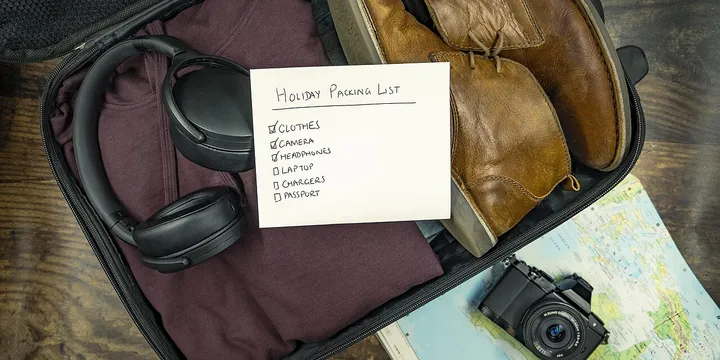
Hero image: Sergey Kustov, CC BY-SA 3.0, via Wikimedia Commons.
Frequently Asked Questions
What day of the week is cheapest to fly?
There is no universal cheap day — the pattern varies by route and season. Friday and Sunday departures are usually the most expensive because leisure demand peaks, and midweek or early-morning flights are often among the cheapest. Instead of guessing, open the calendar view in Google Flights and let the actual prices pick your day.
Does searching in incognito mode lower flight prices?
No — there is no reliable evidence that repeat searches raise prices for you. Fares change because of demand and how many seats are left, not because you looked at them twice. Incognito is useful for keeping your search history private, not for magically cheaper tickets.
How far in advance should I book a flight?
A practical rule of thumb: 1–3 months for short-haul and domestic routes, 2–6 months for long-haul international trips, and longer for peak periods like summer and school holidays. Prices usually climb in the final 2–4 weeks, so set a decision date: if the fare is within roughly 15% of the lowest price you have seen, book.
Is it cheaper to book directly with the airline?
It depends on the trip. Online travel agencies sometimes undercut the airline, especially for bundles, while booking direct makes changes, cancellations and rebooking far less painful when things go wrong. Compare both, and price the all-in cost — fare, bags, seats and change fees — before deciding.