Quick answer
Fix a squeaky door by first confirming that the sound comes from a hinge, then tightening loose screws, cleaning away grit, and applying a small amount of hardware lubricant to the hinge pin and seams. If the noise continues, inspect one hinge at a time for worn parts, rubbing or misalignment; replace damaged hardware or call a professional rather than forcing a bent frame.
A squeaky door is usually a small friction problem that becomes impossible to ignore at night, during a video call or in a quiet hallway. You do not need to replace the whole door to investigate it.
Start with the hinge, but do not assume every squeak comes from the hinge. The This Old House guide to quieting a squeaky door identifies friction, misalignment and dirt or debris as common causes. Use this ten-step workflow to find the sound, make the least invasive repair first and stop before a simple fix becomes damage.
1. Confirm where the squeak comes from
Open and close the door slowly while standing on the latch side. Listen near each hinge, the latch, the strike plate and the edge where the door meets the frame. Touch the hinge lightly as the door moves; a vibration can help identify the noisy joint.
If the noise occurs only when the door rubs the frame, lubricant may not solve the underlying problem. Look for fresh scuff marks, a tight gap or a door that has started to sag. If the sound follows the latch instead, inspect the latch and strike rather than spraying the hinges.
2. Gather simple supplies and protect the area
Use a screwdriver that fits the hinge screws, a clean cloth, cotton swabs or a soft brush, a small amount of lubricant intended for hardware, and a paper towel. If you may lift a hinge pin, keep a nail or pin punch and a small hammer nearby.
Put a towel under the hinge before applying anything. Lubricant can run down painted wood, stain flooring or collect dust. Keep the door supported if it feels heavy, loose or unstable. A stable interior door is a reasonable small repair; a door that can fall, a heavy exterior door or a door with broken glass deserves more caution.
3. Tighten loose hinge screws
With the door closed or supported, check the screws on both leaves of every hinge. Tighten loose screws until they are snug, but do not keep turning once the head or wood starts to resist. Overtightening can strip the screw head or damage a soft wood jamb.
Open and close the door after tightening. If the squeak is gone, you have found movement caused by a loose connection. The This Old House guide also describes loose hinge screws as a cause of door noise, so check the frame side as well as the door side before reaching for lubricant.
4. Clean visible dirt from the hinge
Wipe the hinge barrels, pin ends and surrounding wood with a dry cloth. If grime is stuck to the metal, use a slightly damp cloth or a soft brush, then dry the area. Do not flood the hinge or spray cleaner into the joint.
Dust and old lubricant can make a clean-looking hinge noisy. Remove what you can reach without taking the door apart. If the hinge is rusty, deeply pitted or bent, cleaning may only reveal that replacement is the better repair.
5. Lubricate the hinge without removing the pin
Raise the hinge pin only slightly if it moves easily, or apply a small amount of hardware lubricant around the pin and the hinge seams. Aim precisely rather than soaking the door. The Schlage hinge guide describes controlled application, a cloth to catch drips and occasional reapplication; it also notes that lubrication is a temporary fix.
Open and close the door several times to work the lubricant into the moving parts. Wipe away the excess from the hinge, door and floor. If the noise improves but returns later, that points to a maintenance fix rather than proof that more and more lubricant is needed.
6. Remove and clean one hinge pin at a time
If the squeak remains, work on the loudest hinge first. Place the tip of a nail or pin punch under the hinge pin and tap upward gently. Do not remove all the hinge pins together: one pin at a time keeps the door attached and makes the job easier to control.
Clean the exposed pin and hinge barrels with a cloth. If the pin is coated with hard grime, work patiently rather than bending it. Apply a light coat of suitable lubricant, slide the pin back partway, move the door carefully to spread it, then reseat the pin fully. Test the door before touching another hinge.
7. Deal with a screw that will not tighten
A screw that spins without becoming snug may be in a stripped hole. Stop turning it. Remove it only if the door is supported and you can put it back securely. For a basic wood repair, This Old House describes filling a stripped hole with a small piece of wood and wood glue, letting it dry and refastening the screw.
That repair is not appropriate for every door, jamb or rental property. Do not improvise on a fire-rated door, a load-bearing frame or hardware that controls security without checking the manufacturer’s instructions or asking a qualified professional.
8. Check for rubbing and misalignment
Close the door slowly and inspect the gaps around the top, latch side and bottom. Look for paint transfer, bright rub marks or a hinge leaf that is no longer sitting flat. A hinge can squeak because the door is twisting against the frame rather than because it is simply dry.
Do not hammer a hinge into a new position while the door is hanging. Small alignment work can affect the door’s weight and closing path. The This Old House instructions describe advanced hinge realignment and spacing adjustments, but a door that is visibly sagging, binding or hard to control is a good point to stop and get help.
9. Replace damaged hardware instead of forcing it
A hinge with a bent leaf, severe rust, loose knuckle or damaged pin may not become reliable with oil. Photograph the hinge, count the screw holes and measure its size before buying a replacement. Match the type, size and screw pattern as closely as possible.
Remove and replace one hinge at a time only when the door is stable and you know how you will support its weight. Pre-drill only when the replacement instructions call for it, and keep the door aligned while tightening. If the frame is warped or the replacement does not sit flat, stop rather than forcing the screws.
For a rented home, record the symptom and take a photo before changing hardware. A landlord-maintenance log like the one in the first-time landlord guide is useful when a recurring door problem needs a larger repair.
10. Test the full movement and set a maintenance check
Open the door slowly, halfway and fully. Confirm that it does not scrape, swing unexpectedly, stick at the latch or leave lubricant on the floor. Test the handle and latch, then listen again from both sides.
If the hinge is quiet, wipe the hardware once more and keep the lubricant’s label nearby for future maintenance. If the squeak returns immediately, the cause may be misalignment, worn hardware or frame movement rather than a lack of lubricant. If the door is difficult to control, the frame is damaged, several hinges need adjustment, or repeated repairs fail, ask a carpenter or door specialist to assess it. This Old House lists warped or damaged frames, significant misalignment, unsuccessful repair attempts and antique or specialty doors as reasons to call a professional.
A quiet door repair is mostly about diagnosis and restraint. Find the exact source, tighten before spraying, use only enough lubricant to reach the moving joint, and treat rubbing or damaged hardware as a separate problem. That approach protects the door while keeping a minor noise from becoming a larger repair.
Sources
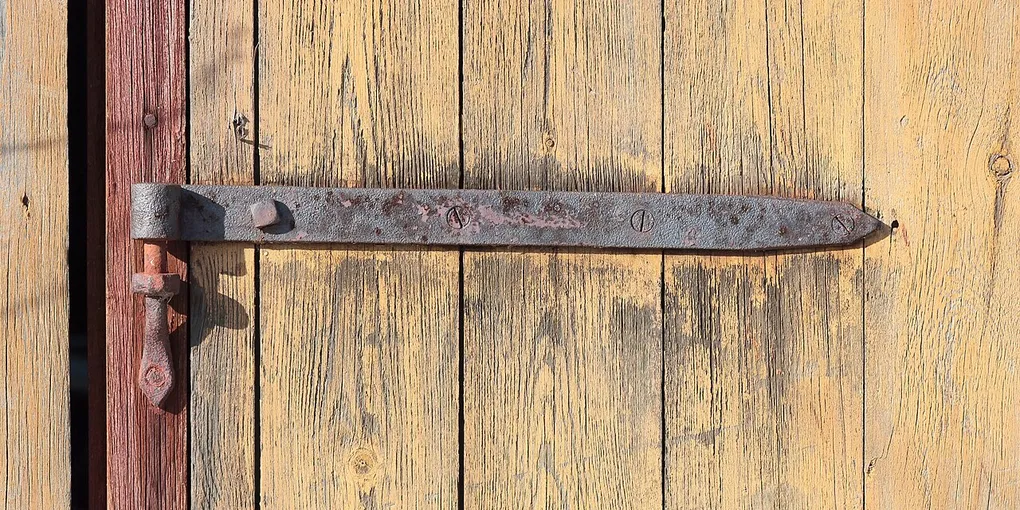
Hero image: Estormiz, CC0, via Wikimedia Commons.
Sources
Frequently Asked Questions
What is the quickest way to fix a squeaky door?
Confirm that the hinge is making the noise, tighten any loose screws, and apply a small amount of lubricant to the hinge pin and the places where the hinge parts meet. Open and close the door several times, then wipe away excess.
Can I use WD-40 on a squeaky door hinge?
Schlage lists WD-40 as one option for a squeaky hinge, but describes lubrication as a temporary fix that may need reapplication. Use a small, controlled amount, protect the surrounding wood and floor, and follow the product label.
How do I fix a squeaky door if lubricant does not work?
Check for loose or stripped screws, dirt inside the hinge, a bent or misaligned hinge, and contact between the door and frame. Repair only what you can inspect safely; replace damaged hardware or ask a door professional to assess a warped frame or persistent misalignment.
Should I remove the hinge pin to stop a squeaky door?
You can remove and clean one hinge pin at a time if the door is stable and you can support it safely. Do not remove every pin at once. Tap gently, keep fingers clear, clean the parts, apply a light lubricant and reseat the pin before moving to another hinge.